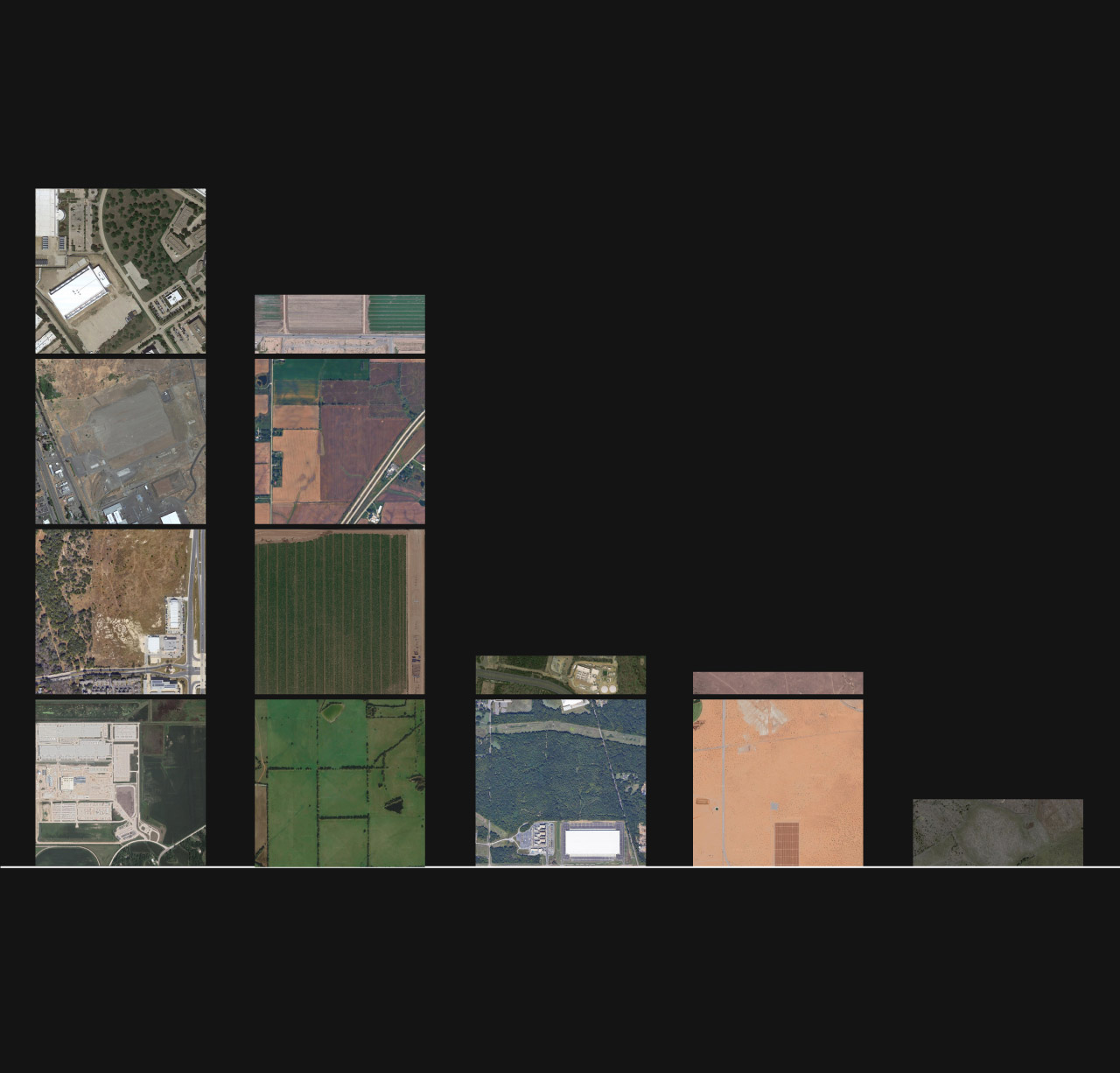
Satellite imagery shows what was once farmland and desert taken over by warehouselike structures.
America’s landscape is undergoing one of the largest transformations in decades.
To meet the insatiable demand for computer processing to power AI, tech companies and their developers nationwide are building ever-larger data centers, packed with power-hungry equipment.
Source: Satellite imagery via Google Earth
The country houses nearly 100 hyperscale data centers, which consume at least 100 megawatts of power at peak operation — enough to power about 80,000 homes. There are another 120 under construction, according to Cleanview, a market intelligence company tracking data center development. Four hundred and sixty more are planned.
Roughly 40 percent of today’s hyperscale data centers were built on previously developed land. The rest took over farmland, shrubland and forest.
Data centers now operating are typically in relatively wealthy metropolitan and urban areas, said David Adams, an associate professor at California State University at Fullerton who studies public infrastructure. That’s likely because when building the facilities, companies look for places supplied with reliable power and fast internet.
But the data centers now being built to power AI require far more electricity because of the powerful chips inside. That’s pushing construction into rural areas, where costs are cheaper but still near fiber internet lines, he said.
Because data centers are straining the capacity of the electric grid, some are also being built with their own power generation, in part to blunt local criticism that these operations increase the cost of electricity for consumers. That can require data center sites to be more sprawling.
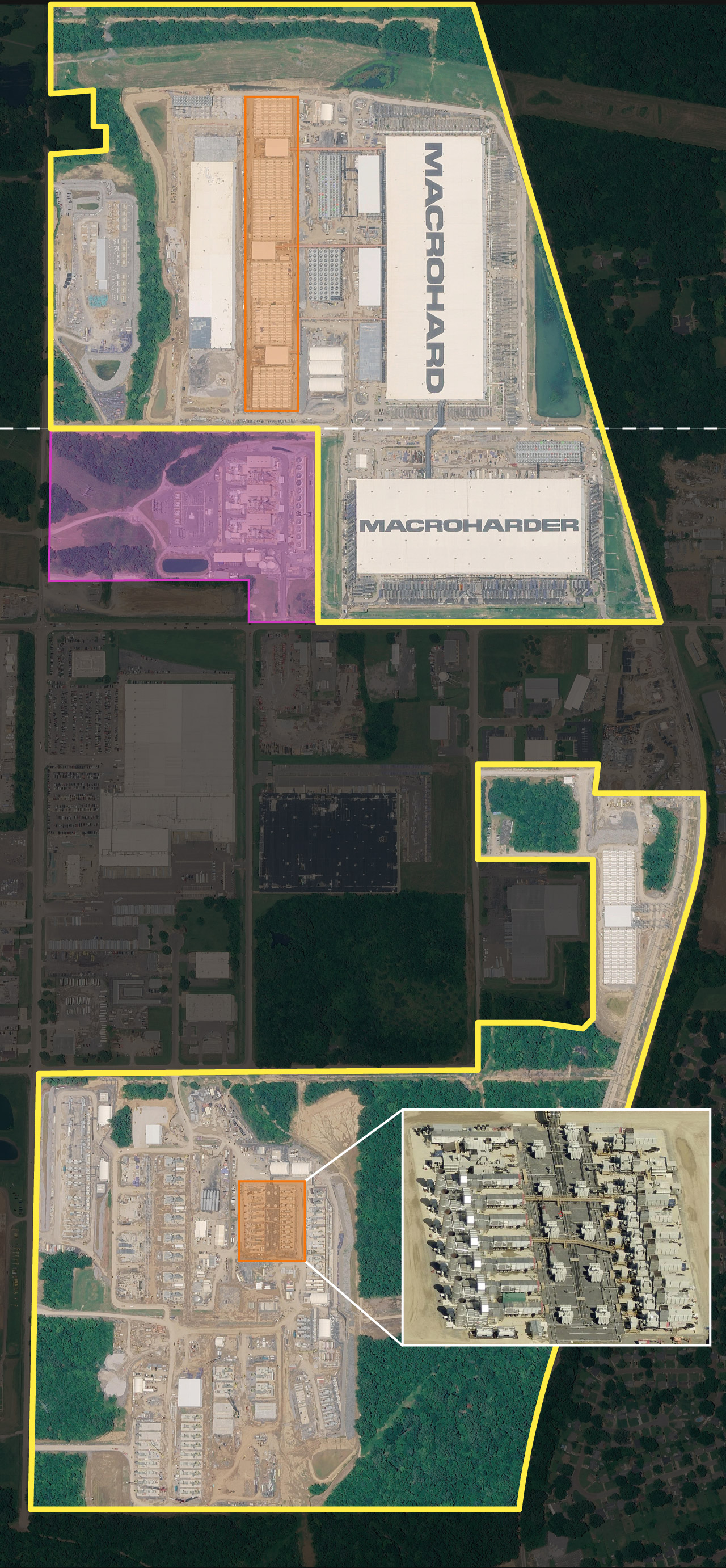
Musk’s SpaceX, which he merged with xAI this year, built its Colossus 2 data center in the Memphis area next to an existing gas power plant. Rows of giant batteries help stabilize the power supply during peak demand, the company has said.
While construction continues, Colossus 2 is being powered by temporary gas turbines, which can be much more polluting than grid power. Residents who live across town, near SpaceX’s older data center, Colossus, have protested the emissions from its on-site generators. SpaceX did not respond to a request for comment.
Data centers have existed for years but have never been quite this large.
“Traditionally it’s just one building situated in an urban area,” Adams said. Now, hyperscalers start with one building and then expand to “two, three, four, five, six buildings.”
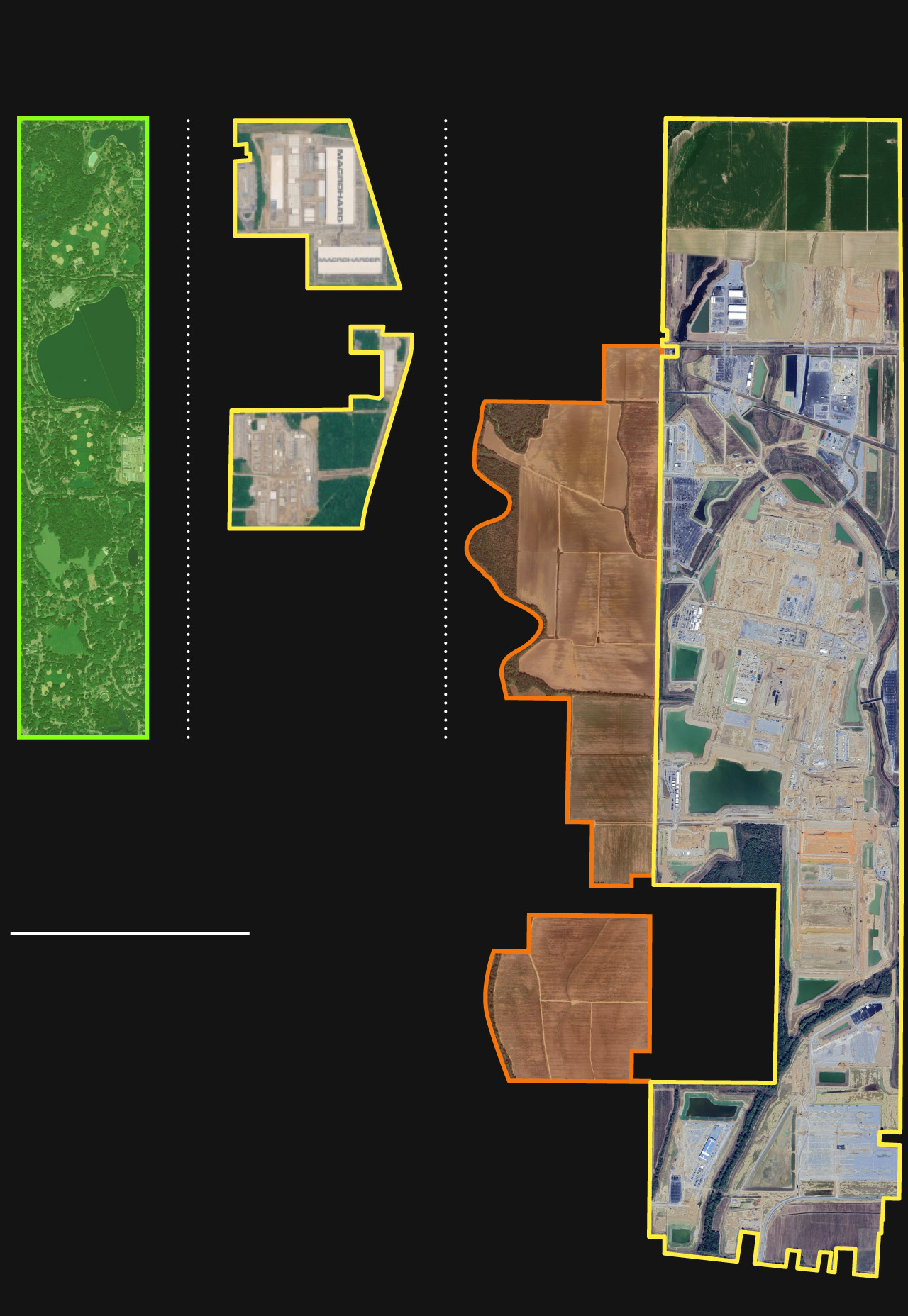
Meta is constructing a data center campus called Hyperion on a tract of land in rural Louisiana that will dwarf Colossus 2 — and Manhattan’s Central Park. The company did not respond to a request for comment.
The project is huge but may soon be overtaken. If all the data centers currently planned are built on schedule, according to Cleanview’s data, by 2030 the Hyperion campus will rank only at No. 5 in the U.S. by square footage.
தியாக தீபத்தின் நினைவாலயம் முன் அணையா விளக்கு புதினம் Wednesday, September 30, 2026 யாழ்ப்பாணம் நல்லூர் பகுதியில் தியாக தீபம் திலீபனின் ...