SHARE

Wednesday, February 11, 2026

Ditwah Survey: More State support needed for Malaiyaha community

Insights from SSA Cyclone Ditwah Survey: More State support needed for Malaiyaha community
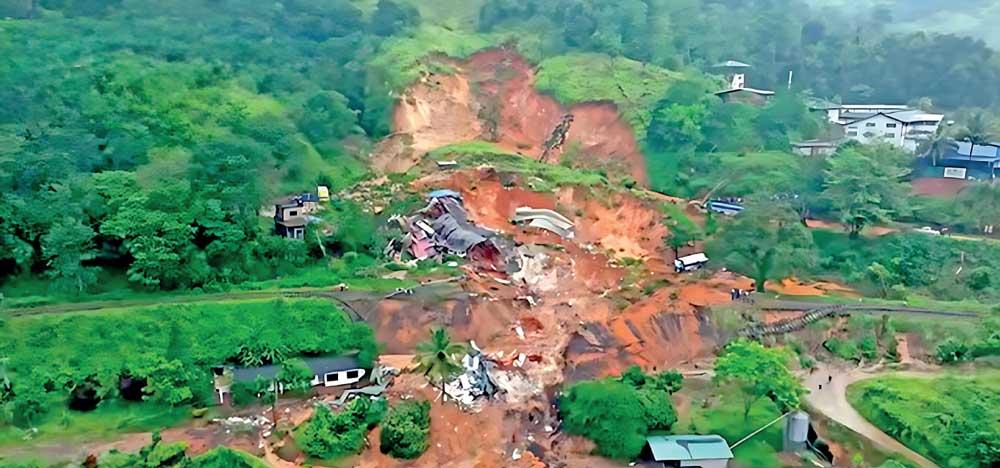
Central Province experienced not just flooding but also the most number of landslides in the island
Source: File photo 
By Shashik Silva Daily Mirror 

  • Early warnings hadn’t reached many areas. Some data collectors said they themselves never heard any warnings in estate areas, while others mentioned that early warnings were issued but didn’t reach some segments of the community

When climate disasters strike, they don’t affect everyone equally. Marginalised communities typically face worse outcomes, and Cyclone Ditwah is no exception. Especially in a context where normalcy is far from ‘normal’, the idea of returning to normalcy or restoring a life of normalcy makes very little sense.  

The islandwide survey conducted by the Social Scientists’ Association (SSA), between early to mid-January on Cyclone Ditwah shows stark regional disparities in how satisfied or dissatisfied people were with the Government’s response. While national satisfaction levels were relatively high in most provinces, the Central Province tells a different story. 

_____________________________________________________

The Central Province (Sinhala: මධ්‍යම පළාත, Tamil: மத்திய மாகாணம்) is one of the nine provinces of Sri Lanka, covering an area of approximately 5,674 square kilometers. It is home to a diverse population of around 2.8 million people and includes three main districts: Kandy, Matale, and Nuwara Eliya. The capital city is Kandy.
_____________________________________________________


Only 35.2% of Central Province residents reported that they were satisfied with early warning and evacuation measures, compared to 52.2% nationally. The gap continues across every measure just 52.9% were satisfied with immediate rescue and emergency response, compared with the national figure of 74.6%. Satisfaction with relief distribution in the Central Province is 51.9% while the national figure stands at 73.1%. The figures for restoration of water, electricity, and roads are at a low 45.9% in the central province compared to the 70.9% in national figures. Similarly, the satisfaction level for recovery and rebuilding support is 48.7% in the Central Province, while the national figure is 67.0%.

A deeper analysis of the SSA data on public perceptions reveals something important: these lower satisfaction rates came primarily from the Malaiyaha Tamil population. Their experience differed not just from other provinces, but also from other ethnic groups living in the Central Province itself.

The Malaiyaha Tamil community’s vulnerability didn’t start with the cyclone. Their vulnerability is a historically and structurally pre-determined process of exclusion and marginalisation. Brought to Sri Lanka during British rule to work for the empire’s plantation economies, they have faced long-term economic exploitation and have repeatedly been denied access to state support and social welfare systems. Most estate residents still live in ‘line rooms’ and have no rights to the land they cultivate and live on. The community continues to be governed by an outdated estate management system that acts as a barrier to accessing public and municipal services such as road repair, water, electricity and other basic infrastructures available to other citizens. 

As far as access to improved water sources is concerned, the Sri Lanka Demographic Health Survey (2016) shows that 57% of estate sector households don’t have access to improved water sources, while more than 90% of households in urban and rural areas do. With regard to the level of poverty, as the Department of Census and Statistics (2019) data reveals, the estate sector where most Malaiyaha Tamils live had a poverty headcount index of 33.8%; more than double the national rate of 14.3%. These statistics highlight key indicators of the systemic discrimination faced by the Malaiyaha Tamil community.

Some crucial observations from the SSA data collectors who had enumerated responses from estate residents in the survey reveal the specific challenges faced by the Malaiyaha Tamils, particularly in their efforts to seek state support for compensation and reconstruction.

First, the Central Province experienced not just flooding but also the most number of landslides in the island. As a result, some residents in the region lost entire homes, access roadways, and other basic infrastructures. The lost of lives, livelihoods and land were at a higher intensity compared to the provinces not located in the hills. Most importantly, the Malaiyaha Tamil community’s pre-existing grievances made them even more vulnerable and the government’s job of reparation and restitution more complex.

Early warnings hadn’t reached many areas. Some data collectors said they themselves never heard any warnings in estate areas, while others mentioned that early warnings were issued but didn’t reach some segments of the community. According to the resident data collectors, the police announcements reached only as far as the sections they were able to drive their vehicles, and there were many estate roads that were not suitable for vehicles. When warnings did filter through to remote locations, they often came by word of mouth and information was distorted along the way. Once the disaster hit, things got worse: roads were blocked, electricity went out, mobile networks failed and people were cut off completely.

Emergency response was slow. Blocked roads meant people could not get to hospitals when they needed urgent care, including pregnant mothers. The difficult terrain and poor road conditions meant rescue teams took much longer to reach affected areas than in other regions.

Relief supplies didn’t reach everyone. The Grama Niladhari divisions in these areas are huge and hard to navigate, making it difficult for Grama Niladharis to reach all places as urgently as needed. Relief workers distributed supplies where vehicles could go, which meant accessible areas got help while remote communities were left out.

Some people didn’t even try to go to safety centres or evacuation shelters set up in local schools because the facilities there were already so poor. The perceptions of people who did go to safety centres, as shown in the provincial data, reveal that satisfaction was low compared to other affected regions of the country. Less than half were satisfied with space and facilities (42.1%) or security and protection (45.0%). Satisfaction was even lower for assistance with lost or damaged documentation (17.9%) and information and support for compensation applications (28.2%). Only 22.5% were satisfied with medical care and health services below most other affected regions.

Restoring services proved nearly impossible in some areas. Road access was the biggest problem. The condition of the roads was already poor even before the cyclone, and some still haven’t been cleared. Recovery is especially difficult because there’s no decent baseline infrastructure to restore, hence you can’t bring roads and other public facilities back to a ‘good’ condition when they were never good, even before the disaster.

Water systems faced their own complications. Many households get water from natural sources or small community projects, and not the centralised state system. These sources are often in the middle of the disaster zone and therefore got contaminated during the floods and landslides.

Long-term recovery remains stalled. Without basic infrastructure, areas that are still hard to reach keep struggling to get the support they need for rebuilding.

Taken together, what do these testaments mean? Disaster response can’t be the same for everyone. The Malaiyaha Tamil community has been double marginalised because they were already living with structural inequalities such as poor infrastructure, geographic isolation, and inadequate services which have been exacerbated by Cyclone Ditwah. An effective and fair disaster response needs to account for these underlying vulnerabilities. It requires interventions tailored to the historical, economic, and infrastructural realities that marginalised communities face every day. On top of that, it highlights the importance of dealing with climate disasters, given the fact that vulnerable communities could face more devastating impacts compared to others.

(The article is based on a survey conducted by the Social Scientists’ Association of Sri Lanka in early to mid-January 2026. The writer is the Chief Operating Officer and a researcher of the association)

Bangladesh 2026 election

 Bangladesh 2026 elections explained in maps and charts

With 127 million voters set for the February 12 election, Al Jazeera analyses key numbers for Bangladesh’s crucial vote.


On February 12, Bangladesh will head to the polls to elect its next government, 18 months after Prime Minister Sheikh Hasina was ousted from office by a student-led movement.

Hasina, the daughter of Sheikh Mujibur Rahman, the leader of the country’s independence movement, ruled Bangladesh between 1996 and 2001 and again from 2009 until she had to flee from office in August 2024 – after ordering a brutal crackdown on protesters which killed an estimated 1,400 people – and seek exile in India.

An interim administration led by Nobel laureate Muhammad Yunus has since led the country.

Here is everything you need to know about the upcoming general election:

Bangladesh at a glance

The 2026 elections are among the most consequential in the country’s 55-year history, since gaining independence from Pakistan in 1971.

With more than 173 million citizens, Bangladesh is the eighth most populous country globally and, over the past 25 years, its economy has been one of the fastest-growing in the world – though growth has cooled in recent years.

Bangladesh is a predominantly Muslim country, with more than 90 percent of the population following Islam, 8 percent practising Hinduism and the rest following other faiths.

Economically, the country’s gross domestic product (GDP) stands at $461bn, with a per capita income of $1,990.

According to the Bangladesh Bank, GDP expanded by 3.97 percent in the fiscal year ending June 2025, easing from a 4.22 percent rise in the previous year.

Millions of first-time voters

Bangladesh has one of the world’s youngest populations, with a significant portion under the age of 30.

Among those above the voting age of 18, approximately 56 million, or 44 percent, are between the ages of 18 and 37, and nearly 5 million are first-time voters.

Bangladesh is one of the most densely populated countries in the world, with 1,366 people per square kilometre (3,538 people per square mile). This density is nearly three times that of India and four times that of Pakistan.

The country’s largest city is the capital, Dhaka, which has a population of more than 37 million people – more than the entire population of Malaysia, Saudi Arabia or Australia.


How is the government structured?

Bangladesh is a parliamentary republic, where executive power is exercised by an elected government, consisting of the prime minister and cabinet.

The president of Bangladesh is the ceremonial head of state and is indirectly elected by the parliament for a five-year term.

The prime minister is the leader of the majority party or coalition in parliament.

The prime minister appoints the cabinet, oversees government policy and directs civil service.

Legislative authority rests with the Jatiya Sangsad, Bangladesh’s parliament. It consists of 350 seats, including 300 directly elected seats and 50 seats reserved for women, which are allocated proportionally based on their share of votes. Members serve five-year terms.

Administratively, Bangladesh is divided into eight divisions, 64 districts and 495 upazilas (councils). Local governments manage municipal services, education and rural development, though they depend heavily on funding and authority from the central government.

Political parties

In this 2026 election cycle, there are 59 registered political parties in Bangladesh, excluding the Awami League, Sheikh Hasina’s party, which has had its registration suspended by the election commission, nullifying its ability to field candidates in the polls.

Of these, 51 parties are actively participating in elections by fielding candidates. In total, 1,981 candidates are contesting, including 249 independent candidates.


Bangladesh Nationalist Party (BNP) – Led by Tarique Rahman, the son of recently deceased former Prime Minister Khaleda Zia.

The BNP is one of Bangladesh’s two major traditional parties and positions itself as a nationalist and conservative alternative to the Awami League.

Jamaat-e-Islami – The Islamic party, led by Shafiqur Rahman, advocates for politics rooted in the religion’s principles and has formed an electoral alliance with the National Citizen Party (NCP) along with other Islamic parties.

National Citizen Party (NCP) – Formed by student leaders of the 2024 uprising, it is a centrist party focused on citizen-led governance and political reform. It has garnered attention from younger voters and civil society groups due to increasing dissatisfaction with established parties.

Jatiya Party (JP-Quader) – This centre-right faction of the Jatiya Party is led by Ghulam Muhammed Quader.

Jatiya Party (JP-Ershad) – Led by Anisul Islam Mahmud, this centre-right party has its roots in the military rule of former President Hussain Muhammad Ershad in the 1980s.

Left Democratic Alliance – A coalition of left-wing parties, including the Communist Party of Bangladesh and several socialist groups.

Amar Bangladesh Party (AB Party) – A centrist party that presents itself as a reform-oriented alternative to the established political blocs, appealing to voters seeking a break from traditional party politics.

Previous election results

Bangladesh’s electoral history over the past two decades has been predominantly shaped by the Awami League, which came to power in 2009 after a significant defeat of the Bangladesh Nationalist Party (BNP) which had ruled from 2001 to 2006.


In the 2001 election, the Awami League suffered a major defeat, winning just 62 seats, while the BNP secured a commanding majority with 193 seats. That election marked the last clear transfer of power between the two major parties.

The balance shifted decisively in 2008, when the Awami League-led Grand Alliance returned to power in a landslide. Since then, the party has consolidated its dominance.

In 2014, with the BNP absent from the contest, Hasina’s Awami League again won in a landslide.

The party further strengthened its grip in the 2018 election, securing 300 seats, while the BNP was reduced to just seven seats, its weakest performance on record. Thousands of BNP leaders were arrested in the lead-up to the elections. The Jamaat was banned in 2015, and so it couldn’t contest. International observers and opposition groups described the election as neither free nor fair.

In the most recent 2024 election, the Awami League won 272 seats, maintaining a parliamentary majority. The BNP again boycotted, amid deepening repression of opposition leaders. The Jamaat was still banned.

Political leaders throughout history

Since Bangladesh’s independence in 1971 from Pakistan, the country’s turbulent political evolution has been shaken by internal conflicts, military intervention and fragile democratic institutions.

Sheikh Mujibur Rahman served as the country’s first president – the leader of the independence movement – who soon banned other political parties and adopted increasingly repressive policies.

Rahman was assassinated in 1975 by army officers, who killed him and most of his family. Only two members of his immediate family survived: his daughters, Sheikh Hasina and Sheikh Rehana, who were in West Germany during the attack, and then lived in India in exile. This event triggered a period of coups and counter-coups that established the military as a dominant political force in the country.

A policeman walks past a banner with a picture of Bangladesh’s founder Sheikh Mujibur Rahman, in Dhaka, Bangladesh [File:Munir Uz Zaman/AFP]

Following the assassination, cabinet minister Khondaker Mostaq Ahmad took control of the government until he was deposed in a counter-coup just months later, which led to the appointment of Chief Justice Abu Sadat Mohammad Sayem as a figurehead president.

In 1977, Major General Ziaur Rahman assumed the presidency, and a year later, he founded the Bangladesh Nationalist Party (BNP). His leadership blurred the lines between military and civilian governance. Zia, as he was called, was also assassinated in a failed coup attempt in 1981.

From 1982 to 1990, Bangladesh was ruled under a military dictatorship led by Hussain Muhammad Ershad, during which democratic institutions were weakened, and the presidency functioned as an instrument of centralised rule.

By the late 1980s, Zia’s wife and successor as BNP leader, Khaleda Zia, and Mujibur Rahman’s daughter Sheikh Hasina, joined forces to take on military rule and demand a return to democracy.

In 1990, under mounting pressure, Ershad resigned, paving the way for elections in 1991 that Khaleda won – becoming the country’s first female prime minister.

By then, the brief unity between Khaleda and Hasina had broken down. Over the next two decades, Bangladesh experienced a turbulent swapping of power between the BNP and Hasina’s Awami League. Hasina became PM in 1996, then Khaleda returned to power in 2001, and then Hasina won office again in 2009.

It would be the start of a 15-year stint marked by increasingly heavy-handed rule and repression of political opponents, accompanied by broad economic growth. By 2024, Bangladeshi youth had seen enough – and rose up in the revolt that ousted Hasina and led to this moment.

அமைதியான உலகிற்கு அர்ப்பணிப்புடன் செயல்படுங்கள்- ஜனாதிபதி

நாங்கள் சிறந்ததை எதிர்பார்க்கிறோம் – மோசமானதற்குத் தயாராகிறோம். – ஜனாதிபதி PMD மார்ச் 3, 2026 யுத்தத்தில் ஈடுபட்டுள்ள அனைத்துத் தரப்பினரும் ...