SHARE

Thursday, January 16, 2025

100 days no benchmark, Govt. on track to bring about change, says Public Security Minister

 100 days no benchmark, Govt. on track to bring about change, says Public Security Minister

By Sandun Jayawardana and Damith Wickramasekara

As the subject minister holding the portfolio of Public Security and Parliamentary Affairs, Ananda Wijepala plays a key role in the implementation of the National People’s Power (NPP) government’s ambitious agenda for the country. A close confidant of President Anura Kumara Dissanayake, Mr. Wijepala has served previously as his private secretary. Today, he holds the position of Chief of Staff to the President in addition to his ministerial portfolio.

In an exclusive interview with the Sunday Times, Mr. Wijepala addresses a wide range of topics, including the government’s performance over the past 100 days, current and future challenges, the fight against corruption, reforms within the police, and controversies surrounding the ongoing ‘Clean Sri Lanka’ programme.

Following are excerpts from the interview:

100 days of AKD presidency
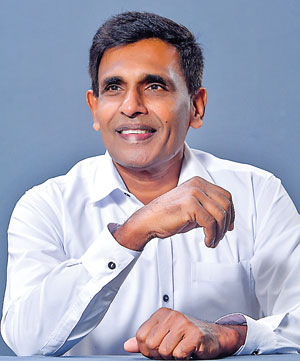
Public Security and Parliamentary Affairs Minister Ananda Wijepala

While it is now more than 100 days since Anura Kumara Dissanayake was elected president, it is less than two months since the new government was formed after the 2024 general election, Mr. Wijepala pointed out. “We never presented a 100-day programme. However, it has been mentioned in the media, in society, and even in Parliament, largely because previous governments highlighted such a benchmark in their programmes.”

He pointed out that the NPP won the election as a single party and didn’t need to make any promises to coalition partners since it was never a coalition. “Our accord is with the people. I would call it a bond. We have a responsibility to ensure that the hopes they had when they voted us into office are realised. We presented our vision to the people via our manifesto, ‘A Thriving Nation, A Beautiful Life.’ The people accepted this manifesto and elected us.”

A new political culture

While the NPP never presented a 100-day programme, it has nevertheless managed to affect several significant changes within the short period it has been in power, the minister pointed out. “For one, we have managed to change the political culture that prevailed in this country for the past 76 years,” he said.

“Politicians who were nurtured by this political culture never became people’s representatives who actually lived among the people. This is because the political class carried forward politics practised by the nobility. They did not do politics to make the lives of ordinary people better. They were in politics for themselves and enriched themselves and their families with the tools required to live a life that flaunted their nobility, from vehicles to bodyguards to luxury houses. That created a widening gap between the politicians and the people.”

Those who ruled the country in this manner eventually led it to bankruptcy, which was when the people decided to give power to a new group in the form of the NPP, said Mr. Wijepala. “We were able to change the old political culture within this short period and create those who are true people’s representatives in every sense of the word. They are not separate from the people. They live among them.”

Reducing rural poverty

With reducing rural poverty another main objective in President Dissanayake’s manifesto, the new government has already increased payments under the ‘Aswesuma’ welfare benefits scheme. It also recently announced an allowance of Rs. 6,000 for children from underprivileged families to buy school items and stationery. Given that there were accusations that the ‘Aswesuma’ scheme had not been fairly implemented and that many who qualified for Aswesuma benefits had been left out of the scheme, the government decided at the last Cabinet meeting to extend the Rs. 6,000 allowance to each child in government schools with less than 300 students, said Mr. Wijepala.

About 2.4 million out of about 5.7 million families in the country are still in poverty, being covered either by Aswesuma or the Samurdhi welfare schemes. As part of efforts to lift people out of poverty, the Rural Development, Social Security and Community Empowerment Ministry will soon launch a survey of families covered by these welfare schemes to collect information about the family members. Officials will look at aspects such as the qualifications and skills the father and mother possess, what sort of resources are available to them, the education level of their children, whether they have any vocational qualifications, etc. After conducting a thorough analysis of such factors, the officials will be tasked with devising a specific project for each household to help them out of poverty. The government will intervene to help them obtain capital to implement that project. It will also help them to find a market for their products so that they can obtain a good monthly income, the minister elaborated. “The hope is that the projects will succeed and eventually, they will move out of poverty and would no longer require welfare payments. We have already laid the foundation for this project.”

The government is also focused on developing the agricultural sector. “We have substantially increased the fertiliser subsidy from Rs. 15,000 per hectare to Rs. 25,000 per hectare. The ultimate objective is to make agriculture, which is currently a loss-making profession, into a profitable one. Several measures, such as developing seeds through seed production farms, agricultural mechanisation, and conducting more research are being planned to reach this objective.

Rule of law and the police

“We said to the people that the rule of law should be established. We cannot do that without extensive reforms to the criminal justice system,” said the minister. He added that most institutions in the system have become politicised and they must be made independent. With regard to the police, the government’s appointment of the present Acting Inspector General of Police (IGP) is part of efforts to ensure that independence, he said. Moreover, for the first time in history, the Director of the Criminal Investigation Department (CID) is a female officer. Mr. Wijepala said he believes several more female OICs will be appointed soon.

He acknowledged that though it is the police’s responsibility to maintain the rule of law, many criminal acts carried out by the underworld and linked to the illicit drug trade have also occurred even after the NPP government was elected to office. “We are not prepared to boast that we have managed to control these activities. However, we are making efforts to stem them. We have already instructed the Special Task Force (STF) to identify police divisions where a large number of underworld activities are taking place and implement an operational mechanism to thwart them.”

The police have been made independent at the senior levels. However, a lot of structural changes must still be made to turn the police into a truly independent department, the minister said.

He also revealed that the government plans to recruit 237 Tamil-speaking graduates to the police to serve in the north and east. A separate gazette will also be issued for the recruitment of police officers to serve in the north and east, he revealed. “The language barrier is a major obstacle for people in the north and east when interacting with police. We want to make these interactions cordial and easy. It is with this intention that we are planning to increase the number of Tamil-speaking officers in the region.”

As the Minister of Public Security who oversees the police, Mr. Wijepala said he is working hard to ensure that acts of corruption a minority of officers are involved in are stopped and the department as a whole becomes more efficient. “This can’t be done by enforcing laws alone. We need to provide police officers with better facilities and also give them other incentives to perform. There are things we can do to this effect, such as granting cash rewards and bonuses to officers who successfully complete investigations.”

There are other issues affecting police personnel that the government needs to resolve, including matters related to promotions, allowances, and uniforms, the minister noted. Some progress has already been made in certain instances, he observed, pointing out that the government last month settled arrears amounting to Rs. 3 billion for the payment of outstanding food and accommodation allowances of police officers.

Clean Sri Lanka

‘Clean Sri Lanka’ is a flagship project of President Dissanayake and his government. “The ‘Clean Sri Lanka’ project aims to clean the entire system that has decayed over the years. This includes a social, economic and political transformation. Among others, it is about creating a citizen devoid of corruption, having a clean environment, and rescuing children and future generations from the drug menace. As such, the Public Security Ministry has a major role to play in this project.”

Referring to the controversy associated with the removal of certain modifications and accessories from vehicles as part of the project, Mr. Wijepala stressed that the government’s aim is to create disciplined drivers and save lives that would otherwise be lost due to road accidents.

On average, seven fatal accidents occur daily in Sri Lanka, claiming 7-9 lives. Thanks to renewed efforts of the police, there have been some recent days where not a single fatal accident was recorded, the minister said. For example, not a single death was reported due to a road accident on Christmas Day.

Authorities are focused on removing unsafe modifications and accessories that could lead to accidents, he added. The government had initially given drivers until January 19 to remove such modifications, but this has now been changed to an awareness and education campaign lasting three months. This is to educate drivers on the need to remove such unsafe modifications and accessories from their vehicles. No legal action will be filed against anyone over the issue during these three months. “We believe that eventually, the drivers themselves will voluntarily remove any unsafe modifications or accessories,” Mr. Wijepala added.

Passport issue

The dire shortage of passports was a crisis the NPP inherited from the previous government but which it too has struggled to control. Mr. Wijepala, under whose purview the Department of Immigration and Emigration (DIE) remains, pointed out that the government has not been able to float another tender for the procurement of e-passports since the tender over the procurement of five million e-passports is currently being challenged in the Court of Appeal. The previous Cabinet had authorised the procurement of 750,000 machine-readable passports as a stopgap measure, with permission from the court. The current stock of passports is sufficient to last until September, the minister said.

From this week onwards, the number of passports issued on a daily basis has been increased from 1200 to 2500, he claimed. “We believe we will need a further 500,000 machine-readable passports, and we will call an open tender for that soon.”

Some 30,000 passports will be set aside for candidates sitting for the Korean language proficiency examination. A further 5,000 will be reserved for Sri Lankans residing overseas whose passports have expired. There is also a backlog of about 130,000 passports that are being cleared. Meanwhile, a special counter has been set aside at the DIE for those who need to obtain their passport urgently. For example, if a person has a job offer to take up in February but has been given a date in April to submit the application, he or she can go to this counter with relevant documents to obtain a passport before the travel date. “Though we haven’t solved the issue 100%, we have been able to manage it. We believe that it will be resolved soon,” the minister said.

Easter Sunday attack investigation

Investigations into the Easter Sunday attack have gone to a new phase since the NPP came to power. As part of this process, investigators hope to question Azad Maulana, a former aide to Tamil Makkal Viduthalai Pulikal (TMVP) leader Sivanesathurai Chandrakanthan, alias ‘Pillayan.’ Moulana was the main ‘whistleblower’ in a 2023 Channel 4 documentary about the attacks. The minister said the NPP government has given a pledge to Archbishop Malcolm Ranjith to fully investigate the attacks and will honour that promise. “Not just Catholics but all Sri Lankans need to know the truth behind this attack. Our objective is to find all those responsible and bring them to justice. The investigation is now proceeding very well. The public will be able to see the results for themselves soon.”

NPP and JVP

On the relationship between the NPP and the Janatha Vimukthi Peramuna (JVP), Mr. Wijepala described the JVP as the “nucleus” of the NPP. It was through the JVP that the NPP came into being. However, it is the NPP that has now formed a government after having contested under the compass symbol. “Many members of the JVP contributed immensely to this campaign, and many of them have now become ministers or MPs. There is no need to look at the NPP and the JVP separately. We have a vision, a plan, a programme and an objective. We are moving towards that objective. Some elements in the opposition are trying to make it seem as if there is a conflict between the NPP and JVP. This is false. We are working to fulfil the mandate given to us by the people.”

Rice shortage

The minister put down the shortage of rice and coconuts as a seasonal issue. “We can’t be blamed fully for such issues since we did not lay the foundation for creating them. Previous governments too imported rice. They gave away quotas to associates to import rice. This time, however, not a single rupee is going to anyone’s pocket. The rice is being imported at the lowest price, and we are being fully transparent about the process.”

He said the government plans to gradually move away from rice imports by making the country self-sufficient in rice. “To do that, however, we need to have at least a three-month buffer stock of rice.”

Local government elections

The government expects that the Election Commission will hold the long-delayed local government elections before the National New Year in April. Legislation paving the way to call for fresh nominations for the election and cancel the previous nomination lists has already been presented to Parliament. “There is no point in going by the previous lists anymore since some parties have splintered into factions. Some candidates have passed away while others have gone overseas. Moreover, some young people who would have been 16 and, as such, ineligible to contest at the time the previous nomination lists were submitted, have now turned 18, and there might be those among them who wish to contest the election,” the minister explained.

He expressed confidence that voters will once again back the NPP at the upcoming local polls as well, allowing the government to set up local government bodies, which will also play a crucial role in making the ‘Clean Sri Lanka’ programme a success.⍐

Ceasefire agreed, analysis shows what remains in Gaza

 Graphics

Ceasefire agreed, analysis shows what remains in Gaza

Negotiators reached a deal on Wednesday (15/01) for a ceasefire in the Gaza war between Israel and Hamas, after 15 months of conflict that has killed tens of thousands of Palestinians and inflamed the Middle East.

The deal, scheduled to be implemented from Sunday, (19/01) outlines a six-week initial ceasefire with the gradual withdrawal of Israeli forces from the Gaza Strip. Hostages taken by militant group Hamas, which controls the enclave, would be freed in exchange for Palestinian prisoners detained by Israel.

After more than a year of intense arial bombardment and a ground offensive by Israeli forces against Hamas militants, the toll on infrastructure within the Gaza Strip has been cataclysmic. According to an analysis of Copernicus Sentinel-1 satellite data, as much as 60% of all buildings in Gaza have been likely damaged or destroyed.


 The volume of rubble left behind is immense, and adding to the complexity of clearing it after the ceasefire is the large quantity of unexploded ordinance as well as risks from asbestos and other contaminants, especially in refugee camps, and the large number of bodies still lying in the rubble.

The World Health Organization said large amounts of dust released from destroyed buildings are releasing hazardous materials that float into the air or seep into water supplies, risking serious health problems for Gaza’s population.

Within the Gaza Strip, the highest concentration of destruction has been in the northern governorates of Gaza, an area Israeli forces ordered residents to flee in the first month of the conflict after encircling Gaza City, the enclave’s largest city before the conflict.

According to the analysis, as much as 70% of buildings in North Gaza and 74% in Gaza City are likely damaged or destroyed. Satellite images show widespread rubble and the ruins of structures in the area.

Satellite image: Sentinel-2 L2A, January 4, 2025.


With the planned ceasefire days away, violence in Gaza continued on Thursday. Israel airstrikes killed at least 70 people in Gaza overnight, residents and authorities in the enclave said, hours after the ceasefire deal was announced.

Correction

An earlier version of the leading Gaza Strip map included some small areas with damaged buildings that were not indicated to have them in the analysis. It has been corrected.

Sources

Damage analysis of Copernicus Sentinel-1 satellite data by Corey Scher of CUNY Graduate Center and Jamon Van Den Hoek of Oregon State University. Analysis includes damage between Oct. 12, 2023, and Jan. 11, 2025.

Edited by

Jon McClure

Has the United States Erred?

இரண்டாம் டிரம்ப் ஆட்சியின் உலக விவகாரக் கொள்கை- (வீடியோ ஆங்கிலம்)


Defending Taiwan 'critical,' says Rubio at U.S. Senate hearing

Washington, Jan. 15 (CNA) Senator Marco Rubio, U.S. President-elect Donald Trump's pick for secretary of state, said during his Senate nomination hearing on Wednesday that defending Taiwan against China was "critical" for the United States.

"We reject any effort to coerce, intimidate and or forcibly drive Taiwan to do whatever China wants them to do," Rubio told the Senate Foreign Relations Committee, which expressed bi-partisan support for his nomination.

The Republican Senator from Florida since 2011 is on track to become his country's top diplomat as leader of the U.S. State Department under Trump's second administration, which is set to formally start on Monday.

At the Senate hearing, Rubio said that China needs to "stop messing around with Taiwan" and vowed to continue the United States' "one China" policy, which he said had been "consistent and reaffirmed by every administration since 1979."

According to the presumptive nominee for secretary of state, the U.S.' China policy, based on the Taiwan Relations Act and the Six Assurances, means that Washington would "make no commitment to not helping" Taiwan defend itself and would not "force any outcomes."

"We're not going to pressure Taiwan in any arrangement," he said.

Referring to Beijing's efforts to isolate Taiwan from the international community, Rubio also said it was "important" for the United States to enable Taiwan's involvement in global forums "irrespective" of China's claims over Taiwan.

Rubio expressed his strong support for Taiwan to apply a "porcupine strategy" and suggested that making "the cost of invading Taiwan higher than the benefit" could deter Chinese aggression.

During the nomination hearing that lasted around four hours, Rubio promised to uphold the "unmistakable mandate" from the U.S. electorate for a "strong America" that was "engaged with the world."

In interactions with senators that centered on Washington's relationship with Beijing, Rubio called China "the most potent and dangerous near-peer adversary this nation has ever confronted" and "the threat that will define this century."

Presiding over the nomination hearing, Senate Foreign Relations Committee Chairman Jim Risch said that China was "the most significant long-term risk to the United States" and that Washington must work with its allies in Asia, including Taiwan, "to boost their military spending and bolster their ability to deter China."

After his nomination formally clears the Senate floor, Rubio will replace Antony Blinken as head of the U.S. State Department, which manages the superpower's foreign relations.

The son of Cuban immigrants, the 53-year-old Miami-born senator has consistently voiced opposition to communism and supported policies to counter China, which claims Taiwan as a part of its territory despite having never ruled the island.⍐

(By James Thompson and Chung Yu-chen) Enditem/ASG

Taiwan's 2025 economic growth forecast at 3.22% amid Trump presidency uncertainty

Taiwan's 2025 economic growth forecast at 3.22% amid Trump presidency uncertainty

01/16/2025 Forcus Taiwan


Chung-Hua Institution Economic Research (CIER) members.
(Photo: Rti)


Taipei, Jan. 16 (CNA) Taiwan's economy is expected to grow 3.22 percent in 2025, according to the Chung-Hua Institution for Economic Research's (CIER) forecast released Thursday.

The institution's forecast was lower than its estimate of 4.3 percent growth for 2024, due to a higher base and rising global economic uncertainty, said CIER, one of Taiwan's leading think tanks. Final figures for 2024 have not yet been released.

At the 2025 Economic Outlook Forum held by the institution, CIER said one of the biggest uncertainties is U.S. President-elect Donald Trump's policies.

CIER President Lien Hsien-ming (連賢明) said there were four main things to look out for in terms of tariffs. 

  1. The first is whether they are launched immediately, as Trump previously claimed.
  2. The second is whether the full tariffs will be implemented immediately or gradually increased; 
  3. and the third is whether the tariffs will be universal or differ among countries.
  4. Lastly, as Taiwan's exports are primarily in information technology and largely tax-exempt, it will be crucial to monitor whether Trump decides to impose taxes on them, Lien said.

Despite the uncertainty, CIER was cautiously optimistic about Taiwan's economic outlook and said the 3.22 percent growth will come from both increasing overseas trade and demand in the domestic market.

Product and service exports are predicted to grow 5.56 percent, with private investments expected to rise 4.71 percent.

As for inflation, CIER predicted the consumer price index (CPI) to be 1.93 percent in 2025, lower than the 2 percent alert -- as long as utility rates do not increase.

Hsu Chien-ting (徐千婷), chief economist of Taiwan Cooperative Financial Holding Co., Ltd., said artificial intelligence (AI) will still be the dominant trend.

As Taiwan is the "core of the core" of AI, demand will lead to investments and exports, bolstering Taiwan's economy, she said.

On that note, CIER pointed out that the U.S. has been restricting exports of products like AI chips, and while Taiwan's chips are not restricted, exports to countries that are may be impacted.

On the other hand, other products relevant to AI and high-performance computing (HPC) face increasing demand and exports are expected to continue growing, CIER added.

Meanwhile, Lin Chi-chao (林啟超), chief economist at Cathay United Bank, said Trump is waging a "technology war" under the guise of a tariff war to create a gap between U.S. and Chinese technology.

The U.S. has already started trade investigations into China's mature process chips, due to global concern that China's production capacity for these chips could increase significantly, posing a serious challenge to production in other countries, Lin said.⍐

(By Pan Tzu-yu and Wu Kuan-hsien) Enditem/kb

AKD Govt. reaffirms Sri Lanka’s ‘One China Policy’


By  KEN MORITSUGU and BHARATHA MALLAWARACHI
Updated 12:45 PM GMT, January 15, 2025

BEIJING (AP) — Sri Lanka and China signed a series of cooperation agreements on Wednesday following talks between their leaders, one month after Sri Lankan President Anura Kumara Dissanayake made India his first overseas trip since winning election last September.

The support of the two regional powerhouses — and rivals — is crucial for Sri Lanka to emerge from its worst economic crisis in decades, which led to political upheaval and paved the way for Dissanayake to come to power.

China was once seen as having the upper hand in Sri Lanka through its huge loans and infrastructure investments. While China remains the country’s largest bilateral lender, Sri Lanka’s economic collapse provided an opening for India, which stepped in with massive financial and material assistance including food, fuel and medicines.

Chinese leader Xi Jinping, in opening remarks to Dissanayake, said that relations between their countries are at a historical juncture.

“I am willing to work with you, Mr. President, to chart a new vision for the development of bilateral relations and promote new and greater achievements in China-Sri Lanka friendly cooperation,” Xi said.

Sri Lanka borrowed heavily from China over the past decade for projects including a shipping port, airport and a city being built on reclaimed land. The projects failed to earn enough revenue to pay off the loans, and Sri Lanka leased the port in Hambantota to a state-owned Chinese company in 2017.

Dissanayake said China remains a key partner that has supported important development under its Belt and Road Initiative, a signature policy of Xi to construct roads, ports, power plants and other infrastructure overseas. The initiative has helped China deepen its ties in much of the developing world.

For years, China has been trying to expand its influence in Sri Lanka, an island off India’s southeast coast that the government in New Delhi considers part of its strategic backyard. The Indian navy launched a submarine and two warships at a state-run shipyard on Wednesday with an eye on China’s presence in the Indian Ocean.

Marxist-leaning Dissanayake’s visit to the Chinese capital can be seen as an effort to navigate the rivalry between India and China, which his party traditionally has leaned toward.

In New Delhi last month, Dissanayake met Prime Minister Narendra Modi and said he would not allow Sri Lanka to be used in “a manner that is detrimental to the interest of India.”

The agreements between Sri Lanka and China covered a range of areas, including economic and technological development, health inspections for food imports and TV broadcasting and other media cooperation.

Sri Lanka declared bankruptcy in April 2022 and suspended payments on $83 billion in domestic and foreign loans as a foreign exchange crisis led to severe shortages of food, medicine, fuel and cooking gas, along with hourslong power cuts.

China’s support is vital for Sri Lanka to restructure its external debt. China accounts for about 10% of Sri Lanka’s loans, more than Japan or the Asian Development Bank.

The country’s crisis was largely the result of economic mismanagement combined with the COVID-19 pandemic, which along with terrorist attacks in 2019 devastated its tourism industry. The pandemic also disrupted the flow of money sent home by Sri Lankans working abroad.

--------------------


சீனப் பயணத்துக்கு ஒரு வாரம் முன் அநுரா ஆட்சி முடிவெடுத்து அறிவித்த விடயங்கள்:

‘Taiwan is only a province of China,’ affirms Sri Lanka


The cabinet reaffirmed Colombo's commitment to the 'One China Policy' ahead of  Dissanayake's visit to Beijing

Jan 8, 2025 Tamil Guardian

The Sri Lankan government re-affirmed its support for the ‘One China Policy’ in a cabinet decision this week, ahead of Sri Lankan president Anura Kumara Dissanayake’s visit to China next week.

Sri Lanka’s cabinet agreed to the proposal put forward by foreign affairs minister Vijitha Herath to continue abiding by the policy, a move thought to be a gesture that will strengthen bilateral ties between Beijing and Colombo.

“It is accepted that legitimate China is only the People’s Republic of China and, Thaiwan is only a province of China,” read the Sri Lankan decision.

In addition, the cabinet approved signing a Memorandum of Understanding (MoU) between the China Media Group and the Sri Lanka Tourism Promotion Bureau (SLTPB).

Cabinet Spokesman and Minister Dr. Nalinda Jayatissa said it was one of multiple MoUs between Sri Lankan and Chinese institutions that were approved* this week.

These include; 

1) MoU between the Health and Mass Media Ministry and the National Radio and Television Administration (NRTA) of the People’s Republic of China
2) MoU between the Associated Newspapers Ceylon Ltd., and Xinhua News Agency of China
3) Memorandum of Cooperation between the Department of Government Information and Xinhua News Agency of China
4) MoU between Sri Lanka Rupavahini Corporation and China Media Group
5) MoU between Sri Lanka Broadcasting Corporation and China Media Group

Cabinet Spokesman
and Minister
Dr. Nalinda Jayatissa


AKD Govt. reaffirms Sri Lanka’s ‘One China Policy’*

  • Cabinet green lights multiple key agreements with China including boosting tourism and export of chicken meat from Sri Lanka
Wednesday, 8 January 2025 Daily FT

Sri Lanka this week reiterated commitment to the ‘One China Policy’, whilst Cabinet of Ministers approved a series of new agreements with China.

The Cabinet of Ministers on Monday approved the continuation of ‘One China Policy’ recognition of the People’s Republic of China as the sole legitimate Government of China and acknowledging Taiwan is only a province of China.

The fact furnished by the Foreign Affairs, Foreign Employment and Tourism Minister Vijitha Herath indicating that Sri Lanka further follows the same policy as it is and act adhering to the same was approved by the Cabinet of Ministers.

In addition, as part of strengthening bilateral relations, the Cabinet of Ministers approved signing a Memorandum of Understanding (MoU) between the China Media Group and the Sri Lanka Tourism Promotion Bureau (SLTPB).

Cabinet Spokesman and Minister Dr. Nalinda Jayatissa yesterday announcing the decisions said the move aims to elevate Sri Lanka as a premier tourist destination for Chinese tourists by leveraging modern technology and expertise of the China Media Group.

Speaking at the weekly post-Cabinet meeting media briefing, he said additionally the Cabinet endorsed a proposal to facilitate the export of chicken from Sri Lanka to China. 

“The agreement drafted in collaboration with China’s General Administration of Customs, outlines health requirements and quarantine procedures to ensure compliance with export standards,” Dr. Jayatissa said.

The proposal to this effect submitted by Agriculture, Livestock, Land and Irrigation Minister Lal Kantha to sign the said agreement between the General Administration of Customs of the People’s Republic of China and the Ministry was unanimously approved by the Cabinet of Ministers on Monday.

In humanitarian efforts, Dr. Jayatissa stated that the Chinese Government has provided emergency aid worth 35.7 million Yuan to support small-scale fishermen in Northern and Eastern Provinces and the Cabinet of Ministers formally certify this aid and further enhance cooperation in the sector.

The assistance includes 75,000 fisheries nets for small scale and low income generating fishermen, 500 precast houses for small scale and low income generating fishermen and 1,630 tons of rice for small scale and low income generating fishermen.

In addition, Dr. Jayatissa said Cabinet granted approval for multiple MoUs between Sri Lankan and Chinese institutions to foster collaboration in health, media and information sectors.

These include; 1) MoU between the Health and Mass Media Ministry and the National Radio and Television Administration (NRTA) of the People’s Republic of China, 2) MoU between the Associated Newspapers Ceylon Ltd., and Xinhua News Agency of China, 3) Memorandum of Cooperation between the Department of Government Information and Xinhua News Agency of China, 4) MoU between Sri Lanka Rupavahini Corporation and China Media Group and 5) MoU between Sri Lanka Broadcasting Corporation and China Media Group.

The proposal to this effect submitted by Health and Mass Media Minister Dr. Jayatissa said the pact aims to enhance knowledge exchange and technical expertise.⍐

Wednesday, January 15, 2025

Xi holds talks with Sri Lankan President in Beijing


Xi holds talks with Sri Lankan President in Beijing

By Deng Xiaoci, Shen Sheng and Zhang Yuying Published: Jan 15, 2025 

China will actively support Sri Lanka in focusing on economic development and the two countries should jointly foster new highlights in high-quality Belt and Road cooperation, as well as cooperation in modern agriculture, digital economy and marine economy, Chinese President Xi Jinping said Wednesday, Xinhua News Agency reported.

China's efforts in further deepening reform comprehensively to advance Chinese modernization will bring new opportunities for Sri Lanka's development, Xi said when holding talks with Sri Lankan President Anura Kumara Dissanayake, who is in China for a state visit.

Noting that China and Sri Lanka enjoy a traditional friendship, Xi said bilateral relations have maintained healthy and stable development over the past 68 years, setting an example of friendly coexistence and mutually beneficial cooperation between different countries.

With joint efforts, China and Sri Lanka have continuously promoted strategic cooperative partnership featuring mutual assistance and ever-lasting friendship. High-quality Belt and Road cooperation and cooperation in various fields have achieved fruitful results, bringing tangible benefits to the two peoples, Xi said.

The two countries should have a keen grasp of bilateral relations from a strategic perspective and jointly build a China-Sri Lanka community with a shared future, he said.

Dissanayake kicked off a four-day state visit to China on Tuesday, according to Sri Lanka local media Sunday Times. This marks the leader's first visit to China after taking office. 

China and Sri Lanka have long been each other's friend and close neighbor. Since our two countries established diplomatic ties in 1957, the bilateral relationship has stood the test of the changing international landscape, always maintained sound and steady growth, and set up a fine example of friendly relations and mutually beneficial cooperation between countries different in size, Chinese Foreign Ministry spokesperson Guo Jiakun briefed on January 10. 

China stands ready to work with Sri Lanka through the upcoming visit to carry forward our time-honored friendship, deepen political mutual trust, and expand high-quality Belt and Road cooperation and practical cooperation in various fields for continuous new progress in advancing the China-Sri Lanka strategic cooperative partnership featuring sincerity, mutual support and ever-lasting friendship as well as more benefit for the two peoples, the spokesperson also said. 

'New heights' for ties  

Luo Zhaohui, Director of the China International Development Cooperation Agency, and  Vijitha Herath, Minister of Foreign Affairs, Foreign Employment and Tourism of Sri Lanka, signed on Wednesday several cooperation documents, including intergovernmental economic and technical cooperation agreement, and MoU on strengthening cooperation in social and livelihood development.

Sri Lankan president's visit will undoubtedly further promote bilateral exchanges and policy coordination between China and Sri Lanka, laying a crucial foundation for future cooperation and the high-quality development of the Belt and Road Initiative (BRI), Long Xingchun, a professor from the School of International Relations at Sichuan International Studies University, told the Global Times.

After his election victory last year, Dissanayake's visit to China is his second foreign trip and his first visit to China. This visit can be seen as a continuation and deepening of the cooperation results achieved by previous governments, aiming to further elevate the China-Sri Lanka partnership to new heights, Qian Feng, director of the research department at the National Strategy Institute at Tsinghua University, told the Global Times.

Sri Lanka was one of the first countries to join the BRI, and the cooperation in infrastructure has greatly enhanced Sri Lanka's domestic infrastructure in the country, Qian said.

Sri Lanka is an important BRI partner country. Over the past decade, China has undertaken landmark projects in Sri Lanka, including Colombo Port City, Hambantota Port, highways, power plants and water conservancy infrastructure. These projects have significantly improved Sri Lanka's infrastructure, laying a solid foundation for its economic development.

Dissanayake took office when Sri Lanka faced grave economic difficulties. Tasks such as addressing external challenges, economic development, job creation and increasing fiscal revenue cannot be accomplished without cooperation with China as a major power. Therefore, cooperation under the BRI has become an increasingly important engine for the development of bilateral relations, injecting much-needed momentum for the South Asian country, Long said. 

China's growing influence in South Asian and Indian Ocean countries such as Sri Lanka is an inevitable outcome of global economic development and globalization. As sovereign nations, countries in South Asia need to develop diplomatic relations with various countries, including China, India, Japan and the US. The rise of China's influence in the region is a natural result of nations in the region expanding their relationships, Long noted.

Inevitable development 

Indian news outlet Firstpost in a lengthy article published on Wednesday wrote that "amid the growing Chinese influence in Sri Lanka, India has emerged as a strong counterbalance."  The Indian media's report accused that China's "aggressive economic tactics" will bring "critical implications for Sri Lanka's sovereignty and the stability of the broader region." 

Experts pointed out that India's wariness of China's presence in the Indian Ocean primarily stems from New Delhi's narrow geopolitical perspective where India views South Asia as its own sphere of influence and does not respect other countries' rights to develop friendly and cooperative relations with China. 

In an era of globalization, cooperation between South Asian and Indian Ocean countries and China is inevitable and beneficial to India as well. If India cannot move beyond its narrow geopolitical thinking, it will be difficult to advance the development of South Asia, Long said. 

"Sri Lanka and China have close economic, diplomatic and cultural exchanges," said Ruwan Ranasinghe, deputy minister of the Ministry of Foreign Affairs, Foreign Employment and Tourism of Sri Lanka in a recent interview with Xinhua, stressing that high-quality Belt and Road cooperation and major projects between the two countries such as the Colombo Port City and Hambantota Port have provided important impetus for Sri Lanka's economic recovery and showcased a strong junction between the two sides."⍐ 

Qatar announces Gaza ceasefire

Qatar announces Gaza ceasefire

January 15, 2025 | 7:18 PM GMT

Mohammed bin Abdulrahman Al Thani, Qatar’s prime minister and foreign affairs minister, spoke on Jan. 15, as Israel and Hamas agreed to a ceasefire.

       Israel and Hamas agree to ceasefire deal, including hostage release, Biden says

A hostage and ceasefire deal between Hamas and Israel has been reached Wednesday following more than 15 months of extraordinary bloodshed and violence in Gaza, President Joe Biden said Wednesday. Implementation of the agreement is to start on Sunday, Qatari Prime Minister Mohammed bin Abdulrahman Al Thani said at a news conference announcing the deal in Doha, the Qatari capital, where intense negotiations have taken place over the past several weeks.


The agreement, which requires ratification by a vote of Israel’s cabinet, follows an intense period of meetings and calls over the past several days, including by Biden to the leaders of Israel and mediating partners Qatar and Egypt. Steve Witkoff, President-elect Donald Trump’s special envoy to the Middle East, has also played an instrumental role, meeting with Israeli Prime Minister Benjamin Netanyahu over the weekend to express Trump’s interest in attaining a deal before his inauguration on Monday.


காலநிலை அறிவிப்பு-பேராசிரியர் நா.பிரதீபராஜா

https://www.facebook.com/Piratheeparajah 03.12.2025 புதன்கிழமை பிற்பகல் 3.30 மணி விழிப்பூட்டும் முன்னறிவிப்பு இன்று வடக்கு மற்றும் கிழக்கு ம...