
Sunday, April 19, 2015

Saturday, April 18, 2015
Mahinda Rajapaksa prepares for political comeback!

Mahinda Rajapaksa prepares for political comeback in Sri Lanka
Former president who suffered surprise election defeat in January plans to stand in parliamentary polls, aides sayMahinda Rajapaksa, the former president of Sri Lanka, is planning to stand in parliamentary polls to launch an attempt to return to power, aides have said.
The veteran politician, who suffered a surprise defeat in snap presidential polls he called in January this year, has been taking a break from politics and has yet to formally declare any campaign.
However, he has been meeting hundreds of supporters who visit his residence in the town of Hambantota, and travelling widely around Sri Lanka to see elected members of local and municipal authorities.
“You wait and see,” Rajapaksa said, when asked last week if he was a spent force. “I am yet to take a decision on CONTESTING, but if people request me, I can’t refuse.”
The victory of Maithripala Sirisena by six percentage points in a runoff vote on 8 January was welcomed by India and western nations including the US. Analysts had described the election as the most significant in the country for decades and a last chance for democracy.
Rajapaksa came to power in 2005, led the military to a bloody victory over violent separatists from the Tamil minority four years later and surfed a wave of popularity among the Sinhala majority TO WIN again in 2010. He then had the constitution changed to allow the third term he hoped to win in January’s poll.
However, allegations of corruption, violent intimidation of political opponents, attacks on journalists, growing resentment among Tamils and mounting sectarian violence led to concern at home and abroad.
Rajapaksa’s aides say that soon after the surprise defeat he was downcast. But they say he “picked up fast when he saw people coming to see him”.
“When he saw that he still had that following, he was back to his old self,” said one friend, whose relationship with Rajapaksa goes back more than 18 years.
Observers point out that Rajapaksa remains popular among his core Sinhala, rural, conservative Buddhist support base. He is also acknowledged to be an effective campaigner, working a crowd with avuncular ease.
“He wants the government to feel that he is its main threat, and he has succeeded in doing that. There is no opposition without Rajapaksa right now,” an aide said.
Three rallies have been organised in different parts of Sri Lanka to call for the ousted president to CONTEST the parliamentary polls.
Rajapaksa has blamed his defeat on a conspiracy involving Indian and western intelligence agencies.
The first step to a return to power would involve getting a nomination from his own Sri Lanka Freedom party (SLFP) to stand in parliamentary polls expected in June. The former president told the Guardian he was confident he would be wanted as a candidate.
“I am SLFPer, I have been a SLFPer all my life. Why should the party refuse me nominations? I plan to CONTEST from the SLFP. The fact that I am a SLFPer can not be ignored,” he said.
An alternative might be to join another party that appeals to his support base. “Rajapaksa will come from a platform that will CONTEST on a Sinhala nationalist agenda. That is where his power base is, these are the voters that never deserted him,” the aide said.
This will raise fears of increased tensions in what is an already polarised nation. Votes from the Tamil-dominated former warzone in the country’s north and from areas with large Muslim communities played a key role in Rajapaksa’s defeat. According to one report, Sirisena got nearly three-quarters of the vote in the Tamil stronghold of Kilinochchi.
In a speech this week, the new president called for unity. “Throughout history our strength as a nation has come from the mutual understanding and co-existence that made us rise together to defend our motherland,” Sirisena said.
However, Sirisena and the prime minister, Ranil Wickremesinghe, a veteran of Sri Lanka’s convoluted and bitter politics, face significant challenges. One problem is the instability of the ruling coalition. Essentially united only by a desire to oust Rajapaksa, the government needs to consolidate its hold in the national assembly at the coming elections.
Sirisena is trying to rebalance executive power by reinforcing Sri Lanka’s judiciary and parliament, while stripping the president’s office of the extensive powers accumulated under Rajapaksa. However, this will need new legislation and possibly a referendum.
There are also deep economic problems and the bruises of the 26-year war are still livid. In the closing phases of the conflict, thousands of Tamil civilians were killed in army bombardments and confused fighting with separatist extremists from the Liberation Tigers of Tamil Eelam (LTTE).
According to Wickremasinghe, there are still more than 200 detainees loosely categorised as political prisoners in Sri Lankan jails.
Paikiasothy Saravanamuttu, executive director of the Centre for Policy Alternatives, a Colombo-based think tank, said any decline in the new government’s popularity would open an opportunity for a comeback by the ousted president.
“As long as the government’s popularity keeps eroding, Rajapaksa becomes a factor, he becomes an obvious choice for disgruntled voters, especially from the majority Sinhala community,” he said.
Rajapaksa’s aide said the former president was in no hurry to mount his comeback bid. “He knows how to wait, he waited 35 years before he showed anyone he had presidential ambitions. Now he will wait till this government makes its moves,” he said.
Thursday, April 16, 2015
ஆந்திர நிர்வாகத்தின் தமிழ்த் தொழிலாளர் படுகொலை- கோரப் புகைப்படக் காட்சிகள்


புகைப்படங்கள் நன்றி: இனந்தெரியாதோருக்கு ENB
ஆந்திர அரசின் தமிழகக் கூலித் தொழிலாளர் படுகொலையை எதிர்த்து கழகம் கண்டன ஆர்ப்பாட்டம்!
தமிழகத்தைச் சேர்ந்த தொழிலாளர்கள் ஆந்திராவில் செம்மரம் வெட்டுகிறார்கள் என்று கூறி நூற்றுக்கணக்கானோரை ஆந்திரா போலீஸ் கைது செய்து சிறையில் அடைத்து வருகிறது. இந்நிலையில் இம்மாதம் 8ஆம் திகதியன்று ஆந்திராவின் சித்தூர் மாவட்டம் ஸ்ரீவாரிமெட்டு வனப்பகுதியில் உள்ள ஸ்ரீநிவாசமங்காபுரத்தில் தமிழக தொழிலாளர்கள் 200 பேர் செம்மரம் வெட்டுவதாக கூறி டிஐஜி காந்தராவ் தலைமையிலான `செம்மரக் கடத்தல் தடுப்புப் பிரிவு போலீசார்` அன்று காலை தேடுதல் நடவடிக்கை மேற்கொண்டனர். அப்போது தமிழக கூலித் தொழிலாளர்கள் மீது கண்மூடித்தனமாக துப்பாக்கிச் சூடு நடத்தி 20 தமிழ்த் தொழிலாளர்களைப் படுகொலை செய்துள்ளனர். மேலும் பல தொழிலாளர்கள் படுகாயமடைந்த நிலையில் மருத்துவமனைகளில் சேர்க்கப்பட்டுள்ளனர்.
இப்படு பாதகக் கொலையில் பலியானோர் தமிழகத்தின் திருவண்ணாமலை மற்றும் வேலூர் மாவட்டங்களைச் சேர்ந்தவர்கள் ஆவர்.

மக்கள் ஜனநாயக இளைஞர் கழகம் கண்டன ஆர்ப்பாட்டம்

===================================================================
இப்படு பாதகக் கொலையில் பலியானோர் தமிழகத்தின் திருவண்ணாமலை மற்றும் வேலூர் மாவட்டங்களைச் சேர்ந்தவர்கள் ஆவர்.
இப்படுகொலை மிகக் கொடூரமான முறையில் நடத்தப்பட்டதற்கான ஆதாரங்கள் உள்ளன.மிக நெருக்கத்தில் வைத்து தானியங்கித் துப்பாக்கிகளால் ஆந்திர போலீஸார் சுட்டுள்ளதாக கூறப்படுகிறது.பலருக்கு நெற்றியில் குண்டு பாய்ந்துள்ளதாகவும் கூறப்படுகிறது

மக்கள் ஜனநாயக இளைஞர் கழகம் கண்டன ஆர்ப்பாட்டம்
ஆந்திர மாநில நிர்வாகத்தின் இந்த அடக்குமுறையை எதிர்த்து கழக முழக்கம் ஏந்திய பதாகை.

===================================================================
20 தமிழ்த் தொழிலாளர்கள் படுகொலையை கண்டித்து
மக்கள் ஜனநாயக இளைஞர் கழகம்
கண்டன ஆர்ப்பாட்டம் !
==============================================
ஆரூர் வட்டாட்சியர் அலுவலகம் எதிரில் ,ரௌண்டன பேருந்து நிறுத்தம் .
நாள் :20/04/2015 திங்கள் மாலை 4.00 p.m.
தலைமை : தோழர் ஞானம் மாநில அமைப்பளர் ம ஜ இ க .
சிறப்புரை : தோழர் மனோகரன் ம ஜ இ க சென்னை
நன்றியுரை ; தோழர் .மயகண்ணன்
தருமபுரி கிருஷ்ணகிரி மாவட்ட ம ஜ இ க அமைப்பாளர்.
=======================================================================
Chinese Naval Ships to Use Pakistan's Port After Colombo Snub
 |
| Colombo Port |
World | Press Trust of India | Updated: April 15, 2015 23:27 IST
BEIJING: Pakistan's Gwadar port which has been taken over by a Chinese firm could guarantee maintenance and supply for China's naval ships in the Indian Ocean after the new Sri Lankan government declined permission for Chinese vessels to dock in the country.
"The Gwadar port will also guarantee China's naval ships' maintenance and supply in the Indian Ocean. The move is widely seen as crucial for China, especially as it is unlikely that Sri Lanka will open its ports to Chinese naval ships," Zhao Gancheng, director of South Asia Studies at Shanghai Institute for International Studies told state-run Global Times.
The new Sri Lankan government headed by President Maithripala Srisena reversed his predecessor Mahinda Rajapaksa's policy of allowing Chinese submarines to dock in Colombo, following India's concerns.
Zhao said the port will serve as a major route to the Indian Ocean for Chinese goods, which will have far-reaching significance for China's Xinjiang region's economic development.
Xinjiang is planned to be connected through an economic corridor with Gwadar through Pakistan-occupied Kashmir (PoK).
Chinese experts however warned of inherent risks about the project in view of militancy in the Balochistan region.
Experts cautioned about obstacles as the port area suffers from a lack of water resources, housing, transportation and other facilities to provide for a large workforce, the Global Times reported.
Wang Dehua, an expert with the Shanghai Municipal Center for International Studies, who has been visiting Gwadar Port since 2007, said that detailed plans on building highways, railways and pipelines are the second step.
"Building such infrastructure has inherent risks and difficulties, he said, due to the high mountain ranges and security issues caused by militants operating in the region.
These difficulties can be overcome, but may take time," he said.
The port will formally commence operations by a Chinese company this month which is projected as a key transportation hub of the planned China-Pakistan Economic Corridor.
Story First Published: April 15, 2015 - NDTV
US checkmates China with Modi and Sirisena
Ceylon today, 2015-04-16
US checkmates China with Modi and Sirisena
The government has used the US to influence the UN to postpone the probe report's publication until September, a mere 150 days away. The report will be made public irrespective of whether the government initiates its own domestic probe on par with global standards which meet UN specifications. Despite all the ballyhoo, MR knows that the west and Sirisena and company will in the final essay allow the UN to throw the BOOK at MR come September. Besides the anti-west foreign policy issue that created the conditions for the birth of the MS faction and MR's ouster from power, MR's survival, as he see it, leaves him no option but to wrest power by hook or by crook to be in power again as the ONLY OPTION available to him to ensure that he can call the cards when the UN report is made public. In MR's mind, he will concede that Sirisena is unlikely to anger the electorate by throwing him to the wolves. It could ricochet badly on him at election time.
The government has used the US to influence the UN to postpone the probe report's publication until September, a mere 150 days away. The report will be made public irrespective of whether the government initiates its own domestic probe on par with global standards which meet UN specifications. Despite all the ballyhoo, MR knows that the west and Sirisena and company will in the final essay allow the UN to throw the book at MR come September. Besides the anti-west foreign policy issue that created the conditions for the birth of the MS faction and MR's ouster from power, MR's survival, as he see it, leaves him no option but to wrest power by hook or by crook to be in power again as the only option available to him to ensure that he can call the cards when the UN report is made public. In MR's mind, he will concede that Sirisena is unlikely to anger the electorate by throwing him to the wolves. It could ricochet badly on him at election time.
MS persuaded the US to get the report postponed for no other reason than this. All he has to do to signal the UN to publish the report is to have Mangala Samaraweera take a call to the US. I am not brave enough to hazard a guess as to whether or not he can DEAL with the social pejoration it will generate. It can undo the steady inroads he is making into the hearts of the electorate that he is carefully cultivating.
There are unspoken fears known to Sirisena and Ranil who naturally would not want negative and highly disturbing details coming out in a UN probe. This is one of the main undercurrents inexorably pushing MR to make a bid for power again and equally powerfully pushing Sirisena to delay the probe report because it would lead to a huge groundswell of sympathy for MR that could translate into a massive vote for him as Premier in the general election. On the flip side, properly handled, the release of the report could be so manipulated. And timed that it could cast MR in very bad light and swing voter fervour against MR. Sirisena could be playing for time for that purpose and till then hold the domestic probe in abeyance. All I'm saying is that these are the factors which impact on the motives which drive MR, MS and Ranil to seek power at the coming general elections. The US and India would not want the report out for the same reason, while China will not trust Sirisena either way. All else in between with Sirisena will be aimed at gauging out how deep his link with the west goes before they make a decisive policy decision about him.
UN probe report
These facets in the background are what drive MR to want power again so that he has control if and when the UN probe report is released. It's imperative and that is why he has mounted a strong bid to return to power. He simply can't have CBK-Ranil-Sirisena handling a probe any less than he can afford to have the UN throw a probe report in his face. MR knows he now has to come out as a candidate of a new party and a coalition led by him. That's why I said the battle lines are drawn. They were drawn before the UPFA's 'MR FOR PM' demand was launched.
The Congress led administration's approach, that had none of Modi's stance, was seen by the west to be weak in the face of a China that was swiftly consolidating its hold in the Indian Ocean region via its ever increasing footprints all over Sri Lanka and more ominously, offshore too and in the Maldives. Under MR Sri Lanka was quickly becoming a Chinese satellite or slave State. Trends in India and Sri Lanka had to be arrested and reversed fast.
Modi's willingness to smile and shake China by the hand must never be interpreted to mean that he's forgotten what's between the lines in the India-US military/defence agreement. Such agreements are put in place and are primed to be ACTIVATED at a moment's notice when perceived military threats from a potential enemy force show signs of metamorphosing into rapid deployment forces, jets and submarines literally where your fishermen are fishing. Those Indian fishing trawlers, I can assure you, are doing a heck of a lot more than fishing. A trawler with anti-asdic technology on board can spot a sub, especially a nuclear sub, more than five kilometres away. When an Indian Admiral, a few years ago, took a speed boat ride around Trincomalee Harbour, shortly after explosions ripped out a secret truck load of Chinese explosives in Trincomalee, flattening the Police Station and killing some people, his experienced eye was looking for evidence even back then of Chinese subs deep down in the harbour... WHY? Compelling reasons why Modi's India will back the CBK/Sirisena/Ranil trio to the hilt!
All this puts the last presidential election and today's developments into some sort of logical perspective. We then understand better why Sirisena is playing for time before he and CBK are reasonably sure of victory before calling a general election. The MR UPFA faction can bay all day to the moon, but Sirisena will not call a general election until he is sure the electorate has swung away from MR to the new look SLFP. A revamped Central Committee and islandwide elections organizational structure has also to be in place before he calls a general election. The cleansing out of the CC has run into some flak, but the President seems to be able to respond in a manner that shows he has anticipated these minor hiccups and has contingency plans to retain his growing stranglehold on the emerging new SLFP. No matter what wishful thinkers contend, I find it difficult to see the sacked CC members making, at best, a temporary come back to the CBK/SIRISENA SLFP.
Split in SLFP
Changes in the SLFP 'administered' by Sirisena merely prove my prediction in last week's analysis of a huge split in the SLFP. What Sirisena and CBK are trying to do is to control that split to ensure that they inherit the biggest piece of the SLFP mirror when its shattered pieces fall apart. The vote on the CB Governor's issue proved tha I would not be surprised to see President MS tear up the 100-day programme, and postpone the dissolution of Parliament for June next year, consolidate in the electorate, precipitate the split on the SLFP, have Ranil make more inroads into floating votes and then call a general election. A split SLFP faction in Parliament backed by its leftist riot squad of Vasu, Wimal, Dinesh, Tissa Vitharana et all can at best rouse the rabble in some electorates to create riots here and there in desperate death struggles. Sirisena has been cheek by jowl with these characters in Parliament for decades. He knows what to expect and, I suspect, is more than a match for rabble rousers. And of course we all know who FINANCES these elements. And we also know that India wants the Port City Project out.
The scenario then seems poised to turn very ugly, very soon. Given the known qualities of the antagonists, one looks objectively at the unfolding realities and sees chaos, even anarchy. Violence, planned violence. The university students' protests were just a testing of the waters, a dry run.
The blurred battle lines are getting clearer by the day. It does not take an Einstein to tell you who's on the wrong side of the moral equation.
US checkmates China with Modi and Sirisena
The government has used the US to influence the UN to postpone the probe report's publication until September, a mere 150 days away. The report will be made public irrespective of whether the government initiates its own domestic probe on par with global standards which meet UN specifications. Despite all the ballyhoo, MR knows that the west and Sirisena and company will in the final essay allow the UN to throw the BOOK at MR come September. Besides the anti-west foreign policy issue that created the conditions for the birth of the MS faction and MR's ouster from power, MR's survival, as he see it, leaves him no option but to wrest power by hook or by crook to be in power again as the ONLY OPTION available to him to ensure that he can call the cards when the UN report is made public. In MR's mind, he will concede that Sirisena is unlikely to anger the electorate by throwing him to the wolves. It could ricochet badly on him at election time.
The government has used the US to influence the UN to postpone the probe report's publication until September, a mere 150 days away. The report will be made public irrespective of whether the government initiates its own domestic probe on par with global standards which meet UN specifications. Despite all the ballyhoo, MR knows that the west and Sirisena and company will in the final essay allow the UN to throw the book at MR come September. Besides the anti-west foreign policy issue that created the conditions for the birth of the MS faction and MR's ouster from power, MR's survival, as he see it, leaves him no option but to wrest power by hook or by crook to be in power again as the only option available to him to ensure that he can call the cards when the UN report is made public. In MR's mind, he will concede that Sirisena is unlikely to anger the electorate by throwing him to the wolves. It could ricochet badly on him at election time.
MS persuaded the US to get the report postponed for no other reason than this. All he has to do to signal the UN to publish the report is to have Mangala Samaraweera take a call to the US. I am not brave enough to hazard a guess as to whether or not he can DEAL with the social pejoration it will generate. It can undo the steady inroads he is making into the hearts of the electorate that he is carefully cultivating.
There are unspoken fears known to Sirisena and Ranil who naturally would not want negative and highly disturbing details coming out in a UN probe. This is one of the main undercurrents inexorably pushing MR to make a bid for power again and equally powerfully pushing Sirisena to delay the probe report because it would lead to a huge groundswell of sympathy for MR that could translate into a massive vote for him as Premier in the general election. On the flip side, properly handled, the release of the report could be so manipulated. And timed that it could cast MR in very bad light and swing voter fervour against MR. Sirisena could be playing for time for that purpose and till then hold the domestic probe in abeyance. All I'm saying is that these are the factors which impact on the motives which drive MR, MS and Ranil to seek power at the coming general elections. The US and India would not want the report out for the same reason, while China will not trust Sirisena either way. All else in between with Sirisena will be aimed at gauging out how deep his link with the west goes before they make a decisive policy decision about him.
UN probe report
These facets in the background are what drive MR to want power again so that he has control if and when the UN probe report is released. It's imperative and that is why he has mounted a strong bid to return to power. He simply can't have CBK-Ranil-Sirisena handling a probe any less than he can afford to have the UN throw a probe report in his face. MR knows he now has to come out as a candidate of a new party and a coalition led by him. That's why I said the battle lines are drawn. They were drawn before the UPFA's 'MR FOR PM' demand was launched.
The Congress led administration's approach, that had none of Modi's stance, was seen by the west to be weak in the face of a China that was swiftly consolidating its hold in the Indian Ocean region via its ever increasing footprints all over Sri Lanka and more ominously, offshore too and in the Maldives. Under MR Sri Lanka was quickly becoming a Chinese satellite or slave State. Trends in India and Sri Lanka had to be arrested and reversed fast.
Which is why and how Sirisena came to power. Which is also how Modi came to power in India.
Modi's willingness to smile and shake China by the hand must never be interpreted to mean that he's forgotten what's between the lines in the India-US military/defence agreement. Such agreements are put in place and are primed to be ACTIVATED at a moment's notice when perceived military threats from a potential enemy force show signs of metamorphosing into rapid deployment forces, jets and submarines literally where your fishermen are fishing. Those Indian fishing trawlers, I can assure you, are doing a heck of a lot more than fishing. A trawler with anti-asdic technology on board can spot a sub, especially a nuclear sub, more than five kilometres away. When an Indian Admiral, a few years ago, took a speed boat ride around Trincomalee Harbour, shortly after explosions ripped out a secret truck load of Chinese explosives in Trincomalee, flattening the Police Station and killing some people, his experienced eye was looking for evidence even back then of Chinese subs deep down in the harbour... WHY? Compelling reasons why Modi's India will back the CBK/Sirisena/Ranil trio to the hilt!
All this puts the last presidential election and today's developments into some sort of logical perspective. We then understand better why Sirisena is playing for time before he and CBK are reasonably sure of victory before calling a general election. The MR UPFA faction can bay all day to the moon, but Sirisena will not call a general election until he is sure the electorate has swung away from MR to the new look SLFP. A revamped Central Committee and islandwide elections organizational structure has also to be in place before he calls a general election. The cleansing out of the CC has run into some flak, but the President seems to be able to respond in a manner that shows he has anticipated these minor hiccups and has contingency plans to retain his growing stranglehold on the emerging new SLFP. No matter what wishful thinkers contend, I find it difficult to see the sacked CC members making, at best, a temporary come back to the CBK/SIRISENA SLFP.
Split in SLFP
Changes in the SLFP 'administered' by Sirisena merely prove my prediction in last week's analysis of a huge split in the SLFP. What Sirisena and CBK are trying to do is to control that split to ensure that they inherit the biggest piece of the SLFP mirror when its shattered pieces fall apart. The vote on the CB Governor's issue proved tha I would not be surprised to see President MS tear up the 100-day programme, and postpone the dissolution of Parliament for June next year, consolidate in the electorate, precipitate the split on the SLFP, have Ranil make more inroads into floating votes and then call a general election. A split SLFP faction in Parliament backed by its leftist riot squad of Vasu, Wimal, Dinesh, Tissa Vitharana et all can at best rouse the rabble in some electorates to create riots here and there in desperate death struggles. Sirisena has been cheek by jowl with these characters in Parliament for decades. He knows what to expect and, I suspect, is more than a match for rabble rousers. And of course we all know who FINANCES these elements. And we also know that India wants the Port City Project out.
The scenario then seems poised to turn very ugly, very soon. Given the known qualities of the antagonists, one looks objectively at the unfolding realities and sees chaos, even anarchy. Violence, planned violence. The university students' protests were just a testing of the waters, a dry run.
The blurred battle lines are getting clearer by the day. It does not take an Einstein to tell you who's on the wrong side of the moral equation.
Tuesday, April 14, 2015
Russia opens way to missile deliveries to Iran
World | Mon Apr 13, 2015 8:01pm BST Related: WORLD
Russia opens way to missile deliveries to Iran, starts oil-for-goods swap
MOSCOW | BY GABRIELA BACZYNSKA
(Reuters) - Russia paved the way on Monday for missile system deliveries to Iran and STARTED an oil-for-goods swap, signalling that Moscow may have a head-start in the race to benefit from an eventual lifting of sanctions on Tehran.
The moves come after world powers, including Russia, reached an interim DEAL with Iran this month on curbing its nuclear programme.
The Kremlin said President Vladimir Putin signed a decree ending a self-imposed ban on delivering the S-300 anti-missile rocket system to Iran, removing a major irritant between the two countries after Moscow cancelled a corresponding contract in 2010 under pressure from the West.
A senior government official said separately that Russia has STARTED supplying grain, equipment and construction materials to Iran in exchange for crude oil under a barter DEAL.
Sources told Reuters more than a year ago that a DEAL worth up to $20 billion was being discussed and would involve Russia buying up to 500,000 barrels of Iranian oil a day.
Officials from the two countries have issued contradictory statements since then on whether a DEAL has been signed, but Russian Deputy Foreign Minister Sergei Ryabkov said on Monday one was already being implemented.
"I wanted to draw your attention to the rolling out of the oil-for-goods DEAL, which is on a very significant scale," Ryabkov told a briefing with members of the upper house of parliament on the talks with Iran.
"In exchange for Iranian crude oil supplies, we are delivering certain products. This is not banned or limited under the current sanctions regime."
He declined to give further details. Russia's Agriculture Ministry declined comment and the Energy Ministry did not respond to a request for comment. There was no comment from Iran.
Iran is the third-largest buyer of Russian wheat, and Moscow and Tehran have been discussing the oil-for-goods barter DEAL for more than a year.
Russia hopes to reap economic and trade benefits if a final deal is concluded to build on the framework agreement reached in the Swiss city of Lausanne between Iran and Russia, the
United States, France, Britain, Germany and China.
They have until June 30 to WORK out a detailed technical agreement under which Iran would curb its nuclear programme and allow international control in exchange for a lifting of economic sanctions.
U.S. Secretary of State John Kerry on Monday raised concerns about the missile system sale with Russian Foreign Minister Sergei Lavrov, State Department spokeswoman Marie Harf said.
She said, however, that U.S. officials do not think Russia's actions will hurt unity between the major powers in the nuclear talks.
TWO TO TANGO
Lavrov said the agreement in Lausanne wiped out the need for Moscow's ban on the delivery of S-300 and that the system was defensive, hence would pose no threat to Iran's foe, Israel.
"As a result of suspending the contract, we did not receive major sums that we were due. We see no need to continue doing this given progress in talks on Iran's nuclear programme and the absolutely legitimate nature of the forthcoming deal," he said.
The United States and Israel had lobbied Russia to block the missile sale before it did so in 2010, saying the S-300 system could be used to shield Iran's nuclear facilities from possible FUTURE air strikes.
Leonid Ivashov, a retired Russian general who now heads the Moscow-based Centre for Geo-Political Analysis think-tank, said the move was part of a race for future contracts in Iran.
"If we now delay and leave Iran waiting, then tomorrow, when sanctions are fully lifted, Washington and its allies will get Iran's large market," RIA news agency quoted him as saying.
Ryabkov suggested Russia had high hopes that its steady support for Iran would pay off in energy cooperation once international sanctions against Tehran are lifted.
"It takes two to tango. We are ready to provide our services and I am sure they will be pretty advantageous compared to other countries," he said. "We never gave up on Iran in a difficult
situation ... Both for oil and gas, I think the prospects for our cooperation should not be underestimated."
He also reiterated Moscow's view that an arms embargo on Iran should be lifted once a final nuclear DEAL is sealed.
Sanctions have cut Iran's oil exports to about 1.1 million barrels per day from 2.5 million bpd in 2012. Analysts say Iran is unlikely to see a major boost in exports before next year.
One upper house lawmaker asked Ryabkov whether lifting sanctions on Tehran could undermine Russia's position on global energy MARKETS, including as the main gas supplier to Europe.
"I am not CONFIDENT as yet that the Iranian side would be ready to carry out supplies of natural gas from its fields quickly and in large quantities to Europe. This requires infrastructure that is difficult to build," he said.
(Additional reporting by Polina Devitt, Olesya Astakhova, Vladimir Soldatkin and Emily Stephenson Editing by Timothy Heritage, Angus MacSwan and James Dalgleish)
Russia opens way to missile deliveries to Iran, starts oil-for-goods swap
MOSCOW | BY GABRIELA BACZYNSKA
 |
| Iran's President Hassan Rouhani (L) talks with his Russian counterpart Vladimir Putin as they meet during the Shanghai Cooperation Organization (SCO) summit in Dushanbe September 12, 2014. REUTERS/Mikhail Klimentyev/RIA Novosti/Kremlin |
The moves come after world powers, including Russia, reached an interim DEAL with Iran this month on curbing its nuclear programme.
The Kremlin said President Vladimir Putin signed a decree ending a self-imposed ban on delivering the S-300 anti-missile rocket system to Iran, removing a major irritant between the two countries after Moscow cancelled a corresponding contract in 2010 under pressure from the West.
A senior government official said separately that Russia has STARTED supplying grain, equipment and construction materials to Iran in exchange for crude oil under a barter DEAL.
 |
| S-300 anti-missile rocket system |
Officials from the two countries have issued contradictory statements since then on whether a DEAL has been signed, but Russian Deputy Foreign Minister Sergei Ryabkov said on Monday one was already being implemented.
"I wanted to draw your attention to the rolling out of the oil-for-goods DEAL, which is on a very significant scale," Ryabkov told a briefing with members of the upper house of parliament on the talks with Iran.
"In exchange for Iranian crude oil supplies, we are delivering certain products. This is not banned or limited under the current sanctions regime."
He declined to give further details. Russia's Agriculture Ministry declined comment and the Energy Ministry did not respond to a request for comment. There was no comment from Iran.
Iran is the third-largest buyer of Russian wheat, and Moscow and Tehran have been discussing the oil-for-goods barter DEAL for more than a year.
Russia hopes to reap economic and trade benefits if a final deal is concluded to build on the framework agreement reached in the Swiss city of Lausanne between Iran and Russia, the
United States, France, Britain, Germany and China.
They have until June 30 to WORK out a detailed technical agreement under which Iran would curb its nuclear programme and allow international control in exchange for a lifting of economic sanctions.
U.S. Secretary of State John Kerry on Monday raised concerns about the missile system sale with Russian Foreign Minister Sergei Lavrov, State Department spokeswoman Marie Harf said.
She said, however, that U.S. officials do not think Russia's actions will hurt unity between the major powers in the nuclear talks.
TWO TO TANGO
Lavrov said the agreement in Lausanne wiped out the need for Moscow's ban on the delivery of S-300 and that the system was defensive, hence would pose no threat to Iran's foe, Israel.
"As a result of suspending the contract, we did not receive major sums that we were due. We see no need to continue doing this given progress in talks on Iran's nuclear programme and the absolutely legitimate nature of the forthcoming deal," he said.
The United States and Israel had lobbied Russia to block the missile sale before it did so in 2010, saying the S-300 system could be used to shield Iran's nuclear facilities from possible FUTURE air strikes.
Leonid Ivashov, a retired Russian general who now heads the Moscow-based Centre for Geo-Political Analysis think-tank, said the move was part of a race for future contracts in Iran.
"If we now delay and leave Iran waiting, then tomorrow, when sanctions are fully lifted, Washington and its allies will get Iran's large market," RIA news agency quoted him as saying.
Ryabkov suggested Russia had high hopes that its steady support for Iran would pay off in energy cooperation once international sanctions against Tehran are lifted.
"It takes two to tango. We are ready to provide our services and I am sure they will be pretty advantageous compared to other countries," he said. "We never gave up on Iran in a difficult
situation ... Both for oil and gas, I think the prospects for our cooperation should not be underestimated."
He also reiterated Moscow's view that an arms embargo on Iran should be lifted once a final nuclear DEAL is sealed.
Sanctions have cut Iran's oil exports to about 1.1 million barrels per day from 2.5 million bpd in 2012. Analysts say Iran is unlikely to see a major boost in exports before next year.
One upper house lawmaker asked Ryabkov whether lifting sanctions on Tehran could undermine Russia's position on global energy MARKETS, including as the main gas supplier to Europe.
"I am not CONFIDENT as yet that the Iranian side would be ready to carry out supplies of natural gas from its fields quickly and in large quantities to Europe. This requires infrastructure that is difficult to build," he said.
(Additional reporting by Polina Devitt, Olesya Astakhova, Vladimir Soldatkin and Emily Stephenson Editing by Timothy Heritage, Angus MacSwan and James Dalgleish)
Monday, April 13, 2015
இறுதிப் போர்ப் பெருந் திட்டம் எவ்வாறு தீட்டப்பட்டது?
ஏதிரிகள் எவ்வாறு எம்மைத் தோற்கடித்தனர்!
How did Sri Lanka succeed against what many considered the most innovative and dangerous insurgency force in the world,
Liberation Tigers of Tamil Eelam (LTTE)?
How did Sri Lanka succeed against what many considered the most innovative and dangerous insurgency force in the world,
Liberation Tigers of Tamil Eelam (LTTE)?
==================================

Lessons in strategy from an overlooked victory
By Peter Layton April 09, 2015
How to win a civil war in a globalized world where insurgents skillfully exploit offshore resources? With most conflicts now being such wars, this is a question many governments are trying to answer. Few succeed, with one major exception being Sri Lanka where, after 25 years of civil war the government decisively defeated the Liberation Tigers of Tamil Eelam (LTTE) and created a peace that appears lasting. This victory stands in stark contrast to the conflicts fought by well-funded Western forces in Iraq and Afghanistan over the last decade. How did Sri Lanka succeed against what many considered the most innovative and dangerous insurgency force in the world?
Three main areas stand out.
First, the strategic objective needs to be appropriate to the enemy being fought. For the first 22 years of the civil war the government’s strategy was to bring the LTTE to the negotiating table using military means. Indeed, this was the advice foreign experts gave as the best and only option. In 2006, just before the start of the conflict’s final phase, retired Indian Lieutenant General AS Kalkat in 2006 declared,
“There is no armed resolution to the conflict. The Sri Lanka Army cannot win the war against the Lankan Tamil insurgents.”
Indeed, the LTTE entered negotiations five times, but talks always collapsed, leaving a seemingly stronger LTTE even better placed to defeat government forces. In mid-2006, sensing victory was in its grasp, the LTTE deliberately ended the Norwegian-brokered ceasefire and initiated the so-called Eelam War IV. In response, the Sri Lankan government finally decided to change its strategic objective, from negotiating with the LTTE to annihilating it.
To succeed, a strategy needs to take into account the adversary. In this case it needed to be relevant to the nature of the LTTE insurgency. Over the first 22 years of the civil war, the strategies of successive Sri Lankan governments did not fulfill this criterion. Eventually, in late 2005 a new government was elected that choose a different strategic objective that matched the LTTE’s principal weaknesses while negating their strengths.
The LTTE’s principal problem was its finite manpower base. Only 12 percent of Sri Lanka’s population were Lankan Tamils and of these it was believed that only some 300,000 actively supported the LTTE. Moreover, the LTTE’s legitimacy as an organization was declining. By 2006, the LTTE relied on conscription – not volunteers – to fill its ranks and many of these were children. At the operational level some seeming strengths could also be turned against the LTTE, including its rigid command structure, a preference for fighting conventional land battles, and a deep reliance on international support.
Grand Strategy
Second, success requires a grand strategy. A grand strategy defines the peace sought, intelligently combines diplomacy, economics, military actions, and information operations, and considers the development of the capabilities the nation needs to succeed. The new government decided not to continue with the narrowly focused military strategies that had failed its predecessors, but rather adopt a comprehensive whole-of-nation grand strategy to guide lower-level activities.
In the economic sphere, the new government decided to allocate some 4 percent of GDP to defense and increase the armed forces budget some 40 percent. This would significantly strain the nation’s limited fiscal resources so annual grants and loans of some $1 billion were sought from China to ease the burden. Other forms of financial assistance, including lines of credit for oil and arms purchases, were provided by Iran, Libya, Russia and Pakistan.
Diplomatically, the government took steps to isolate the LTTE, which received some 60 percent of its funding and most of its military equipment from offshore. This succeeded and over time the group was banned in some 32 countries. Importantly, a close working relationship was formed with India, the only country able to meaningfully interfere with the new government’s grand strategy. The U.S. in the post-9/11 counter terrorism era also proved receptive to the government’s intentions of destroying the world’s premier suicide bomber force. America assisted by disrupting LTTE offshore military equipment procurement, sharing intelligence, providing a Coast Guard vessel, and supplying an important national naval command and control system. Canada and the European Union also came on board by outlawing the LTTE’s funding networks in their countries, severely impacting the group’s funding base.
Internally, the government set out to gain the active support of the public. By 2006 many Sri Lankans were war weary and doubted the new government’s abilities to achieve a victory no one else could. To win popular support the government realized that development activities had to be continued, not stopped while the war was fought. Moreover, various national schemes addressing poverty needed to be sustained, a prominent example being the poor farmer fertilizer subsidy scheme. These measures made financing the war very difficult and foreign financial support important, but were essential to convincing the people that there was a peace worth fighting for. The measures worked. Before 2005, the Army had difficulty recruiting 3,000 soldiers annually; by late 2008, the Army was recruiting 3,000 soldiers a month.
The increased budgets and popular support allowed the Sri Lankan armed forces to grow significantly. The Army in particular was expanded, growing from some 120,000 personnel in 2005 to more than 200,000 by 2009.
Astute Tactics
Third, to meet the ends that the grand strategy seeks, the focus of the lower-level, subordinate military strategy needed to be exploiting the enemy’s weaknesses while countering its strengths.
The LTTE had limited numbers of soldiers, fielding only some 20,000-30,000, and with astute tactics could be overwhelmed. In this regard, the government forces had already won a major success before Eelam War IV started in mid-2006.
In late 2004, a senior LTTE military commander, Colonel Karuna, defected, bringing with him some 6,000 LTTE cadres and seriously damaging the LTTE’s support base in Eastern Sri Lankan. The mass defection provided crucial intelligence that offered deep insights into the LTTE as a fighting organization. Crucially, for the first time, the government intelligence agencies now had Lankan Tamils willing to return to LTTE-held areas, collect information, and report back. The scale of the defection also clearly showed that the legitimacy of the LTTE was waning.
At the start of Eelam War IV, the LTTE were able to operate throughout the country. There were no safe rear areas as high-profile suicide attacks on the foreign minister, defense secretary, the Pakistani high commissioner and the army chief underlined.
This capability was countered by using the enlarged armed forces and police on internal security tasks, and by developing a Civil Defence Force of armed villagers. Operations were also conducted to find and destroy LTTE terrorist cells operating within the capital and some large towns. This defense-in-depth neutralized the LTTE’s well-proven ability to undertake both leadership decapitation strikes and terrorist attacks on vulnerable civilian targets.
These defensive measures in the south and the west of the country allowed the Sri Lankan military strategy in the north and east to be enemy-focused rather than population-centric. The primary aim there was to attack the LTTE and force them onto the defensive rather than try to protect the population from the LTTE – the conventional Western doctrine. The areas under LTTE control were accordingly attacked in multiple simultaneous operations to confuse, overload, tie down and thin out the defenders. Tactical advantage was taken of the Army’s new much greater numbers.
In these operations, small, well-trained, highly-mobile groups proved key. These groups infiltrated behind the LTTE’s front lines attacking high-value targets, providing real-time intelligence and disrupting LTTE lines of resupply and communication.
Groups down to section level were trained and authorized to call in precision air, artillery and mortar attacks on defending LTTE units. The combination of frontal and in-depth assaults meant that the LTTE forces lost their freedom of maneuver, were pinned down, and could be defeated in detail.
The small groups included Special Forces operating deep and a distinct Sri Lankan innovation: large numbers of well-trained Special Infantry Operations Teams (SIOT) operating closer. The considerably expanded 10,000 strong Special Forces proved highly capable in attacking LTTE military leadership targets, removing very experienced commanders when they were most needed and causing considerable disruption to the inflexible hierarchical command system. Of the SIOTs, Army Chief General Fonseka, who introduced the concept, notes that:
“we also fought with four-man teams… trained to operate deep in the jungle…. be self-reliant and operate independently. So a battalion had large numbers of four-man groups that allowed us to operate from wider fronts.”When Eelam War IV started there were 1500 SIOT trained troops; by 2008 there were more than 30,000.
Learning Organization
With enhanced training in complex jungle fighting operations, Sri Lankan soldiers generally became more capable, more professional, and more confident. The Army could now undertake increasingly difficult tasks day or night while maintaining a high
tempo. The Army had became a ‘learning organization’ that embraced tactical level initiatives and innovations.
The LTTE was unique amongst global insurgency groups in also having a capable navy that conducted two main tasks: interdiction of government coastal shipping and logistic sea transport.
For interdiction operations the LTTE developed two classes of small, fast boats: fiberglass-hulled, attack craft armed with machine guns and grenade launchers, and low-profile, armored suicide boats fitted with contact-fused, large explosive charges. In
Eelam War IV, sizeable clusters of some 30 attack craft and 8-10 suicide craft operated as swarms, mingling with local trawler fleets to make defense difficult. These were eventually defeated by even larger counter-swarms of 60-70 government fast attack craft that used targeting information from some 20 shore-based coastal radars coordinated through the command and control system the U.S. had provided.
For sea transport operations the LTTE used eleven large cargo ships that would pick up military equipment purchased from around the globe, station themselves beyond the Navy’s reach some 2,000 kms from Sri Lanka and then dash in close to the coast and quickly offload to waiting LTTE trawlers. In Eelam War IV though, the Navy used three recently acquired, second-hand offshore patrol vessels (including the donated ex-U.S. Coast Guard Cutter) combined with innovative tactics and intelligence support from India and the U.S. to strike at the LTTE’s transport ships. The last ship was sunk in late 2007 more than 3,000 km from Sri Lanka and close to Australia’s Cocos Islands.
The combination of the three factors of adopting a strategic objective matched to the adversary, using a grand strategy that focused the whole-of-the-nation on this objective, and adopting an optimized, subordinate military strategy proved devastating.
The LTTE was completely destroyed. The government proved able to change its strategies in response to continuing failure and win, whereas the LTTE doggedly stuck to its previously successful formula and lost.
Some have criticized the Sri Lankan victory as only being possible because the government disregarded civilian casualties and used military force bluntly and brutally. This view correctly emphasizes that wars are by their nature cruel and violent and should not be entered into or continued lightly. However, it unhelpfully neglects critical factors and explains little. As this article has discussed, victory came to the side with the most successful strategies – even if it took the government more than 22 years to find them.
In this regard, a comparison with the two other Western-led counter insurgency wars of the period comparing soldiers and civilians killed is instructive:
Breakdown of Overall Deaths in the Conflict

These were three different civil wars that each featured counterinsurgency strategies that progressively evolved. All involved significant civilian casualties with Iraq markedly the worse with 61 percent of those killed being civilians and Afghanistan the best at 25 percent. The Sri Lankan war with 34 percent of those killed overall being civilians, and thus broadly comparable to Afghanistan, then seems somewhat unremarkable except that the Sri Lankan war was decisively won. In Iraq and Afghanistan there was no victory, there remains no peace and people continue to die.
In Sri Lanka the guns fell silent in 2009, there is 7 percent GDP growth, low unemployment, and steadily rising per capita incomes. Even an economically poor country it seems can win the peace in a civil war. The key is to focus on getting the strategy right.
Peter Layton has considerable defense experience and a doctorate in grand strategy.
Peter Layton
Peter Layton

Peter Layton is a doctoral candidate at the UNSW researching conceptual frameworks to assist policymakers when formulating grand strategies. As part of this he recently completed a Fellowship at the European University Institute in Italy. A retired RAAFGroup Captain, Peter has extensive experience in force structure development and taught national security strategy at the US National Defense University. He has written extensively on defence and security matters, and was awarded the US Exceptional Public Service medal for force structure planning work. In 2006, he won the RUSI Trench Gascoigne Essay prize for original writing on contemporary issues of defense and international security.
பிற்குறிப்பு: இக்கட்டுரை தோல்வியில் இருந்தும், எதிரிகளிடமிருந்தும் படிப்பினை பெறும் நோக்கில் பிரசுரிக்கப்பட்டுள்ளது.ENB Admin
==========================================
Subscribe to:
Posts (Atom)
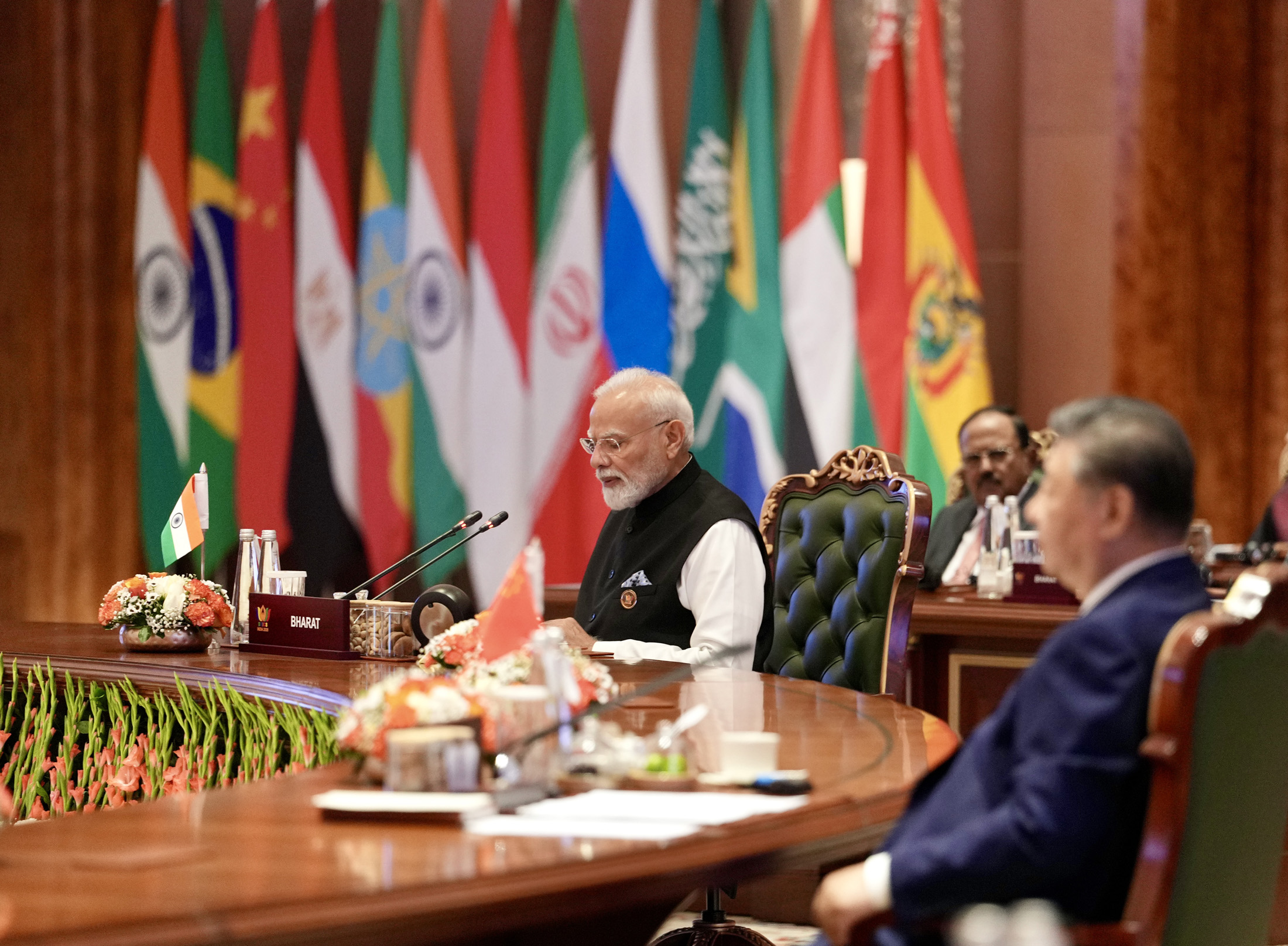
2026 BRICS New Delhi Declaration
BRICS New Delhi Declaration: Building for Resilience, Innovation, Cooperation and Sustainability (September 12, 2026) 12 Sep, 2026 1. We, th...
-
 தமிழகம் வாழ் ஈழத்தமிழர்களை கழகக் கண்டனப் பொதுக்கூட்டத்தில் கலந்து கொள்ளக் கோருகின்றோம்!
 -
சமரன்: தோழர்கள் மீது எடப்பாடி கொலை வெறித்தாக்குதல், கழகம்...


