
Water crisis in Nuwara Eliya due to unchecked contamination activities
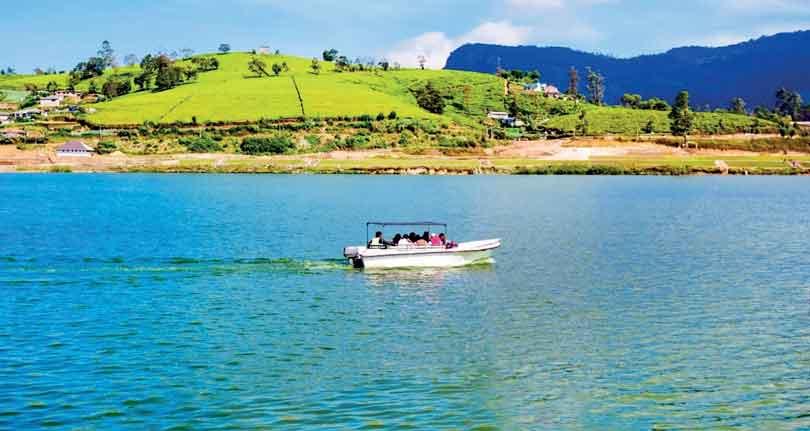
Despite much concerns regarding the drinking water available the Peradeniya Water Supply and Drainage Board has guaranteed that Nuwara Eliya’s drinking water doesn’t contain heavy metals or E. coli. The picture shows the picturesque Lake Gregory
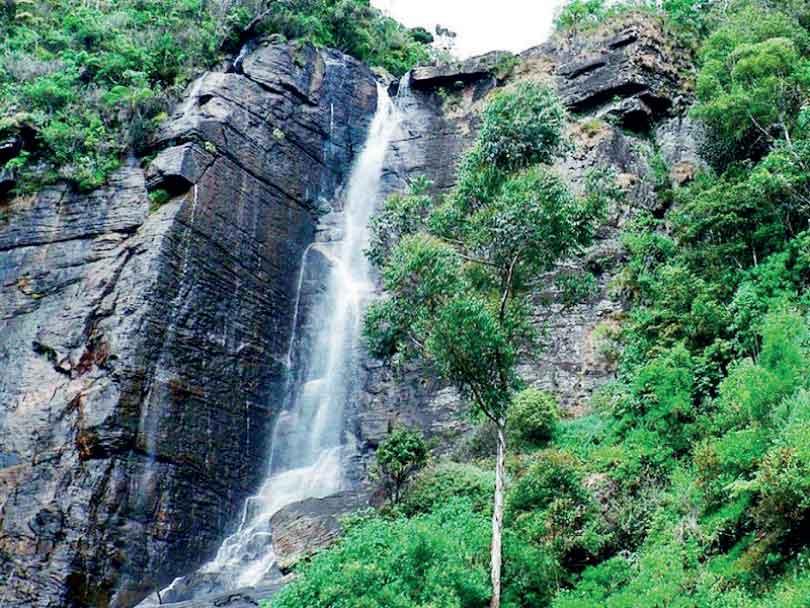
There were plans during the previous regime to construct a tank on a 15-acre plot of land below the Lover’s Leap waterfall to supply drinking water to Nuwara Eliya. However, the project was halted for political reasons
“The Peradeniya Water Supply and Drainage Board has guaranteed that Nuwara Eliya’s drinking water does not contain heavy metals or E. coli. The Water Supply Board conducts monthly water tests and daily chlorination. If the mayor has stated that the drinking water contains E. coli and heavy metals, you should ask him about it”
Kithsiri Herath, Public Health Inspector of Nuwara Eliya
Municipal Council
- Nuwara Eliya Municipal Council is primarily responsible for ensuring safety regarding food, drinking water, and accommodation
- Despite the presence of water sources in the city, they aren’t sufficient to meet the basic needs of the population
- Nuwara Eliya Municipal Council confirms that to date no organization has issued a certificate guaranteeing the quality of drinking water
- Drinking water needs of some areas of the Nuwara Eliya Municipality are met through water from Lover’s Leap falls which is generally safe
By Prageeth Sampath Karunathilaka and Sudharika Gurusinghe
Nuwara Eliya holds a special place as a tourist destination. Two of the main attractions are the extremely cold climate and the picturesque Gregory Lake. Both local and foreign visitors flock to this town during the festive season to absorb the atmosphere. Nuwara Eliya Municipal Council is primarily responsible for ensuring the town’s safety and ensuring that the food, drinking water, and accommodation of tourists meet the required standards.
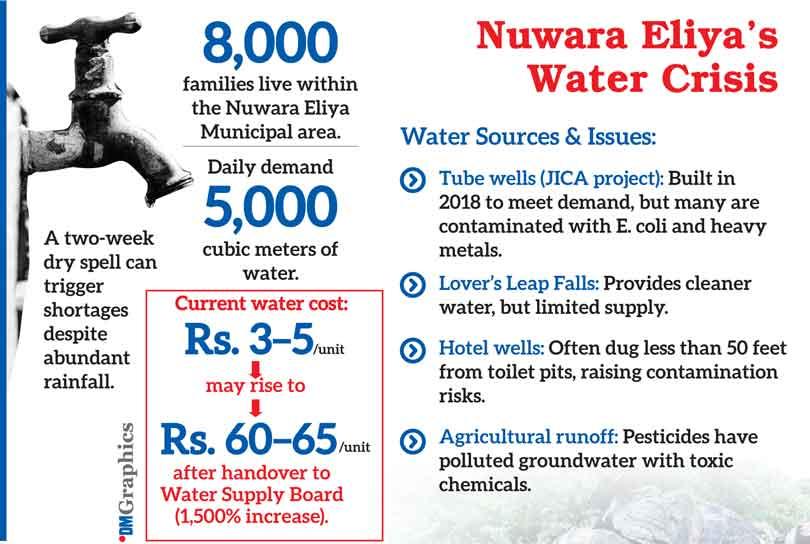
Around 8,000 families reside within the Nuwara Eliya Municipal Council area, with tourism being their main source of income. Much of the tourist activity occurs during December, January, and the Sinhala New Year, while during other seasons the town sees a surge of visitors only during long weekends. Nuwara Eliya Municipal Council demonstrates unwavering commitment to the comfort and services provided to those visiting the city.
However, there is an issue behind this commitment. The authorities here are not giving sufficient attention to problems that have crop up related to water in Nuwara Eliya. Despite the city’s cold climate and the presence of water sources, they are not sufficient to meet the basic water needs of the population.
Situated at a high altitude (approximately 1,868 metres), Nuwara Eliya has an average annual temperature of 16 degrees Celsius. During the winter months (January to March), nights can become extremely cold, and on some mornings, flowers with frost on them are visible. On such days, the minimum temperature can drop below 4 degrees Celsius. During this time, when the sun is directly overhead, temperatures rise, and it can feel extremely warm, with readings sometimes exceeding 26 degrees Celsius. The first inter-monsoon period occurs in March and April, followed by the southwest monsoon from May to September. During these months, rain often falls day and night, accompanied by strong south-westerly winds, and wet weather can persist for extended periods.
The city usually experiences around 5–6 days of sunlight per month. The second inter-monsoon occurs during October and November, while the northeast monsoon is active from December to February. Rainfall during these periods is typically higher than in other seasons. Under such climatic conditions, a two-week period without rain can cause a drinking water shortage in the city. This is because the area falling within the parametres of the Nuwara Eliya Municipal Council cannot meet the daily demand of 5,000 cubic metres of water.
To address this problem, a project to construct nine tube wells was initiated with assistance from JICA. The existing water sources were insufficient not only for drinking purposes, but also for agriculture. As a result, a tube well project began around 2018.
According to Nuwara Eliya Municipal Council reports prepared for 2018, as a result of constructing these tube wells, the water in toilets of nearby houses had dried up. This happened because the wells used the same water source. These 2018 test reports confirmed that Nuwara Eliya’s drinking water contained E. coli (mixed with fecal matter). An official from Nuwara Eliya Municipal Council also informed with this newspaper that there is no guarantee that these tube wells were constructed according to proper standards or quality certifications. A senior official from the company involved in the construction of the tube wells, confirmed that the tube well water is more brackish (slightly salty, as in river estuaries). Furthermore, the official stated that the tube well water contains faecal matter and heavy metals.
The senior officer of Nuwara Eliya Municipal Council also confirmed that, to date, no organization has issued a recognised quality certificate for drinking water in the area. Currently, the drinking water provided to the residents of Nuwara Eliya is tested by the Peradeniya Water Supply and Drainage Board once a month, and water is supplied accordingly. In addition to tube well water, the drinking water needs of some areas of the Nuwara Eliya Municipality are met by water obtained from Lover’s Leap falls. This water is generally safe. However, the senior officer confirmed that the water supplied from the tube wells contains faecal matter and heavy metals.
Hotel operators look for alternatives
Because the water in the area is contaminated with fecal matter and heavy metals, many hotel operators have sought an alternative, which is digging wells on their premises for the purposes of obtaining water. The most serious concern is that these wells are often located very close to toilet pits. Investigations done by this newspaper revealed that in many instances, there is less than a 50-foot distance between the toilet pits and the wells. It was also reported that the Nuwara Eliya Municipal Council does not conduct inspections of these sites. The senior officer confirmed that the water supplied to both tourists and residents—whether through tube wells or hotel wells—contains heavy metals and faecal matter.
The presence of heavy metals in Nuwara Eliya’s water sources is largely due to the use of pesticides in agriculture. Such details for mentioned in the Nuwara Eliya Municipal Council reports prepared for 2018. As a result of using pesticides for cultivation without proper assessment and in an uncontrolled manner, heavy metals have entered the water sources. The chemicals have mixed with the water. As a result, residents of Nuwara Eliya are currently facing an acute water crisis. Despite knowing that this water contains heavy metals and faecal matter, no authorities have taken steps to address the situation. The senior officer said that they are aware of the crisis, yet they have let people continue to consume water contaminated with faecal matter.
Some form of a solution to Nuwara Eliya’s drinking water problem was proposed in 2003 through the Lover’s Leap drinking water scheme, initiated by former Mayor Mahinda Dodampe Gamage. In 1994, the CISIR had confirmed that the water from this waterfall is of high quality, and it has also received certification from the World Health Organization. Had this project been implemented, both tourists and residents could have accessed clean, high-quality water free from heavy metals and fecal matter. Former Mayor Gamage had planned to construct a tank on a 15-acre plot of land below the Lover’s Leap waterfall to supply drinking water to Nuwara Eliya. In 2012, an inspection of this water source was conducted, and in 2016, the Irrigation Department carried out a preliminary feasibility study. However, the project was halted for political reasons, leaving residents to continue using water contaminated with heavy metals and faecal matter.
Another project to supply water from Ambewela was also launched, but discontinued midway. Recently, it was decided at the Nuwara Eliya District Coordinating Committee meeting to hand over control of the Municipal Council’s water sources to the Water Supply and Drainage Board to find a solution to the water problem.
Currently, the unit price for water supplied to the people of Nuwara Eliya ranges between three and five rupees. After the water supply is handed over to the Water Supply and Drainage Board, the unit price will range between 60 and 65 rupees. This represents an increase of around 1,500 to 1,600 percent on water bills. For people who previously struggled to pay bills of three to five rupees per unit, this will be an additional burden.
Commenting on the situation, Susantha Palihavadana, a UNP member of Nuwara Eliya Municipal Council, noted that a water testing laboratory established under the United Nations Fund operates within the Municipal Council premises. This laboratory conducts daily water testing, and E. coli and heavy metal levels are controlled by adding chlorine and other necessary chemicals. He assured that only clean water from Lover’s Leap Falls is supplied for consumption, and water, contaminated with faecal matter, is never provided for usage.
“In 2018, tests confirmed that the drinking water contained E. coli, but that issue has since been resolved. The tube well project, implemented with support from JICA, has also been highly successful, and no reports have indicated any problems with the wells. While water in Nuwara Eliya does contain heavy metals, it can be purified through chlorination. We have not received any information about wells and toilets located close to each other in hotels, and currently, there are no reported issues with the drinking water supplied in Nuwara Eliya,” he added.
When inquired, Kithsiri Herath, Public Health Inspector of Nuwara Eliya Municipal Council, stated that the Municipal Council Water Supply Officer, Ajith, was nearby and could be consulted for any questions. He said the following: “The Peradeniya Water Supply and Drainage Board has guaranteed that Nuwara Eliya’s drinking water does not contain heavy metals or E. coli. The Water Supply Board conducts monthly water tests and daily chlorination. If the mayor has stated that the drinking water contains E. coli and heavy metals, you should ask him about it. Anyone can make claims, but there is no problem with Nuwara Eliya’s water. Nuwara Eliya General Hospital receives water from us. The hospital also has to pay us a substantial outstanding bill. How can you claim that E. coli is present in tube well water”. He ended the call when asked to explain how chlorine eliminates E. coli and heavy metals.
When this scribe raised the question again with the Public Health Inspector, he said he was unable to provide an answer and advised this newspaper to contact the Mayor.
When asked whether water containing heavy metals and fecal matter would continue to be allowed for public consumption, and whether there is an alternative solution, Nuwara Eliya Municipal Council Mayor Upali Wanigasekara stated: “We cannot guarantee that the drinking water in Nuwara Eliya is completely clean. A project to address this issue is currently underway, but it has not been effective so far. We have established a water testing laboratory with Korean aid, where anyone can come and obtain a certificate for the water they use. I have been in office for four months. It is said that Nuwara Eliya’s drinking water contains heavy metals. Even I use spring water. Until now, the water in Nuwara Eliya was treated in the traditional way, using only chlorine for purification. Water consumption has increased with population growth, but the municipality did not have a laboratory to test water for a long time. The District Development Committee decided to supply drinking water to Nuwara Eliya from Ambewela, which is a large-scale project. However, a proper plan hasn’t been implemented yet. The existing water pipes date back to the British colonial period, and the entire water system needs to be completely restructured,” he added.
When asked whether the consumption of contaminated water has affected the residents of Nuwara Eliya, the Director of Nuwara Eliya General Hospital Mahendra Seneviratne stated: “There is a problem with drinking water in Nuwara Eliya. We have built a water purification system for the hospital to provide patients with clean water. Patients visit the hospital for treatment of dysentery, vomiting, and diarrhoea. People from areas such as Welimada and Bandarawela also come here for treatment. Therefore, we cannot say that these illnesses are solely caused by the water problem; a proper study would be needed to determine that.”
Several attempts were made to obtain a response from the Peradeniya Water Supply and Drainage Board, but no reply was received. Thus, the right of reply on this matter remains open to the Board.
Our research indicated that E. coli and heavy metals are not completely eliminated by chlorination alone. This raises serious concerns about how authorities can claim that chlorination removes all heavy metals and faecal matter from the water consumed by Nuwara Eliya residents. This issue poses a potential violation of the basic rights of approximately 8,000 families, and it requires immediate attention from the relevant authorities.



No comments:
Post a Comment