SHARE

Sunday, January 25, 2026

Northern Investment Summit 2026

Northern Investment Summit 2026 ends with high focus on key sectors

Sri Lanka, Jan. 23 -- The Northern Investment Summit 2026 (NIS26), aimed at promoting domestic and foreign investment in Sri Lanka's Northern Province, concluded on January 22 at the Thiruvalluvar Cultural Centre, Jaffna, following a two-day programme held on January 21 and 22.

Organised by The Management Club (TMC) Sri Lanka, the summit focused on highlighting investment opportunities in key sectors including agriculture and fisheries, tourism, education and information technology, and renewable energy, with the objective of increasing the Northern Province's contribution to the national economy while generating employment and encouraging youth and women entrepreneurship.

The inaugural session was attended by Minister of Industry and Entrepreneurship Development Sunil Handunnetti, Minister of Fisheries, Aquatic and Ocean Resources Ramalingam Chandrasekar, Prime Minister's Secretary G. A. Saputhanthri, Finance Ministry Secretary Harshana Suriyapperuma, Indian Consul General in Jaffna Sai Murali, Northern Province Governor N. Vedanayahan, Members of Parliament, senior government officials, diplomatic representatives, and a large number of local and foreign investors.

Several state institutions including the Board of Investment, Export Development Board, Tourism Promotion Bureau, National Enterprise Development Authority, and the Northern Provincial Council participated in the summit, alongside representatives from foreign missions and private sector stakeholders.

The summit is considered significant as it marked the first large-scale, structured investment forum held in the Northern Province since the end of the conflict, signalling renewed efforts to integrate the region into national and international investment frameworks amid Sri Lanka's broader economic recovery process.

 Northern Investment Summit 2026: Turning vision into action

FT Tuesday, 30 December 2025 

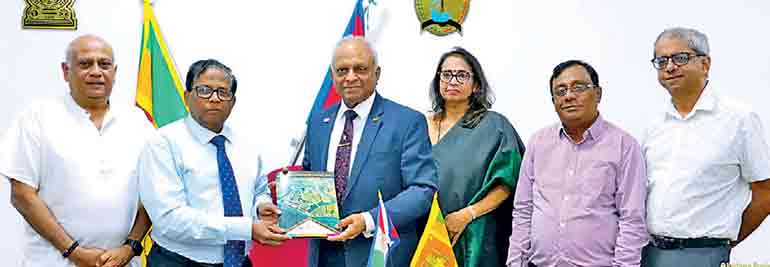
Meeting with Northern Province Governor N. Vethanayagan  

The Management Club (TMC) is set to ignite a new chapter of economic transformation with the Northern Investment Summit 2026 (NIS26), taking place on 21 and 22 January 2026 at the iconic Thiruvalluvar Cultural Centre. Held under the powerful theme “Empowering Growth, Insightful Innovations,” the summit promises to be more than a conference—it will be a catalyst for bold ideas, strategic partnerships, and long-term investment in Sri Lanka’s Northern Province.

Designed as a high-impact platform, NIS26 will bring together Government leaders, business pioneers, global and diaspora investors, development agencies, and academia to unlock the region’s vast yet underexplored potential. With the Northern Province currently contributing just 4.5% to national GDP, the summit aims to transform untapped opportunity into inclusive growth—benefiting not only the North, but the entire nation.

In an interview with Siyatha TV, TMC Immediate Past President and NIS26 Project Chairman Indhra Kaushal Rajapaksa described the summit as a landmark initiative—the first time a private-sector institution has taken the lead in a regional development agenda of this scale. The idea was sparked by TMC’s dynamic Jaffna branch, established during his presidency and comprising professors, senior bankers, and professionals committed to accelerating regional progress.


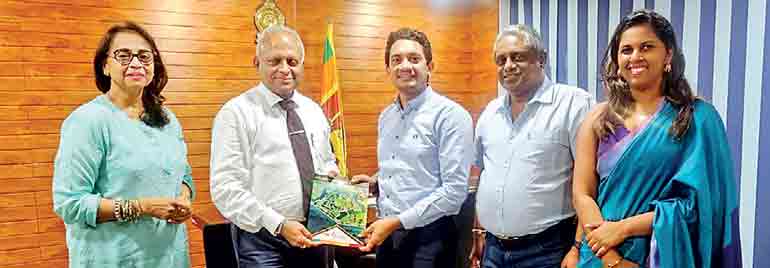
Meeting with Industry and Entrepreneurship Deputy Minister Chathuranga Abeysinghe

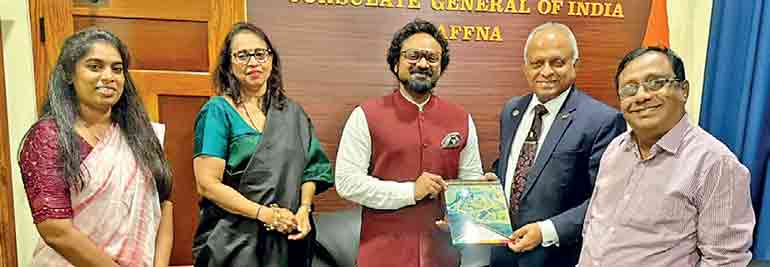
Momentum intensified through high-level engagement with key stakeholders. A pivotal milestone was the meeting with the Consulate General of India in Jaffna, where Consul General of India Shri Sai Murali S., expressed strong and enthusiastic support for the summit. His active involvement was instrumental in securing the Thiruvalluvar Cultural Centre as the prestigious venue for NIS26—underscoring the depth of Indo-Sri Lankan collaboration and the confidence of regional partners in the summit’s vision.

A defining moment in the summit’s journey was a high-impact hybrid consultative meeting chaired by the Northern Province Governor N. Vethanayagan, which brought together an unprecedented cross-section of stakeholders committed to the region’s development. The session saw physical participation from over 40 institutions and private-sector organisations, alongside virtual engagement from 41 development partners, INGOs, overseas investors, and local private investors. This inclusive and future-focused dialogue enabled open exchange of ideas, alignment of priorities, and collective ownership of the Northern development agenda. The strong turnout and depth of engagement underscored growing confidence in the Northern Province as a credible, investment-ready destination and reaffirmed the shared resolve to convert strategy into action through the Northern Investment Summit 2026.

What began as a bold proposal quickly gained momentum. With strong backing from the Ministry of Industry, Ministry of Finance, Board of Investment (BOI), Export Development Board (EDB) and several other State institutions, NIS26 has evolved into a nationally endorsed public–private collaboration, where TMC acts as facilitator.

To ensure credibility and readiness, TMC undertook an extensive consultative process across all five districts of the Northern Province. With the support of the Governor, district secretaries, and institutions such as the Industrial Development Board (IDB) and National Enterprise Development Authority (NEDA), district-level data was captured using a standardised framework.

TMC’s knowledge partner KPMG is now consolidating this intelligence into five district-specific, investment-ready proposals, which will be unveiled to local, international, and expatriate investors. These proposals represent real, bankable opportunities—carefully vetted and aligned with national development priorities.


Meeting with Consulate General of India in Jaffna Shri Sai Murali S.

NIS26 focuses on four strategic pillars that define the future of the Northern Province:

  • Agriculture and Fisheries – unlocking value through sustainable aquaculture, sea cucumber and seaweed farming, and Agri-innovation 
  • Education and IT – positioning the North as Sri Lanka’s next IT and knowledge hub
  • Tourism – developing authentic, high-value tourism rooted in culture, heritage, and nature
  • Energy – accelerating renewable and sustainable energy solutions
These are strengthened by SMEs and startup ecosystems, empowering local entrepreneurs and connecting them to global markets.

Infrastructure has emerged as the single most critical enabler. TMC has actively advocated for enhanced air, land, and rail connectivity, including expansion plans for Jaffna International Airport, a dedicated container rail line, and a central logistics hub. Resolving these bottlenecks is expected to unlock a surge of interest—particularly from India and the wider region.


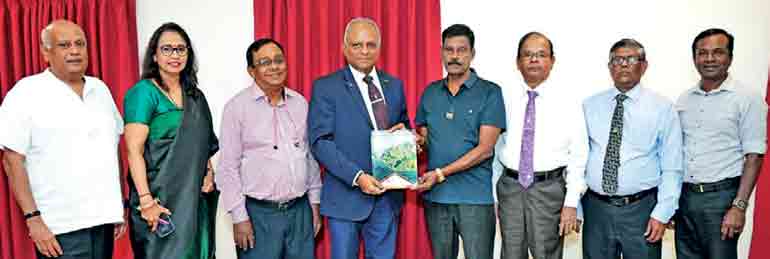
Signing MoU with Lions District 306 D12

Equally vital is policy innovation. Rajapaksa emphasised the need for a special incentive scheme for the Northern Province, supported by Public-Private Partnerships (PPPs), to accelerate investment while easing fiscal pressures on the State.

NIS26 has already attracted strong institutional and private-sector support. HNB has come on board as the official banking partner, alongside key partners such as the International Distillers Ltd. (IDL), National Enterprise Development Authority (NEDA), Industrial Investment Board (IDB), National Chamber of Exporters (NCE), Staff and Education development Association (SEDA), and international business councils. Further strengthening community and social impact, an MoU has been signed with the Lions District 306 D12, reflecting broad-based support for inclusive development.

International outreach continues to build momentum, with MoUs signed with organisations such as the Australia Sri Lanka Business Council and growing engagement from global investor networks.

As envisaged by NCE Secretary General/CEO Shiham Marikar, the summit will serve as a vital economic bridge—integrating the Northern Province more closely with national and international value chains.

With the NIS26 website live (https://summit.mhstaging2.com/), registrations open, and investor inquiries already flowing in, the summit is poised to unlock a robust investment pipeline over the next three to five years

An invitation to invest, collaborate, and co-create the future of the Northern Province.

Local and international investors, regional industrialists, the Sri Lankan expatriate community, policymakers, and innovators are invited to join this landmark initiative and be part of a story where vision becomes opportunity, and opportunity becomes national progress.

Govt. moves to appease monks

Stirring the racial pot

A presidential statement at a Thaipongal ceremony in Jaffna last week has made waves in the south, many perplexed by what exactly the message was that he was trying to convey.


On plain listening, it seemed to target those whom he said were aiming to fan the communal flames using pilgrims from the south to the north, meaning Buddhists, to sow ‘harvest hatred’. Waving his finger as he is wont to do when stressing a point, either in Parliament or outside, he stressed he would never allow racism to raise its ugly head again.


“Why,” he asked, “do these pilgrims pass all the Buddhist places of worship in the south to perform religious observances in the north – if not in hatred?” It was an astounding remark to make unless he had some definitive prima facie information – which if he did have, making it public would have helped clarify his point. He added that he has asked the intelligence services to investigate all of this as well. Otherwise, whether he was basing his comment on some political advice was not clear.


In the absence of it all, it has led to questions about the motive for the statement, also raising the question if, correspondingly, it would apply to Sri Lankan citizens from the north who make regular pilgrimages to the south, as far as the Hambantota district – and if this is the antithesis to the government’s call for communal amity by dividing the north and south by an artificial border.


The use – or abuse – of religious extremism can be a deadly cocktail, and clearly there is a need to keep it in check. External elements are capable of exploiting religion and communal tensions towards their own ends, as is public knowledge. These can be done overtly or covertly, as in cases like the Easter Sunday attacks of 2019, through the internet.


The recent incident in Trincomalee where Buddhist monks were arrested for violating a coast conservation law almost erupted into a racial issue in the multi-ethnic district. While all are equal before the law, the over-enthusiasm of the police has now resulted in a clash with the Attorney General – something that has spread into a tussle between the two law enforcement agencies. This week’s demonstration and counter-demonstration at Hulftsdorp for and against the Attorney General received a strong missive from the Bar Association about the rule of law in this country.


The government’s silence was deafening, making the AG take sides, compromising his independence.

From the early days in office, the Government’s displeasure with the Attorney General’s office has been made public, and they floated the idea of an Independent Prosecutor’s Office, which even received traction with foreign governments, which felt there was little progress in human rights prosecutions.


They better think again about their stance if they can see what is behind the Government’s move.


The Global South was right


As the President was making waves in Jaffna with his speech, the US President was making tidal waves with his own version of the global order and turning himself into an ‘unnatural disaster’ for the world in the process.


He doubled down on his threat to take over “a block of ice”, as he called Greenland, making insulting and unpresidential comments to all his European allies and the US-Europe alliance itself. European leaders, whom he condescendingly treats like, well, dirt, must surely be thinking, ‘With friends like this…we may be better off with erstwhile foes like China and even the Global South.’


The US President had already set the stage for the crash of the much-acclaimed Davos Economic Forum with his steady onslaught on the current international system – the unilateral incursion into Venezuela, threats to take over Canada, belittling NATO, arbitrary tariffs and finally the unthinkable – a bid to acquire Greenland.


The Canadian Prime Minister, who is just next door to the US, is clearly shivering more than he should be in the winter cold of the Swiss Alps, where past enthusiasm for global economic cooperation, trust and partnership has been replaced by the present malaise over the imminent demise of the so-called ‘rules-based world order’, to which he delivered the requiem.


His speech hit the headlines for announcing the end of the US-led postwar hegemony, the “rupture” between the US and Europe, and the way forward for the ‘Middle Powers’ in a future international system. Clearly, Canada and its Western allies in the Global North are looking for survival in a world after Pax Americana.


“In a world of great power rivalry, the countries in between have a choice: compete with each other for favour or combine to create a third path with impact,” the Canadian PM told Davos. His description of Europe’s current predicament is hauntingly reminiscent of another transition in the global system: the post-colonial moment which gave rise to the Third World and the Non-Aligned Movement, antecedents of the Global South.


He conceded the North’s own complicity in the rhetorical shield of the ‘rules-based order’ as a value-coated cover to impose the will of the powerful states, under which he says countries like Canada prospered for decades. Canada’s recent actions showing scant respect for the sovereignty of Sri Lanka and India by supporting separatist groups like the LTTE and the Khalistanis for vote-base politics are a textbook case. He adds that they knew this order was “partially false”.


That is what the Global South has long been complaining of. The South had declared the Emperor naked many decades earlier – the selective, politicised double standards of this order fell on deaf ears. A new reality has set in for those who cynically benefitted from the old world order to their advantage.

There is no better contemporary example than the lack of accountability for the tragedy of Gaza – and the recent events in Venezuela.


Ironically, it is only now that the Global North, especially Europe, rediscovers the value and mutual respect embedded in the principles of sovereignty, self-determination and the sovereign equality of states – central to Global South thinking since its inception.


The US President is making Europe dance with his decision-making, depending on which side of the bed he gets off in the morning.


‘For whom the bells toll, it tolls for thee.’ Though not explicitly stated in those terms, let Davos 2026 be the year where the Global North recognises the worldview of the Global South, the Non-Aligned Movement of yesteryear, as the grizzly bear and the horned dragon watch smiling from their respective capitals.


Bring on the investments, Vijitha tells diaspora


The Northern Investment Summit 2026 was held this week, where members of the Tamil diaspora attended in large numbers with pledges to invest in projects for the long-term development of Northern Sri Lanka. It brought together government, business, and academia.


As part of the investments, the groundbreaking ceremony of the AUREUM luxury hotel complex under an investment of Luxembourg, which was delayed due to the COVID-19 pandemic, was held. Foreign Affairs and Tourism Minister Vijitha Herath, who attended the event, invited Sri Lankan expatriates to bring in new investment into the tourism industry, citing the country now has both economic and political stability.

Govt. moves to appease monks, but opposition too scrambles to assist temples


Following criticism of President Anura Kumara Dissanayake by Buddhist monks as well as others for his remarks in Jaffna last week, where he said those gathering every full moon (Poya) day at certain disputed sites in the North were driven not by devoutness but by hatred, the government is keen to win back its detractors over the issue.


As a first step, the President will hold a meeting in Colombo on Monday where he will announce generous funds for the rebuilding of over 1400 temples that were damaged by Cyclone Ditwah. The money for the reconstruction will be disbursed through the respective Divisional Secretariats within the next few days, while the government also plans to assist Buddhist temples that are in need of repairs.


It seems, however, it’s not only that government that is keen to assist the temples. Opposition Leader Sajith Premadasa, SLPP MP Namal Rajapaksa and Sarvajana Balaya MP Dilith Jayaweera have all announced they plan to assist the temples affected by the cyclone.


From ABBA to Paudwal, comrades certainly appear to have an ear for music


While the JVP comrades like to keep their private lives under wraps, one thing is clear that some of them at least have an ear for music. 


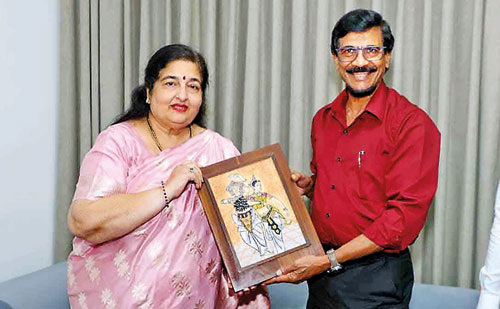
Soon after taking power in December 2024, the Party’s General Secretary, Tilvin Silva, along with a few others, was seen enjoying an ABBA concert. This week many were in attendance at the concert by the Padma Shri award-winning veteran Bollywood singer Anuradha Paudwal titled ‘Timeless Bollywood Melodies” held at the Nelum Pokuna in Colombo. 


Before the concert, Ms Paudwal, was invited to the JVP head office at Pelawatte, where she was received by Tilvin Silva and presented a token of appreciation.


Delegation of SJB and SLPP members off to Odisha for India Republic Day
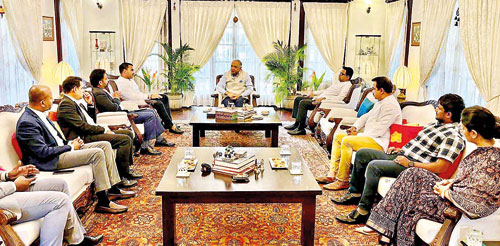


At the invitation of the Indian government, a delegation comprising politicians from the Samagi Jana Balawegaya (SJB) and the Sri Lanka Podujana Peramuna (SLPP) is scheduled to depart for the Indian state of Odisha to mark India’s Republic Day on January 26.


The delegation comprises SJB MPs Chitral Fernando, Chamidrini Kiriella, Chatura Galappatti, and Prasad Siriwardena; SLPP MP Namal Rajapaksa, former MPs Indika Anuruddha, Sanjeewa Edirimanna, and Sampath Athukorala; and Political Bureau member Milinda Rajapaksa.


During the visit, the group is set to conduct an observation tour of the Odisha State Disaster Management Authority, recognised as one of the world’s leading disaster management centres. Furthermore, they will participate in a tour of Buddhist archaeological sites dating back to the era of Emperor Ashoka.


A discussion regarding this visit was held recently at the official residence of the Indian High Commissioner.


This follows a tour of the judges to India.

Saturday, January 24, 2026

Greenland, America and the end of Atlanticism

The Weekend Essay  Geopolitics 
Greenland, America and the end of Atlanticism 
Behind the crisis caused by Donald Trump’s threats is a much bigger change: the waning of US hegemony and the coming of a multi-polar age

Odd Arne Westad Published FT


Danish forces take part in an exercise with troops from other European Nato members in Kangerlussuaq, Greenland, last September © AP/Ebrahim Noroozi

The Greenland ice sheet is breaking up, losing 280bn tonnes to the ocean every year. All across the Arctic, new sea routes are opening as temperatures rise. Some projections indicate that in 20 years it will be possible to sail across the North Pole through the central Arctic Ocean — though you would have to watch for giant icebergs, large enough to sink the biggest vessels and the best-laid plans. 

Given the extraordinary effects of global warming, which were almost unforeseeable a short while ago, it is not surprising that Greenland has been thrown into the geopolitical spotlight. What is more surprising is the way this has happened, with a US president demanding the right to take over the country in order to prevent other Great Powers from doing so. 

Pushing for “the Complete and Total purchase of Greenland”, Donald Trump has found a cause that is fully alienating his administration from most European countries and has the potential to effectively end Nato as a mutual defence agreement. By midweek, he was ruling out using military force and talking up the prospect of a deal. But like the Arctic ice, the transatlantic relationship seems to be fracturing rapidly.


Donald Trump with Nato secretary-general Mark Rutte in Davos, where the US president said on Wednesday that the two had discussed ‘the framework of a future deal’ over the island © AP/Evan Vucci

The break-up of Atlanticism has, of course, been predicted many times before and still has not happened, mainly because of Europe’s dependence on US military guarantees. From the Suez crisis in the 1950s to the invasion of Iraq in the 2000s, Nato has weathered many storms and survived with its common defence purpose intact. 

It was Henry Kissinger who observed back in the 1960s that political identities are often established by opposition to a dominant power. “The European sense of identity,” he argued, “is unlikely to be an exception to this general rule — its motive could well be to insist on a specifically European view of the world.” Kissinger’s book The Troubled Partnership did not become a bestseller, except, he liked to joke, in bookshops where it had been put under “marriage manuals”.

This crisis could very well be different precisely because of differing senses of identity. These have, of course, been developing over time: Europeans preferring principles of sovereignty, international law and UN co-operation, Americans (and not just Trump Republicans) believing in predominance, global control and economic supremacy. Since the 2010s the split has become ever more visible, especially with Trump in charge. 
''A world dominated by one or two superpowers was not peaceful, but it was to some extent predictable. That predictability is gone''. 
In Trump’s second administration, the US is governed by the hard right, while in Europe, for the most part, traditional political parties are still in charge. But even if European extreme-right parties were to succeed further electorally, or the US were to elect a Democratic president, it is highly likely that transatlantic tensions would continue. 

The reason for this is that political identities, as declared by governments on both sides of the Atlantic or elsewhere, are usually connected to power relations. And it is these fundamental power relations that have changed, from a unipolar system with the US at the centre after the cold war to an embryonic form of multi-polarity today. The transatlantic crisis is the effect of a much bigger change that has been building for almost a generation: the end of American hegemony and the coming of a multi-polar age. The global system no longer has one centre. It has many, each of which will seek to project power in whatever way it sees as serving its interests. 

This is a kind of world that few of us have experienced. Nearly everyone alive today has grown up in a world dominated by one or two superpowers. That world was not peaceful, but it was to some extent predictable. Now that predictability is gone, replaced by the uncertainties that a much more complex and multi-polar world will bring. Gone also is the belief that the 21st century would somehow be a return to the cold war, with China replacing the Soviet Union as the global antagonist of the US. 


That is not the world that Donald Trump sees when he demands Greenland or attacks Venezuela. He sees — as, for their part, do Vladimir Putin and Xi Jinping — a world of rapidly evolving multi-polar rivalries in which they need to dominate their neighbourhoods and strengthen themselves in case of large-scale Great Power confrontations. This is the vision of the world that Trump acts on now and will act on in the future. 

So the new era of fragmentation is no new cold war, but it carries some striking similarities to another past world, that of the late 19th and early 20th century. Back then, we also had a world of many Great Powers that clashed with each other and sought to dominate their neighbourhoods. Nationalism and populism were on the rise, and many people felt that the globalisation of the day had not worked for them. Protectionism and tariffs increased, and growing numbers blamed the citizens of other countries for their problems. Immigration and terrorism were among the big issues. Leaders everywhere were fearful of military action, but still prepared for conflict in ways that almost guaranteed that, if hostilities were to break out, the Great Powers would get involved. 
'' Trump’s message that might makes right is not only unsettling Europeans. It is also heard loud and clear in Moscow and Beijing 
We know how that world ended. Today, as before 1914, the stakes are very high, and the conflicts are real. A large number of people who live within the Great Powers believe that those who live in other Great Powers, or at least their leaders, are out to get them. Two in five Americans have said that it is likely that America will go to war with China in the next five years. In China, where reliable public opinion data is scarce, students frequently ask me when I believe a full-scale Sino-American war will erupt. Two-thirds of Russians believe the war in Ukraine is a life-or-death “civilisational struggle” with the west, and about the same percentage of Indians have an unfavourable or very unfavourable view of China. In Europe, a staggering three-quarters of Germans and French now view China unfavourably. Meanwhile, 73 per cent of French people and 71 per cent of Germans believe that the US is no longer an ally. 

Much as in the pre-1914 world, nationalisms of various kinds play an increasing role in today’s politics. From Trump’s attempts to dominate the western hemisphere, to Xi Jinping’s quest to regain China’s glory, to Vladimir Putin’s stab at a new Russian empire, to the rise of populist anti-foreign attitudes in Britain, Germany and France, negative views of others underpin many of the conflicts in today’s world. 


A boat makes its way through a frozen inlet off Nuuk, capital of Greenland, last year © AP/Evgeniy Maloletka 

It is easy to see how such sentiments make major war more possible, because they make it harder for even the more sensible political leaders to warn against the effects of international conflict. Under such circumstances, few of those in charge want to risk their own political careers through defusing tensions with other countries. The bipartisan US consensus over confronting China is one example. Another is how Russian, Chinese and American political elites have aligned themselves with expansionist agendas that many privately recognise could lead to disaster, such as in the case of Ukraine, Taiwan or Greenland. 

The worst part of Trump’s Greenland posture, at least so far, is the rhetoric that it uses. Not only does it openly threaten an ally, but it argues, in a very naked fashion, that might makes right. This message is not only unsettling Europeans. It is also heard loud and clear in Moscow and Beijing. Why should Xi hold back in blackmailing Taiwan when Trump threatens the use of military force against Denmark, a treaty ally and one of the most unwarlike countries on Earth? Why should Putin not go for broke in Ukraine when Trump sends special forces to capture the president of another country and his wife, and puts them on trial in an American court? 

Recommended News in-depth Greenland Greenland is ground zero for Arctic ‘Great Game’ How this crisis unfolds in the coming weeks and months will determine not only the future of the transatlantic relationship, but also of relations among the world’s Great Powers. They are all watching keenly. For Russia, Trump is the gift that keeps on giving. Moscow newspapers have not only found the total justification for Putin’s war in Ukraine, they also, gleefully, describe Europe’s impotence in international affairs: “spinning as if in a frying pan”, wrote the pro-Kremlin tabloid Komsomolskaya Pravda. China is, as usual, more careful, but the People’s Daily writes about “Europe’s strategic ‘spinelessness’ in the face of hegemonic coercion”. Even India and Indonesia are taking Trump’s rhetoric as justification for acting unilaterally when their strategic interests are at stake.


A team from the Chinese icebreaker Xuelong 2 carry out scientific research during an Arctic expedition last August © Alamy 


Russia’s ‘50 Years of Victory’ nuclear-powered icebreaker at the North Pole in 2021 © AFP via Getty Images

In a broader sense, Trump’s policies serve as a reminder of how often dominant powers self-destruct rather than being diminished by the actions of their rivals. Before 1914, Britain wasted its status and resources on unnecessary wars and conflicts. America’s Boer war was Afghanistan and Iraq in the 2000s, made worse by the 2021 retreat from Afghanistan and the constant quarrels among allies. 
 
The global image of the US, the soft power that kept its prominence among nations, has suffered more since Trump first became president than at any other time in US history. For much of the rest of the world, Trump’s late-night tweets and bullying demeanour, his infantile preoccupation with winning the Nobel Peace Prize or building resorts in Gaza, and now his campaign to buy Greenland — including, presumably, its 56,000 people — are constant reminders of American decline and unreasonableness, a country not fit to manage international affairs, or even, it seems, its own affairs. 

Another aspect of the decline of dominant powers is their inability, or unwillingness, to concentrate on the key issues facing their own countries. It is easy to empathise with Americans who voted for Trump because they believed that the US has done enough for the world, and now needs to concentrate on its own affairs. America First is not an unreasonable slogan for the many Americans, including those who have fought in needless, unnecessary wars, who are now suffering from decaying industries, infrastructure and healthcare. 
'' The push to buy Greenland takes an approach to international affairs unique to the US and makes it into a modern parody 
Trump was elected to be the first post-cold war US president, a president who really put the US, and not the international system it had created, first on the agenda. What the voters got was, in the end, the opposite: continued decline at home, exacerbated by self-inflicted economic chaos, and a quixotic foreign policy that delivers nothing to ordinary Americans. 

The push to buy Greenland is part of that unworkable approach to the world. For people outside the US, it is the principle that countries and peoples can be bought and sold that rankles most. But the campaign is more than another frustration in the uninformed, febrile mind of an ageing president. It takes an approach to international affairs unique to the US and makes it into a modern parody. 
Didn’t Thomas Jefferson buy Louisiana? Didn’t Andrew Johnson buy Alaska? Woodrow Wilson, not among Trump’s favourite presidents, bought the Virgin Islands from Denmark in 1917 for $25mn. Why not buy Greenland now and make it American? But the world has moved on and parodying the past leads nowhere.


At the US consulate in Nuuk on January 13, an employee closes the door after hanging out the American flag © Reuters/Marko Djurica 

Meanwhile, the strategic situation in the Arctic in terms of Great Power rivalries will be going from bad to worse. Moscow and Beijing are increasingly co-operating on Arctic development, though their partnership contains inherent tensions. China declared itself a “near-Arctic state” in 2018 and announced its “Polar Silk Road” as part of the Belt and Road Initiative, framing the region as a domain for strategic access rather than sovereignty — a conceptual challenge to the territorial claims of Arctic nations. The two powers conduct combined coast guard patrols in the Bering Sea and joint bomber flights near Alaska, while Chinese investment and technology help develop Russian Arctic infrastructure that Moscow previously resisted sharing. Already in June 2025, the Trump administration transferred responsibility for Greenland from US European Command to Northern Command, integrating it into homeland defence rather than treating it as part of European theatre operations.

For Europe, the crisis over Greenland has the potential to become much more than just another stage in the slow unravelling of its relations with the US. Europe has been left in the lurch by its main ally and needs to act to assert its interests and not just its identity. The European parliament has moved to freeze approval of the recently negotiated EU-US trade deal until Trump’s threats cease. But trade is not enough. A permanent European military presence in Greenland is needed, alongside European institutions that treat Greenland as vital to Europe’s own security, rather than as a Danish dependency to be defended just on principle. Such policies make coercion both more difficult and less attractive to Washington. 

At the core of Europe’s longer-term dilemma is, of course, the unwillingness of European countries to take responsibility for their and the continent’s own defence. Even the recent rise in defence budgets has predominantly flowed to American suppliers. European countries spent roughly €381bn on defence in 2025, yet less than one-fifth of procurement is conducted jointly. 


Low cloud over houses in Nuuk this month © Mads Claus Rasmussen/Avalon 

The lack of military integration is Europe’s greatest weakness, made worse by Brexit and by the cost of the war in Ukraine. An integrated European defence mechanism within Nato is urgently needed. It will be extraordinarily hard to achieve, just like the single market and the euro. But without its own integrated defence capability, Europe will remain a region in which Great Powers demand what they believe they need for their own security. At the moment, the only foreseeable outcome of the current crisis is further damage to the transatlantic relationship and the emboldening of America’s Great Power rivals. Trump’s demands have been impulsive and reckless, but they are still reflective of new realities that we all have to live with. The way that Great Powers think about capabilities and dominance has fundamentally changed. And their rivalries have moved north, with the receding ice, into waters that are truly uncharted.  

Odd Arne Westad is a professor of history and global affairs at Yale University and author of ‘The Cold War: A World History’. His next book, ‘The Coming Storm: Power, Conflict and Warnings from History’, will be published in March Find out about our latest stories first — follow FT Weekend on Instagram, Bluesky and X, and sign up to receive the FT Weekend newsletter every Saturday morning

Thursday, January 22, 2026

Prime Minister Dr. Harini Amarasuriya in Davos

PM participates in high-level bilateral meetings at World Economic Forum in Davos

FT Thursday, 22 January 2026

Prime Minister Dr. Harini Amarasuriya participated in a series of high-level bilateral meetings on Tuesday on the sidelines of the 56th Annual Meeting of the World Economic Forum (WEF) in Davos-Klosters, Switzerland.

The Prime Minister attended a productive bilateral meeting with European Commissioner for International Partnerships Jozef Síkela. During the discussion, both sides focused on strengthening Sri Lanka-EU cooperation and advancing mutual interests.

Prime Minister Dr. Amarasuriya also met with Asian Development Bank (ADB) President and Board of Directors Chairperson Masato Kanda at the WEF Congress Centre. The meeting provided an opportunity to discuss ongoing engagement and future collaboration between Sri Lanka and the ADB.

The Prime Minister also participated in a high-level dialogue at the Global Tourism Forum held at the Euronews Hub, Piz Buin, Davos, as part of the WEF engagements.

In addition, Dr. Amarasuriya held discussions with Menzies Aviation Chairman Hassan El Houry, where opportunities for collaboration in aviation services and connectivity were explored.

Labour Minister and Deputy Finance Minister Dr. Anil Jayantha Fernando was also present at these meetings.

PM Harini meets IMF Chief at World Economic Forum in Davos

Jan 21, 2026

Managing Director of the International Monetary Fund (IMF), Kristalina Georgieva and Sri Lankan Prime Minister Harini Amarasuriya have engaged in Discussions on the sidelines of the 2026 World Economic Forum in Davos, Switzerland. 

In a statement, the IMF Asia and Pacific said Sri Lanka and its people have shown remarkable resilience in the face of the devastation from Cyclone Ditwah.

The statement further said that, during the talks, IMF Managing Director Kristalina Georgieva reiterated the IMF’s commitment to supporting Sri Lanka’s economic recovery. (Newswire)

Prime Minister Dr. Harini Amarasuriya (second from left) with European Commissioner for International Partnerships Jozef Síkela (left)

“Exclusion of women is structurally maintained,” PM Harini tells Davos forum

22 January 2026

Sri Lankan Prime Minister Harini Amarasuriya said that contributions of women continue to be systematically undervalued, particularly in unpaid care work, informal labour, and agriculture sectors, despite women increasingly asserting agency in political, economic, and social spheres across the world.

“The exclusion of women from decision-making is not incidental; it is structurally maintained through gendered power hierarchies. Addressing these barriers is about transforming institutions and power structures to create enabling environments in which women can lead with confidence,” PM Amarasuriya said.

She made the remarks on Wednesday (21 Jan) while addressing the World Woman Davos Agenda 2026 at World Woman House, held on the sidelines of the 56th Annual Meeting of the World Economic Forum in Davos-Klosters, Switzerland, a high-level forum organized under the theme “Women Leading the Changing Global Order.”

“From a political standpoint, the exclusion of women from decision-making is not incidental; it is structurally maintained through gendered power hierarchies. Attacks on women in leadership, particularly in politics, through harassment, character assassination, and systemic marginalization, often force capable women, including those aspiring to leadership, to withdraw or refrain from participation, thereby reinforcing entrenched patriarchal structures,” she said.

The Prime Minister went on to note that addressing these barriers is not about protection but about transforming institutions and power structures to create enabling environments in which women can exercise leadership with autonomy, authority, and confidence.

“Sri Lanka demonstrates what is possible when political commitment aligns with the resilience of its people. Under our current inclusive government, historic strides have been made in political representation. For the first time, 20 women have been elected to Parliament. This commitment is reflected not only in vision; it signals a shift toward more inclusive governance,” she added. 

Concluding her address, PM Amarasuriya stated that leadership is not merely about occupying seats at existing tables, but about restructuring systems themselves. 

She reaffirmed Sri Lanka’s commitment to feminist, intersectional leadership, calling on global actors to ensure that women and marginalised communities are not only participants, but principal architects of the policies shaping the future global order. 

(Source:Newswire)

Prime Minister Dr. Harini Amarasuriya (right) with ADB President Masato Kanda

PM Harini holds high-level meetings with EU, UNDP and corporate leaders in Davos

டாவோஸில் ஐரோப்பிய ஒன்றியம், ஐக்கிய நாடுகள் வளர்ச்சித் திட்டம் மற்றும் பெருநிறுவனத் தலைவர்களுடன் பிரதமர் ஹரிணி உயர்மட்டக் கூட்டங்களை நடத்துகிறார்.

ஜனவரி 22, 2026 

ஜனவரி 21 ஆம் தேதி சுவிட்சர்லாந்தின் டாவோஸில் நடைபெறும் உலகப் பொருளாதார மன்றத்தின் ஒரு பகுதியாக, பிரதமர் டாக்டர் ஹரிணி அமரசூரிய, ஐரோப்பிய ஒன்றியம் (EU), ஐக்கிய நாடுகள் சபையின் மேம்பாட்டுத் திட்டம் மற்றும் உலகளாவிய தனியார் துறையின் பிரதிநிதிகளுடன் உயர்மட்ட இருதரப்பு சந்திப்புத் தொடரை நடத்தியதாக பிரதமர் அலுவலகம் தெரிவித்துள்ளது. 

ஐரோப்பிய ஒன்றிய தயார்நிலை மற்றும் நெருக்கடி மேலாண்மை ஆணையர் ஹட்ஜா லஹ்பீப்பை பிரதமர் சந்தித்தார். சந்திப்பின் போது, ​​தித்வா சூறாவளியைத் தொடர்ந்து ஐரோப்பிய ஒன்றியமும் அதன் உறுப்பு நாடுகளும் அளித்த ஆதரவிற்கு இலங்கையின் பாராட்டுகளை அவர் தெரிவித்தார். 

உலக வங்கியின் GRADE அறிக்கையின் முக்கிய கண்டுபிடிப்புகள் குறித்து ஆணையரிடம் பிரதமர் அமரசூரிய விளக்கமளித்தார், மேலும் இலங்கையின் வளர்ச்சி மற்றும் மீட்பு முயற்சிகளுக்கு ஐரோப்பிய ஒன்றியத்தின் தொடர்ச்சியான ஆதரவைக் கோரினார் என்று அந்த அறிக்கையில் தெரிவிக்கப்பட்டுள்ளது. 

பிரதமர் டாக்டர் ஹரிணி அமரசூரிய, ஐக்கிய நாடுகள் சபையின் மேம்பாட்டுத் திட்டத்தைப் பிரதிநிதித்துவப்படுத்தும் அலெக்சாண்டர் டி குரூவையும் சந்தித்தார். இலங்கைக்கும் ஐக்கிய நாடுகள் சபைக்கும் இடையிலான நீண்டகால கூட்டாண்மைக்கு அவர் பாராட்டு தெரிவித்தார், மேலும் வெள்ள நிவாரணம் மற்றும் வாழ்வாதார உதவிகளில் ஐ.நா.வின் ஆதரவை அவர் பாராட்டினார். 

நாடாளுமன்றத் தேர்தலில் கிடைத்த ஆணையைத் தொடர்ந்து, பொது நம்பிக்கை மற்றும் நல்லாட்சியின் அடிப்படையில் தேசிய மறுகட்டமைப்பு மூலம் பொதுமக்களின் எதிர்பார்ப்புகளைப் பூர்த்தி செய்வதில் அரசாங்கம் கவனம் செலுத்துகிறது என்று பிரதமர் குறிப்பிட்டார். 

சமூகப் பாதுகாப்பு அமைப்புகளை வலுப்படுத்துவதற்கும் பாதிக்கப்படக்கூடிய சமூகங்களைப் பாதுகாப்பதற்கும் இலங்கை அரசாங்கத்தின் உறுதிப்பாட்டை அவர் மேலும் உறுதிப்படுத்தினார்.

கூடுதலாக, பிரதமர் ஏபி மோல்லர் ஹோல்டிங்கின் தலைவர் ராபர்ட் எம். உக்லாவை சந்தித்தார். இந்த கலந்துரையாடலில் தனியார் துறையுடனான ஈடுபாடு மற்றும் ஒத்துழைப்புக்கான சாத்தியமான பகுதிகள் குறித்து கவனம் செலுத்தப்பட்டது என்று அந்த அறிக்கையில் மேலும் தெரிவிக்கப்பட்டுள்ளது.

பிரதமர் அலுவலகத்தின்படி, இந்த சந்திப்புகள், மீட்சி, மேம்பாடு மற்றும் நீண்டகால பொருளாதார ஸ்திரத்தன்மையை ஆதரிப்பதற்காக சர்வதேச பங்காளிகள் மற்றும் உலகளாவிய பங்குதாரர்களுடன் இலங்கையின் தொடர்ச்சியான ஈடுபாட்டை பிரதிபலித்தன.


Prime Minister Dr. Harini Amarasuriya (second from left) participates in Global Tourism Forum 

Prime Minister Highlights Tourism as a Tool of Soft Power at Global Forum in Davos

January, 22, 2026

Prime Minister Dr. Harini Amarasuriya participated in a high-level dialogue titled “Tourism as Soft Power and Diplomatic Capital” held at the Euronews Hub, Piz Buin Davos, on the sidelines of the World Economic Forum on January 20.

The session explored how tourism functions as a strategic instrument of diplomacy by strengthening international trust, cultural exchange, and regional cooperation through mobility and people-to-people engagement. The Prime Minister shared the panel with Mr. Kuban Omiraliyev, Secretary General of the Organization of Turkic States and Mr. Meshari Alnahar - ‏CEO Aseer Investment Company, Saudi Arabia.

Addressing global trends, the Prime Minister emphasized that Sri Lanka is an example of hope, recovery and resilience in a world of conflict demonstrating how tourism can play a critical role in a changing global environment particularly amid climate shocks, geopolitical instability, and uneven economic recovery. She noted that tourism is not only an economic sector but also a vital diplomatic bridge that supports livelihoods, builds relationships and connects people.

Drawing on Sri Lanka’s recent experience, she highlighted the country’s strong tourism recovery despite multiple crises, including the impact of Cyclone Ditwah. Transparent crisis management and strategic engagement with international partners helped sustain visitor confidence, resulting in record tourist arrivals even in challenging circumstances.

The Prime Minister also underscored the importance of green and climate friendly tourism infrastructure and underlined that Sri Lanka welcomes long term investment in tourism. She pointed out that tourism supports millions of jobs worldwide and that inclusive policies are essential to ensure fair opportunities, particularly for women and vulnerable communities.


Iran war: Govt. claims neutrality but seen drifting towards US-Israel-India axis

Iran war: Govt. claims neutrality but seen drifting towards US-Israel-India axis Sunday Times 08-03-2026 IRIS Dena’s goodwill request for a ...