SHARE

Thursday, January 22, 2026

Trump launches ‘Board of Peace’


Trump launches ‘Board of Peace’ with signing ceremony in Davos


    • Israeli settlers storm Al-Aqsa Mosque compound in occupied East Jerusalem

      Dozens of Israeli settlers have descended upon Al-Aqsa Mosque compound in the latest raid of the iconic site in occupied East Jerusalem, according to the Wafa news agency.

      Under the protection of Israeli soldiers, settlers streamed into the mosque’s compound to tour the grounds and perform Talmudic rituals. The mosque is considered Islam’s third-holiest site, while Jews believe the compound is where the biblical Jewish temples once stood.

      Settlers – usually under the eye of the military – have made a regular habit of storming the mosque in recent years, despite the Israeli government’s longstanding ban on Jews praying there.

      In 2024, far-right Israeli National Security Minister Itamar Ben-Gvir led a crowd of thousands into the mosque, and also claimed he would build a Jewish synagogue at the compound if he could.

      Al Aqsa mosque
      People gather in front of the Dome of the Rock in Old Jerusalem’s Al-Aqsa Mosque compound, following the Friday noon prayer on August 2, 2024 [Hazem Bader/AFP]

    • A recap of Kushner’s Board of Peace presentation on Gaza’s future

      According to Jared Kushner, the Board of Peace’s development plans in Gaza include:

      • Working with Hamas on demilitarisation
      • Shifting Gaza’s dependence on foreign aid
      • Dividing Gaza into “residential” and “coastal tourism mixed” zones
      • Building 100,000 housing units in Rafah, as well as “New Gaza”

    • ‘We need investments’ in Gaza, Kushner says, showing plan for high-rise towers

      Jared Kushner has offered more details about the Board of Peace’s development plans in Gaza, without mentioning plans for a path towards a Palestinian state.

      The “number one thing is going to be security – obviously we’re working very closely with the Israelis to figure out a way to de-escalation, and the next phase is working with Hamas on demilitarisation,” Kushner said.

      “Without security, nobody’s going to make investments, nobody’s gonna come build there. We need investments in order to start giving jobs,” he said.

      The Board of Peace wants to use “free market principles” to shift Gaza’s dependence on foreign aid, Kushner said.

      Trump’s son-in-law also showed a map of the Gaza Strip divided into “residential” and “coastal tourism mixed” zones.

      The plan includes building 100,000 housing units in Rafah, as well as “New Gaza”, Kushner said, showing a rendering of high-rise coastal towers.

      Kushner, a real estate developer, has previously said Gaza has “very valuable” waterfront property.

      “In the Middle East, they build cities like this – two, three million people – in three years, so stuff like this is very doable if we make it happen,” Kushner said.


    • Peace is ‘a different deal than a business deal’: Kushner

      Trump’s son-in-law Jared Kushner is speaking after the signing ceremony.

      Although everyone was “joyous and celebrating” after the initial Israel-Gaza ceasefire deal was signed, Kushner recalled that “[US special envoy] Steve [Witkoff] and I were panicking, saying, ‘What do we do next?’ How do we implement peace?

      “As you guys know, peace is a different deal than a business deal, because you’re changing a mindset,” Kushner said, calling the Gaza peace efforts “very entrepreneurial”.

      “We needed to think about what do we do next, how do we change the habits, how do we change the behaviours?”


    • What did Trump say at the Board of Peace signing?

      In a nearly 20-minute speech before he signed the Board of Peace charter, Trump powered through some of his favourite talking points:

      • The president said, “We are going to be very successful in Gaza,” adding that he would ensure Gaza was demilitarised and “beautifully rebuilt”.
      • He also falsely claimed that the US “maintained the Gaza ceasefire, delivered record levels of humanitarian aid” and “you don’t hear” about Palestinians in Gaza starving any more. Israel has regularly violated the ceasefire, killing more than 480 Palestinians, and impedes aid delivery.
      • He said the world was “richer, safer and much more peaceful” than it was before he began his second term, ticking off a list of world conflicts he claims to have successfully ended.
      • Next up on Trump’s list is Hezbollah in Lebanon. “We have to do something about that,” he said.
      • Trump also criticised the United Nations, joking that it has “tremendous potential” but that “I never spoke to the United Nations about any of” the eight conflicts he sought to fix.
      • As the first year of his second term has just ended, the president returned to his refrain that “no administration in history has achieved such a sweeping turnaround in 12 months time” and bragged about the US economy.
      US President Donald Trump (R) arrives at the "Board of Peace" meeting during the World Economic Forum (WEF) annual meeting in Davos
      US President Donald Trump strides into the Board of Peace signing ceremony during the World Economic Forum in Davos on January 22, 2026 [Mandel Ngan/AFP]

    • Rubio praises Trump’s ‘courage to dream the impossible’

      US Secretary of State Marco Rubio has spoken after Trump at the Board of Peace conference in Davos, as the US president sat at the centre of a gathering of representatives of 19 countries that have signed on to the charter.

      Rubio said Trump is willing to speak to anyone in what he described as the pursuit of peace.

      “We are here today because of President Trump’s vision,” Rubio said.

      He added that “a few months ago, people thought it was impossible to solve”, referring to ongoing conflicts, and said that “all these hostages being held [in Gaza] – nobody thought that would come to a resolution”.

      Rubio went on to argue that existing institutions had been unable to act, saying Trump instead had “the vision and the courage to dream the impossible”.

      U.S. Secretary of State Marco Rubio takes part in a charter announcement for U.S. President Donald Trump's Board of Peace initiative aimed at resolving global conflicts, alongside the 56th annual World Economic Forum (WEF), in Davos, Switzerland, January 22, 2026. REUTERS/Denis Balibouse
      US Secretary of State Marco Rubio takes part in a charter announcement for US President Donald Trump’s Board of Peace initiative aimed at resolving global conflicts, alongside the 56th annual World Economic Forum (WEF), in Davos, Switzerland, on January 22, 2026 [Denis Balibouse/Reuters]

    • Board of Peace charter signed by Trump, other world leaders

      Trump has been joined at a table next to the podium by leaders from Bahrain and Morocco to kick off the signing.

      “What we’re doing is so important,” Trump said. “This is something I really wanted to be here and do, and I could think of no better place.”

      Trump took out a pen, signed a sheath of documents and held them out to the camera with a smile. Other world leaders then began walking over in pairs to sign.

      President Donald Trump, center, signs the Board of Peace charter during the Annual Meeting of the World Economic Forum in Davos, Switzerland, Thursday, Jan. 22, 2026. (AP Photo/Evan Vucci)
      US President Donald Trump, centre, signs the Board of Peace charter during the World Economic Forum in Davos, Switzerland, on January 22, 2026 [Evan Vucci/AP]

    • Trump praises Iran strikes, repeats claims he stopped eight wars

      US President Donald Trump has repeated his claim that he has settled eight wars since returning to office.

      Speaking in Davos about Iran, Trump pointed to US strikes on Iranian nuclear sites last June, claiming they had “obliterated” Iran’s nuclear capacity. He added that Tehran “does want to talk, and will talk”.

      Trump also referred to US operations against ISIL (ISIS) in Syria, saying “many good things are happening,” and claimed that threats to Europe, the US and the Middle East “are really calming down”.

      “Just one year ago, the world was actually on fire,” he said. “A lot of people didn’t know it.”

Wednesday, January 21, 2026

Trump seeks negotiations for Greenland


President Donald Trump delivered wide-ranging remarks Wednesday at the World Economic Forum in Davos, Switzerland, saying he was “seeking immediate negotiations” to discuss the acquisition of Greenland but that he would not use force to annex the territory. Trump, whose escalating rhetoric about tariffs and comments about taking control of the territory from NATO ally Denmark overshadowed this year’s meeting before it began, claimed during his speech that Greenland is “actually part of North America” and is therefore “a core national security interest of the United States of America.” The president touted his economic record as well as his use of tariffs as a negotiation tactic with world leaders. During his remarks at the conference, which attracts executives and politicians from around the world, Trump also appeared to erroneously refer to Greenland as its neighbor Iceland four times.

Trump rules out taking Greenland by force, calls for talks over future

President Donald Trump speaks during the World Economic Forum annual meeting Wednesday in Davos, Switzerland. (Fabrice Coffrini/AFP/Getty Images)

President Donald Trump remained unyielding in his demand that the United States take over Greenland from Denmark in his speech to Davos on Wednesday, but he ruled out taking the territory by force and said that if Washington is turned down in negotiations, “we will remember.”

The joint declarations amounted to a step-down of sorts from a leader who has been so fierce in recent days about his desire to claim Greenland over the objections of Denmark and Greenlanders that some senior European leaders have feared a shooting war could break out between the United States and Europe. Such a development has been nearly unthinkable for generations.

“We want a piece of ice for world protection, and they won’t give it. We’ve never asked for anything else,” Trump told a gathering of the world’s economic elite in at the World Economic Forum. “They have a choice. You can say yes, and we will be very appreciative. Or you can say no and we will remember.”

Trump made very clear that he is not backing down from his urgent interest in taking Greenland — a desire that has shocked European leaders who have said his drive is reminiscent of the 19th-century empire-building that the United States spent much of the 20th century combating.

But within the context of his bellicose rhetoric in recent days, Trump’s remarks suggested an exit path for discussions about Greenland’s future. Danish leaders have said that giving up sovereignty of Greenland is a red line for them that they cannot accept so long as Greenlanders don’t want it. They have robust backing from fellow European nations.

But Danish leaders have said they welcome increased U.S. investment and security efforts in the Arctic territory, and they have promised to increase their own security investments there.

Monday, January 19, 2026

Trump’s Greenland threats push Europe toward divorcing America

Trump’s Greenland threats push Europe toward divorcing America

With NATO thrown into question, some officials see the “coalition of the willing” as the basis for a new alliance without the U.S. 


Greenland And Europe Hope To Avert U.S. Intervention To Aquire Greenland

Analysis January 19, 2026  Politico By Tim Ross

LONDON — As with many failing relationships, it’s been a story of arguments, unspoken tensions and trying to keep up appearances in public since Donald Trump re-entered the White House a year ago. 

But for many European governments, including America’s longest-standing and most loyal allies, Trump’s threat of punitive tariffs against anyone who tries to stop him taking Greenland was the final straw. Divorce, they believe, is now inevitable. 

In private, dismayed European officials describe Trump’s rush to annex the sovereign Danish territory as “crazy” and “mad,” asking if he is caught up in his “warrior mode” after his Venezuela adventure — and saying he deserves Europe’s toughest retaliation for what many see as a clear and unprovoked “attack” against allies on the other side of the Atlantic. 

“I think it is perceived as one step too far,” said one European diplomat, who like others was granted anonymity to speak candidly. “Europe has been criticized for being weak against Trump. There is some truth in that, but there are red lines.”

Senior European officials increasingly believe it’s time to face the truth that Trump’s America is no longer a reliable trade partner, still less a dependable security ally, and urgently look to the future. “There is a shift in U.S. policy and in many ways it is permanent,” according to a senior official with a European government. “Waiting it out is not a solution. What needs to be done is an orderly and coordinated movement to a new reality.”

That coordination has already begun, as has the big conversation about what comes next. 

Barring a radical shift in the approach of the United States, this process seems likely to end in a radical reshaping of the West that would upend the global balance of power. The implications range from transatlantic economic damage as trade tensions rise, to security risks as Europe attempts to defend itself without American help before it is fully ready to do so. 

There would likely be costs to the United States as well, such as in its ability to project hard power into Africa and the Middle East without access to the network of bases, airstrips and logistical support that Europe currently provides.

A post-U.S. future

Alongside all the talk of retaliation by targeting U.S. trade, diplomats and government officials in national capitals are also considering what a long-term split from Washington might bring. 

For most the prospect is a painful one, ending 80 years of peaceful cooperation, mutual support and profitable trade and dealing a death blow to NATO in its current form. Plenty of governments want to salvage what they can, while Italy’s hard right leader, Giorgia Meloni, is trying to rebuild relations.

But for some government officials, a post-U.S. future for Western allies isn’t hard to imagine. 

For starters, European states, including those not in the EU like Britain and Norway, have spent much of Trump’s second term working in an increasingly effective group that already operates without America: the so-called coalition of the willing to support Ukraine. 

U.S. President Donald Trump leads Ukraine’s President Volodymyr Zelenskyy and European leaders at the White House on Aug. 18, 2025. States like Britain and Norway, which are not in the EU, have been part of the Coalition of the Willing in support of Ukraine. | Aaron Schwartz/EPA

National security advisers from 35 governments are in regular contact, meeting frequently online and in person, as well as interacting via less formal text messaging. They are accustomed to seeking multilateral solutions in a world where Trump is a big part of the problem. 

Levels of trust in these circles are generally high, according to people familiar with the way the group operates. Nor is it just at the level of officials: National leaders are themselves rolling up their sleeves and working in intimate new groupings. 

Leaders including the U.K.’s Keir Starmer, France’s Emmanuel Macron and Germany’s Friedrich Merz, as well as European Commission President Ursula von der Leyen, Alexander Stubb of Finland and Meloni of Italy regularly text with each other — often in the same group chat. 

Texting leaders

Over the past year they have developed a well-drilled routine of exchanging messages whenever Trump does something wild and potentially damaging. “When things start moving quickly, it’s hard to do the coordination, and this group [chat] is really effective,” said one person familiar with the arrangement. “It tells you a lot about the personal relationships and how they matter.”

The “informal but active” arrangement is known as the Washington Group, after the collection of European leaders who visited the White House with Ukraine’s President Volodymyr Zelenskyy last August. 

Their approach for the past year has mostly been to keep calm and respond to his policy actions rather than taking the bait of his provocative words. That ethos has oiled the wheels of the Ukraine peace process, with the coalition of the willing closing in on a framework for a peace plan that the U.S. is signed up to — including American security guarantees for Ukraine. This marks a significant achievement given that Trump earlier ruled out the U.S. military playing a role.  

But Trump’s hell-raising over Greenland has now tipped the balance. 

Gone is the softly-softly approach to the American president’s threats. Even Starmer, normally the most circumspect of leaders, called out the president’s tariff threat as “wrong,” including, apparently, in a direct call with Trump on Sunday. 

The Greenland crisis has focused minds on the question of how to move on without America by their side. 

“The coalition of the willing started as being about Ukraine,” said another diplomat. “But it has created very close ties between some of the key people in the capitals. They have been building up trust and also aptitude to work together. They know each other by name and it’s easy to reach out and to send texts.” 

Who needs NATO, anyway?

This format could potentially become the seedbed for a new security alliance in an era when the U.S. no longer supports NATO and European security. A new arrangement wouldn’t exclude cooperation with America, but nor would it take it for granted. 

Also in the text chats with the Washington Group leaders is Zelenskyy himself, which brings another intriguing idea into the mix. Ukraine is by far the most militarized country among those represented, with a huge army, a highly sophisticated drone production industry, and more expertise in the realities of fighting a war than anyone. 

A handout of Ukrainian servicemen conducting training in the Kharkhiv region in November last year. Ukraine is by far the most militarized country among those represented in the coalition. | 127th Separate Brigade of the Territorial Defence/EPA

While Ukraine has long sought membership in NATO, that now seems less of a prize than it once did, as America’s promises to underpin any security guarantees grow less convincing by the day. 

If Ukraine’s military might were to be included, when added to that of France, Germany, Poland and the U.K., among others, the potential armed power of the coalition of the willing would be vast, and would include both nuclear and non-nuclear states. 

Although Europe’s need to defend itself with less American support is an old topic of conversation, recent days have seen a flurry of initiatives and headlines from Brussels. Officially, the EU has resolved to be able to defend itself by 2030.

European Defense Commissioner Andrius Kubilius a week ago proposed a standing EU army of 100,000 personnel and revived the idea of a European Security Council of around 12 members, including the U.K. Von der Leyen touted a new European Security Strategy, though few details have yet been provided. 

There is wide agreement that these conversations about a new European security architecture need to happen, and fast. EU leaders will meet in person for an emergency summit in the coming days to calibrate a response to Trump’s Greenland threats, though the discussion may range far wider than that. 

With Trump due to attend the World Economic Forum in Davos, there is also a possibility of face-to-face talks between the European and American sides.

After speaking to Merz, Macron, Starmer and NATO chief Mark Rutte, von der Leyen said on Sunday that Europeans would “stand firm” in their commitment to protect Greenland. “We will face these challenges to our European solidarity with steadiness and resolve,” she said. 

Given the current moment, some creative thinking will also be required.  

A quick guide to Greenland

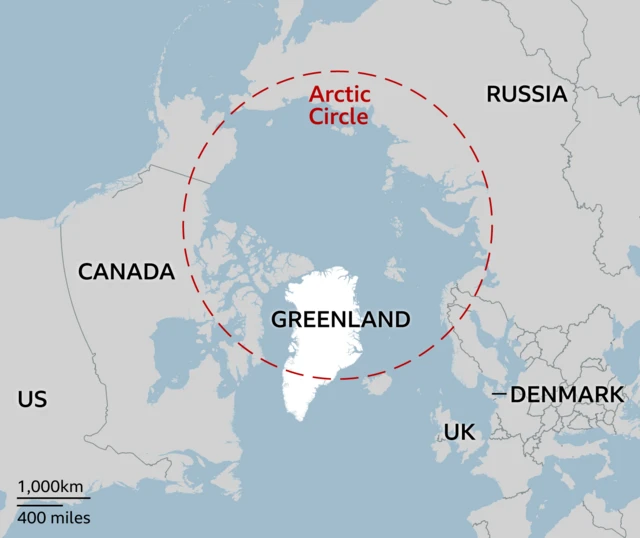
A map showing Greenland's location in relation to US, Canada, UK and Denmark

A quick guide to Greenland

published at 07:5

A map showing Greenland's location in relation to US, Canada, UK and Denmark

Greenland is the world's biggest island and sits in the North Atlantic Ocean, between North America and Europe.

Most of the island is in the Arctic Circle and is covered by a permanent ice cap.

Trade: Melting ice due to climate change means shipping routes are opening up around Greenland's waters. This could also unlock access to minerals and fishing areas.

Natural resources: Greenland has potential oil, gas and key mineral reserves - including some seen by the US as critical to its national security - but the Arctic climate makes extracting them difficult.

Population: Around 57,000, mainly made up of indigenous Inuit. Most live in the south west, near the capital Nuuk.

Military: The US has had a military presence on the island since World War Two, when Nazi Germany occupied Denmark. Its only current base is Pituffik, while Denmark also has several military sites.

Politics: Autonomous territory of Denmark governs its own domestic affairs but not its defence policy. Most Greenland political parties are in favour of independence.

கிரீன்லாந்து ஒரு சுருக்கமான தரவு:

கிரீன்லாந்து உலகின் மிகப்பெரிய தீவாகும், இது வட அட்லாண்டிக் பெருங்கடலில், வட அமெரிக்காவிற்கும் ஐரோப்பாவிற்கும் இடையில் அமைந்துள்ளது.

தீவின் பெரும்பகுதி ஆர்க்டிக் வட்டத்தில் உள்ளது மற்றும் நிரந்தர பனி மூடியால் மூடப்பட்டுள்ளது.

வர்த்தகம் : காலநிலை மாற்றத்தால் பனி உருகுவதால் கிரீன்லாந்தின் நீர்நிலைகளைச் சுற்றி கப்பல் பாதைகள் திறக்கப்படுகின்றன. இது கனிமங்கள் மற்றும் மீன்பிடிப் பகுதிகளுக்கான அணுகலைத் திறக்கக்கூடும்.

இயற்கை வளங்கள்: கிரீன்லாந்தில் எண்ணெய், எரிவாயு மற்றும் முக்கிய கனிம இருப்புக்கள் உள்ளன - அவற்றில் சில அமெரிக்காவால் அதன் தேசிய பாதுகாப்பிற்கு முக்கியமானதாகக் கருதப்படுகின்றன - ஆனால் ஆர்க்டிக் காலநிலை அவற்றைப் பிரித்தெடுப்பதை கடினமாக்குகிறது.

மக்கள் தொகை : சுமார் 57,000 பேர், பெரும்பாலும் பழங்குடி இனுயிட் இனத்தைச் சேர்ந்தவர்கள். பெரும்பாலானோர் தலைநகர் நூக்கிற்கு அருகில் தென்மேற்கில் வசிக்கின்றனர்.

இராணுவம் : இரண்டாம் உலகப் போருக்குப் பிறகு, நாஜி ஜெர்மனி டென்மார்க்கை ஆக்கிரமித்ததிலிருந்து, அமெரிக்கா தீவில் இராணுவ இருப்பைக் கொண்டுள்ளது. அதன் தற்போதைய ஒரே தளம் பிடுஃபிக் -Pituffik- ஆகும், அதே நேரத்தில் டென்மார்க்கின் பல இராணுவத் தளங்கள் உள்ளன.

அரசியல் : கிரீன்லாந்து டென்மார்க்கின் சுயாட்சிப் பிரதேசம் ஆகும். அதன் சொந்த உள் விவகாரங்களை நிர்வகிக்கிறது, ஆனால் அதன் பாதுகாப்புக் கொள்கையை டென்மார்க்கே தீர்மானிக்கின்றது.கிரீன்லாந்து அல்ல. பெரும்பாலான கிரீன்லாந்து அரசியல் கட்சிகள் சுதந்திரத்தை ஆதரிக்கின்றன.

India and EU strike landmark trade deal after two decades of talks

India and EU strike landmark trade deal after two decades of talks January 27, 2026                            Jamie Young                  ...