SHARE

Sunday, May 11, 2025

Will the Govt. heed the warning of the voters’ ?

Local Council polls: Will the Govt. heed the warning in the voters’ verdict?

  • Though the ruling NPP won a majority of councils, a steep decline is seen in its rural strongholds
  • Failure to bring the corrupt to justice and reveal the masterminds of the Easter Sunday attacks is cited as a main reason for the decline in support
  • In the north-east, ITAK and Tamil parties regain support
  • In the south, opposition parties make gains, but questions remain over SJB’s failure to significantly increase its support

 By Our Political Editor- Sunday Times lk


In an election where nearly half of the registered voters did not turn up at polling booths


Tuesday’s local council elections delivered a brutal reckoning for the National People’s Power–Janatha Vimukthi Peramuna government, as the public’s simmering frustration boiled over into the ballot box.


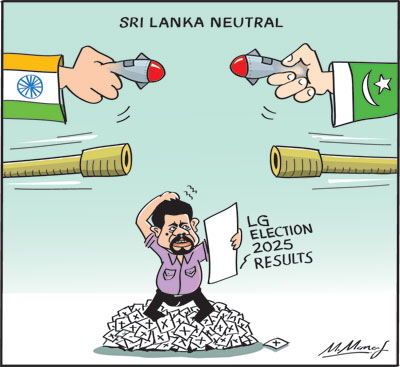
Six months on, President Anura Kumara Dissanayake’s administration has suffered a staggering drop in support—one that can no longer be dismissed as midterm jitters. With just 4,503,930, or 43%, of the votes cast at the local council elections, the number speaks for itself: a steeper 2.3 million vote nosedive (18.56 %) from parliamentary polls. This is not just a wake-up call for a government in office for six months. It is an alarm blaring across the corridors of power.


The electoral map now lays bare a stark urban-rural divide. While city voters have largely stuck with the government, rural communities have issued a decisive rebuke, shifting their allegiance away from the ruling party. This shift is particularly striking given that the rural constituency had previously voted in large numbers to ensconce them in power at the two previous national elections. The extent of the disaffection is evident in the steep decline in votes from areas perceived to be the ruling party’s strong base, underscoring the electorate’s desire for change.
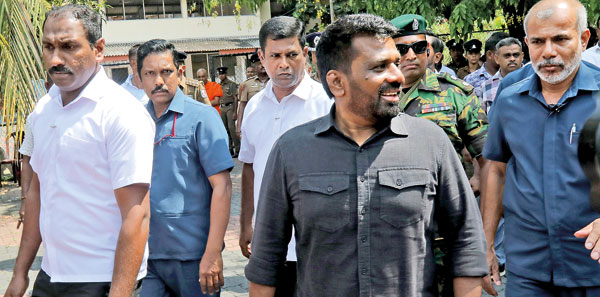

No sooner had he arrived from Vietnam on Tuesday than President Anura Kumara Dissanayake went to the Panchikawatte
polling booth to cast his vote in the local council elections


However, JVP General Secretary Tilvin Silva argued at a news conference on Thursday that the local council election results clearly show that people believed in their government. He ruled out any tie-up with other political parties to gain a majority in some councils. Such an act, he pointed out, would be conducted only with those elected as independents. Easily the second most powerful figure in the ruling party, Silva said—from his party’s headquarters in Pelawatte, Battaramulla—that the local election results were no cause for concern.


The NPP was placed first in 265 local councils—23 municipal councils, 25 urban councils and 217 Pradeshiya Sabhas—while the main opposition SJB were placed first in 14 councils. The Federal Party, or Ilankai Thamil Arasu Katchi (ITAK), recorded victories in 37 councils. The 23 other councils were shared by smaller parties and independent groups. In 120 councils, the NPP was placed first, but the opposition parties put together exceeded their numbers. The NPP’s strength in 20 other councils equalled opposition numbers.


The Colombo Municipal Council (CMC) is an example of how the power play will shape up. The NPP-JVP won 48 seats in what was once the United National Party (UNP) bastion, leaving others to win 69 seats. This was followed by SJB 29 seats, UNP 13 seats, Sri Lanka Podujana Peramuna 5 seats, Sri Lanka Muslim Congress 4 seats, Independent Group Three 3 seats, United Peace Alliance 2 seats, Sarvajaa Balaya 2, Independent Group Four 2 seats, Independent Group Five 2 seats, United Republican Front 1 seat, Independent Group One 1 seat, Independent Group Two 1 seat, Democratic National Alliance 1 seat, People’s Alliance 1 seat, National Freedom Front 1 seat and National People’s Party 1 seat.


All parties, excluding the NPP, improved their voter base compared to the parliamentary elections last year. In a significant move, the NPP in some of the councils located in the suburbs of Colombo obtained over 50 percent of the vote. They included the Kaduwela Municipal Council (53.4 percent), Maharagama Urban Council (52.4 percent), Kesbewa Urban Council (56.1 percent), Boralesgamuwa Urban Council (53.4 percent), Homagama Pradeshiya Sabha (55.8 percent). In contrast, the NPP’s popularity dropped in some of the remote areas. They included areas like Laggala Pallegama in Matale, where the NPP polled 36.1 percent and other areas like Ukuwela Pradeshiya Sabha (39.3 percent), Rajgama Pradeshiya Sabha in Galle (37 percent), Weligepola Pradeshiya Sabha (38.5 per cent ), Ayagama Pradeshiya Sabha (37 percent) and the Yatiyantota Pradeshiya Sabha (37.1 percent.)


This rupture in support is not just symbolic—it has tangible consequences. The NPP-JVP now finds itself precariously positioned in multiple councils, where razor-thin majorities leave the administration exposed to opposition manoeuvring. In some key councils, the opposition has overtaken the ruling party entirely, effectively rendering President Dissanayake’s government a minority in its own backyard. Unlike rival politicians who played a more conventional campaign game, the President himself spearheaded efforts on the ground—leading from the front, just as he did during the presidential and parliamentary races.


The latest local council elections underscore a politically volatile landscape in Sri Lanka. While the opposition registered marginal gains, its overall effectiveness remains questionable. The SJB managed only a 4.03% increase in votes—far below the 17.66% surge it experienced in the last parliamentary elections. This adds to the leadership struggle of Sajith Premadasa. In a bid to reassert himself, he made a public appeal that was an unusual move—urging for the opposition to get together. This appeal was a significant departure from his usual political strategy and underscored the desperate situation. The call for unity resonated with many, but whether it will translate into tangible support remains to be seen, moreso when his SJB and the UNP were not successful in their talks to reunite. The local council election results showed that if they had got together, they would have held sway in many councils. There was a bottom line—who would be the leader—and the talks collapsed.


The Sri Lanka Podujana Peramuna (SLPP) demonstrated a surprising resurgence, securing 9.17% of the vote compared to its 3.14% in the last parliamentary election. A hard-nosed campaign by Namal Rajapaksa had paid off. Though the reflection was a regional phenomenon, it is still noteworthy. Even the embattled UNP managed to claw back a modest share, rising to 4.69% from its previously negligible 0.69%. Notably, this uptick occurred despite the absence of a high-profile UNP campaign, suggesting localised support for individual candidates rather than a broader party-wide endorsement. Its leader, Ranil Wickremesinghe, who stands accused for the current sorry state of his party, lamented after the results were declared that his advice for opposition parties to get together was not heeded. He left for India on Thursday, the fourth since he quit as President.


North-East


One of the most significant shifts was the NPP-JVP’s unexpected electoral losses in local councils across the north and east—a development that stands in stark contrast to its broader national momentum. In a notable reversal, the Federal Party or the Ilankai Thamil Arasu Katchi (ITAK), secured a meaningful comeback, underscoring shifting allegiances in Tamil-majority regions. It is true that the government engaged in considerable infrastructure development work in the north and returned land held by the military to private owners. Yet, there has been no reference from NPP-JVP leaders to the 13th Amendment to the Constitution. There is also another aspect which government leaders may not be aware of. There were Tamil songs which their backers played in the north during the election campaign. They made heroic reference to Tiger guerrilla leaders and praised them. More on voting in the later paragraphs.


Despite the outward confidence projected by the NPP-JVP leadership, internal deliberations paint a different picture. One particularly contentious issue has been a circulating note identifying five non-politicians occupying key positions as primary contributors to the administration’s declining popularity.


While not all on the list to bear direct responsibility, some have been embroiled in controversies that have undermined governance and public trust. A few of the areas where the government turned unpopular overnight are analysed below. They no doubt contributed to the unpopularity of the government, both for the non-deliverance of repeated election pledges to bring those engaged in big-time bribery and corruption to book. A rapid loss of support has been linked to the government’s failure to deliver on its central campaign promise—prosecuting those involved in large-scale bribery and corruption. Six months into its tenure, little progress has been made aside from a handful of cases initiated before the current administration took office.


This has turned the searchlight on two senior police officers, widely publicised by NPP-JVP leaders as those who will deliver. They are Ravi Seneviratne, the former Senior DIG in charge of the CID. He is now secretary to the Ministry of Public Security. The other is Shani Abeysekera, the former Director of the CID. After returning from retirement, he has been reinstated to the Police in two different official capacities. He is Director of the newly established Central Criminal Intelligence Analysis Bureau. The other is Director of the Central Crime Investigation Bureau. The two were tasked with producing results on several important investigations. An example is the probe under their charge into the 2019 Easter Sunday massacres. As their probe was ongoing last month, President Dissanayake announced that by April 21, the sixth anniversary, some big names would be officially announced. However, there was no such announcement. Instead, the Presidential Secretariat announced that the final report of the Janak de Silva Commission of Inquiry that probed the massacres would be examined by a Police team.


This is four years after the same final report was sent by a previous government to the Attorney General who had initiated action on some of the alleged perpetrators. That their inability to produce results did embarrass President Dissanayake and his government. It has been the same with other cases over which President Dissanayake made references during speeches at election rallies. Other than previous cases involving the Mahinda Rajapaksa progeny, there have been no new cases.


Since assuming power, President Anura Kumara Dissanayake has pursued a strategy that extends beyond conducting local council elections—his administration is now laying groundwork for the long-overdue Provincial Council polls. Dissolved in September 2018, these councils remain without elected representatives, deepening concerns about governance stagnation under the NPP-JVP government. Alongside electoral preparations, the administration is also expanding its intelligence-gathering apparatus, moving beyond existing frameworks to establish a broader network that signals heightened state oversight of key sectors, including defence. This initiative is positioned as a means of strengthening governance and national security, though concerns linger over its implications for civil liberties and political opposition.


The months ahead of the local council elections has seen hectic activity by President Dissanayake. His government hurried through Parliament the legislation that were necessary for the conduct of local council elections, overdue for over five years. Originally they were to be held in 2022. The Minister responsible for local government extended the stalemate by postponing the polls until 2023. He was legally permitted to do so by a year. The polls were then put off by then President Ranil Wickremesinghe on the grounds that funds were not available.


President Dissanayake raised the Pay-As-You-Earn (PAYE) tax threshold that stood at Rs 100,000 to Rs 150,000. Salaries of state sector employees and the resultant pension benefits were raised to be effective from April this year. There was a delay in raising electricity tariffs, a demand from the International Monetary Fund (IMF). More lately came the exposition of Lord Buddha’s tooth relics that drew unprecedented crowds to Kandy. With a resultant high-pitched propaganda drive, the mass turnout was considered potential votes. Adding momentum was the largely attended May Day rally, an event held with the focus on local council elections.


Here, it is relevant to mention that President Dissanayake’s Clean Sri Lanka drive countrywide suffered a setback. Nearly a hundred buses with participants for the May Day rally travelling to Colombo stopped their vehicles in a row. Parking in the Southern Expressway is prohibited, and the police moved around helplessly. Most used the area as open-air toilets. Others ate their lunch brought in packets. There were yet others, at least in two separate locations, consuming local liquor. That members of the ruling party paid scant respect for Clean Sri Lanka was clear.


Dissanayake also adopted a firm stance on former presidents retaining official residences, a matter that has sparked debate. Tilvin Silva, a key figure in the NPP-JVP government, publicly urged the former president Mahinda Rajapaksa to vacate his official bungalow at Wijerama Mawatha in Colombo. It came just when President Dissanayake also urged him to quit, saying that the rental for the buildings he occupied, according to the Government Valuer, was Rs 4.6 million. This was when he was officially entitled to a rent of Rs 30,000 only. The campaign died in no time. As revealed last week, former President Rajapaksa has defiantly stayed put.


In a bid to win votes in the once troubled north, the government returned the jewellery which troops had seized during military operations. They had been identified through pawn ticket receipts and other documentation that were available with the gold and jewellery in packs. This is the third time such a return has taken place. The first took place in Vavuniya and thereafter at a ceremony at the Temple Trees. For these two occasions, the Defence Ministry then sought the help of District Secretaries to identify the owners. The Liberation Tigers of Tamil Eelam (LTTE), who dominated ground in the north, had set up banks and operated a pawning service.


There has also been discontent among farmers in the rural areas about the sale of paddy they had grown. The government’s inability to purchase their production forced them to sell their stocks to private traders at much lower prices. This remained a major issue.


Rising crime rate


Another deeply worrying factor is the rapid growth of crime. Not a day passes without a shooting incident, and the Police have still not been able to recover a substantial number of weapons, particularly automatic rifles and pistols in circulation. The NPP-JVP leadership is perhaps unaware that the sad situation in the police has contributed in no small measure to their unpopularity. Even officers in charge of Police stations around Colombo have not been able to counter even minor crime activity in their areas. The inefficiency of the Police has been reflected in two major instances. One was their inability to find their own Inspector General of Police, against whom there was a warrant for his arrest. The other is their inability to find a woman who was posing as a lawyer when a gunman shot dead an underworld kingpin, Ganemulla Sanjeeva, inside the Magistrate’s Court in Hulftsdorp. There is still a Rs 1.5 million reward for anyone who can tell the whereabouts of the woman identified as Ishara Sewwandi.


Despite a variety of issues that made the government unpopular, there is one that stands out particularly good. That is the nonuse of any state resources by them during the election. This is unprecedented.


Now to the outcome of the local councils in the north and the east: In the Jaffna district, where the NPP received 24.8 percent in the last parliamentary elections, this time it was able to gain only 19.5 percent of the vote. The votes the NPP received in the Jaffna district at the parliamentary elections were higher than what the ITAK received—19.47 percent. The ITAK votes in the Jaffna district increased to 31 percent at the May 6 local council elections. In an analogous manner, other Tamil parties too increased their voter base. In several electorates the ITAK and other parties too increased their voter base, while the NPP showed a decline, though it was comparatively lower than decreases in other districts.


ITAK General Secretary Sumanthiran told the Sunday Times, “The failure of the NPP’s parliamentarians to keep to their promises has been one of the reasons for their setback. They also failed to address the poaching issues in the Palk Strait by non-Sri Lankan fishermen and thereby broke the promises given to local fisherfolk. This was seen as another reason for the decline.”


He added, “The false promises given during the parliamentary elections by the NPP to the people in the north and east and the failure to implement some of the programmes promised are the main reasons for the voters to return to the ITAK and other Tamil political parties. One of the significant points is that the NPP has lost its popularity just six months after a parliamentary election where they got over 60 percent of the vote. In contrast, the Yahapalana government carried out a 100-day programme, but made the mistake of conducting the local government elections three years later.”


But this time, direct engagement was not enough to stem the tide of discontent.


In an election where nearly half of the registered voters did not turn up at polling booths, the remaining segment consisted of both those who voted for President Dissanayake and his government in the presidential and parliamentary elections, as well as those who chose not to cast their votes.


The government must now confront the hard truth: the electorate has sent a warning. The real question is, will they heed it? This shift is particularly striking given that the rural constituency had previously voted in large numbers to ensconce them in power at the two previous elections. The extent of the disaffection is evident in the steep decline in votes from areas perceived to be their strong base, underscoring the electorate’s desire for change.☝

Saturday, May 10, 2025

China remains steadfast in upholding int'l economic and trade order

China remains steadfast in upholding int'l economic and trade order

By Xinhua May 11, 2025 


  At the request of the US side, China and the United States kicked off on Saturday a high-level meeting on economic and trade affairs in Geneva, Switzerland. China decided to make contacts with the U.S. side after taking full account of global expectations, national interests and appeals from US businesses and consumers.

China possesses strong resilience and ample policy tools to safeguard its legitimate rights and interests. It stands ready to work with the international community to jointly oppose all forms of unilateralism, protectionism and economic coercion.

Whether the road ahead involves negotiation or confrontation, one thing is clear: China's determination to safeguard its development interests is unshakable, and its stance on maintaining the global economic and trade order remains unwavering.

The United States' reckless abuse of tariffs has flagrantly contravened World Trade Organization rules and destabilized the global economic order. Far from serving any legitimate purpose, these punitive duties represent a deliberate attempt to upend the multilateral trade system, inflicting damage on the rightful interests of countries around the world.

For the United States itself, its tariff offensive amounts to economic self-harm: while it cannot cure underlying structural problems, it has triggered financial market volatility, fueled domestic inflation, eroded industrial capacity and raised the risk of recession.

As the world's two largest economies, China and the United States share a profound stake in ensuring the soundness and steadiness of their commercial ties. The U.S. business and academic communities have consistently stressed that international trade is not a zero-sum game but should foster mutual benefit and shared success. U.S. policymakers should heed these rational and objective voices, and take concrete steps to restore China-U.S. trade relations to a path of healthy and stable growth.

Given mounting calls for economic stability, the decision to sit down for negotiations represents a positive and necessary step to resolve disagreements and avert further escalation. But as China has consistently emphasized, meaningful dialogue can only proceed on the basis of mutual respect, equal consultation and mutual benefit.

If Washington is truly committed to resolving trade frictions through dialogue, it must first confront the harm its tariff-driven policies have inflicted not only on the global trading system, but also on its own economy and citizens.

It must honor established international trade rules and adhere to principles of fairness and justice. Talks should never be a pretext for continued coercion or extortion, and China will firmly reject any proposal that compromises core principles or undermines the broader cause of global equity.

Confronted with U.S. protectionism and economic bullying, China has deployed decisive countermeasures and rallied multilateral support through the United Nations and other global forums to amplify the call for justice. China's actions defend not only its own legitimate development rights but also the shared interests of the wider international community, particularly smaller and developing nations.

China has taken note that some economies are also engaged in negotiations with the United States. It must be emphasized that appeasement cannot secure peace, nor can compromise earn respect. Upholding principled positions and defending fairness and justice remain the right way to safeguard one's legitimate interests.

At its heart, this is not just a trade dispute -- it is an encounter between two fundamentally different visions in this age of economic globalization: one rooted in openness, cooperation and shared growth; the other driven by confrontation, exclusion, and zero-sum mentality.

The talks in Switzerland mark a crucial step toward resolving the issue. However, its ultimate resolution requires sufficient strategic patience and perseverance, as well as the international community's steadfast support for justice.

அபரிமித பண்ட உற்பத்தியின் அணிவகுப்பு ;
An aerial drone photo taken on Feb. 2, 2024 shows an international container terminal of Tianjin Port
in north China's Tianjin. (Xinhua/Zhao Zishuo)

China entered the Geneva talks with confidence in its solid economic fundamentals. Its economy grew by 5.4 percent year-on-year in the first quarter of 2025; in 2024, its total goods imports and exports surpassed 43 trillion yuan (about 5.94 trillion U.S. dollars), with a more diversified set of trading partners and improved export composition.

Meanwhile, policy innovation and market vitality are working in tandem: new fiscal and monetary measures, ranging from interest-rate cuts to targeted support for innovation and social welfare, have further bolstered growth prospects and strengthened China's ability to weather external shocks.

At a time when globalization is under strain and protectionism is on the rise, China has chosen not to lock itself up. Instead, it has doubled down on opening up, advancing trade and investment liberalization with renewed determination and creating opportunities for shared development across the globe.

China's position is clear: no matter how the global landscape shifts, it will remain committed to openness, using the reliability of its own development to help offset the uncertainties facing the wider world.

Trade wars and tariff battles yield no winners. A stable and constructive China-U.S. relationship serves the interests of both nations and the world at large. It is through sustained dialogue, responsible management of differences and deeper win-win cooperation between the world's two largest economies that the global economy can gain the confidence and momentum it urgently needs.🔺

Friday, May 09, 2025

At least two Indian jets crashed

At least two Indian jets appear to have crashed during Pakistan strikes, visuals show

In a review of visuals posted online, The Post verified debris consistent with at least two French-made fighter jets flown by the Indian air force.

Yesterday 9-05-2025  at 3:42 p.m. EDT 

By Imogen Piper
Jarrett Ley
Evan Hill
 and 
Maham Javaid

Metal debris lies on the ground in Wuyan in India-administered Kashmir's Pulwama district on Wednesday. (Sharafat Ali/Reuters)


India’s air force appears to have lost at least two fighter jets, including one of its most advanced models, during attacks Wednesday morning on sites in Pakistan and Pakistani-administered Kashmir, according to a review of visual evidence by The Washington Post.

Islamabad said Wednesday it had downed five Indian warplanes. New Delhi has neither confirmed nor denied the Pakistani claims; India’s military and its ministry of external affairs did not respond to a request for comment.

In a review of more than a dozen images and videos posted online in the aftermath of the strikes, The Post verified debris consistent with at least two French-made fighter jets flown by the Indian Air Force — a Rafale and a Mirage 2000.

The Post based its findings on analysis by Trevor Ball, a former explosive ordnance disposal technician for the U.S. Army; Etienne Marcuz, an associate fellow at the Foundation for Strategic Research; and a French airpower expert with military experience who shared his analysis on the condition of anonymity because he was not authorized to speak to the media. The experts could not determine whether the planes were shot down or crashed due to other reasons. The fate of the pilots was also unclear.

The loss of multiple fighter jets would represent the worst setback in battle for India’s air force in recent memory; in 2019, during the last round of fighting between the nuclear-armed neighbors, India acknowledged one of its jets was shot down by Pakistan.

India’s strikes inside Pakistan — launched in retaliation for a deadly militant attack on tourists last month in Indian-administered Kashmir — were the deepest in more than half a century; mutual accusations of drone attacks and border violations in the days that followed have brought the archrivals to the brink of full-scale conflict.

“There’s a lot of political weight being put behind the planes because neither side has yet crossed a threshold of full-scale conventional warfare,” said Sameer Lalwani, a fellow at the D.C.-based Center for Strategic and Budgetary Assessments.

United States Air Force and Indian Air Force personnel pose in front of a Rafale fighter jet during a joint exercise in India on April 24, 2023. (Debajyoti Chakraborty/NurPhoto/AP)

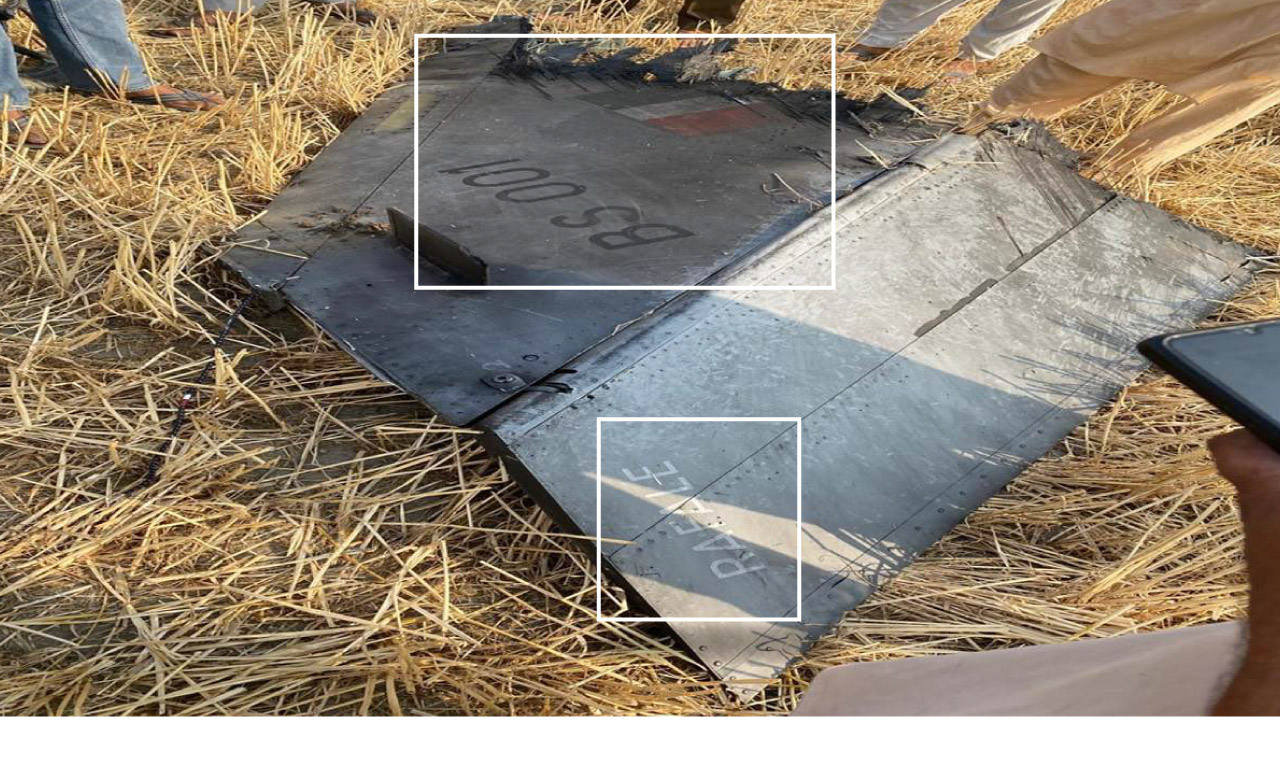
The word “Rafale” is stenciled in white on the vertical stabilizer in one image of the wreckage, alongside the letters “BS 001” and an Indian flag. The markings matched those on the vertical stabilizer of an Indian air force Rafale seen in images posted online in 2021.

Indian flag and serial number

“Rafale” marking

Image widely shared on X shows what experts said was a vertical stabilizer of a Rafale aircraft.


The Post could not independently geolocate the images of the wreckage, which were said to have been taken near the village of Akalia Khurd in Punjab, about 45 miles from India’s border with Pakistan. But they did not appear to have been posted online before Wednesday, and local reports said Indian military authorities had responded to a crash in the area and collected the wreckage. One farmer was killed by a postcrash blast after being the first to reach the site, the Indian Express reported.

Other photos taken in Wuyan, a village in Indian-administered Kashmir about 80 miles from the Pakistani border, showed what all three experts agreed was an external fuel tank belonging to a Mirage 2000, an older fighter aircraft also manufactured by Dassault that entered Indian military service in the 1980s.

Mirage 2000

external fuel tank

Image: Sharafat Ali/Reuters


Reuters

Fuel tanks can be jettisoned in response to a mechanical failure or combat damage, or to make a jet more maneuverable in battle, so are not on their own proof of a crash. But just a quarter-mile away, eyewitnesses reported a plane crashing into a primary school soon after the Indian strikes began. Part of a jet engine is visible within the flaming wreckage of the school in a video posted the night of the attack, according to Ball and the French airpower expert, which suggests an aircraft went down there.

Another video, posted Thursday by the school on Facebook, showed schoolgirls picking up fallen tree limbs and commentators expressing hope it would be rebuilt.

“These missile launch rails are attached to the aircraft, and it being on the ground, along with the large fire in the background indicates a crash likely occurred,” Ball said.

The Post identified an apparent third crash site in Akhnoor, in Indian-administered Kashmir, based on videos and news reports from the day, but it was not possible to determine what type of aircraft was in the wreckage from the available visuals.

Pakistani Prime Minister Shehbaz Sharif said Pakistani planes never entered Indian territory and only shot down the Indian aircraft after they had “delivered their payload.”

Arzan Tarapore, a research scholar focusing on Indian military strategy at Stanford University, said India’s silence on the planes was unsurprising.

“The Indian government during a crisis is typically very guarded about operational details,” he said. “It’s harder to be restrained and control the trajectory of the crisis if you admit to severe losses.”

Sushant Singh, a Yale University lecturer and former Indian military official, said the lack of comment from New Delhi has also allowed Pakistan to “claim a win, and maybe that could be an off-ramp” for escalation.🔺

Putin and Xi cast themselves as defenders of world order


Xi attends Russia's Victory Day parade at Moscow's Red Square

By Xinhua May 09, 2025 Global Times

Chinese President Xi Jinping on Friday attended a grand parade here at the Red Square marking the 80th anniversary of the victory in the Soviet Union's Great Patriotic War.

Leaders from more than 20 countries and international organizations are invited to the event. 

China, Russia to shoulder special responsibility amid rising unilateralism

By Xinhua May 09, 2025

Chinese President Xi Jinping and Russian President Vladimir Putin sign a joint statement on further deepening the China-Russia comprehensive strategic partnership of coordination for a new era after their talks at the Kremlin in Moscow, Russia, May 8, 2025. (Photo: Xinhua)

In the face of the countercurrent of unilateralism and the act of power politics and bullying in the world, China will work with Russia to shoulder the special responsibility as major countries of the world and permanent members of the UN Security Council, Chinese President Xi Jinping said Thursday.

Xi made the remarks while holding talks with Russian President Vladimir Putin during his state visit to Russia.

The two leaders exchanged in-depth views on China-Russia relations and major international and regional issues, reaching consensus on unwaveringly deepening strategic coordination and promoting the stable, healthy and high-level development of China-Russia relations. They also called for promoting the correct historical perspective on World War II (WWII), maintaining the authority and status of the United Nations, and safeguarding international justice and fairness.

ROBUST TIES

In recent years, China-Russia ties have enjoyed stable, healthy and high-level development thanks to joint efforts from both sides, Xi said, hailing long-term good-neighborly friendship and mutually beneficial cooperation as distinct features of bilateral ties.

The political mutual trust between the two countries has grown ever deeper, the bond of practical cooperation ever stronger, while people-to-people exchanges and local interactions have flourished with increasing vitality, Xi said, noting that China-Russia relations have grown more confident, stable and resilient in the new era.

Xi said that history and reality have fully proved that continuing to develop and deepen China-Russia relations is integral to carrying forward the friendship between the two peoples from generation to generation, adding that it is an inevitable choice for both sides to achieve mutual success and promote their own development and revitalization.

It is also the call of the times for safeguarding international fairness and justice and promoting the reform of the global governance system, Xi said.

Noting that this year marks the 80th anniversary of the victory in the Chinese People's War of Resistance against Japanese Aggression, the Soviet Union's Great Patriotic War and the World Anti-Fascist War, Xi said that 80 years ago, peoples of China and Russia made tremendous sacrifices and won great victories, making remarkable historic contributions to maintaining world peace and the cause of human progress.

China will work with Russia to take a clear stand to jointly promote the correct historical perspective on WWII, safeguard the authority and status of the United Nations, firmly defend the victory of WWII, resolutely defend the rights and interests of China, Russia and the vast number of developing countries, and promote an equal and orderly multipolar world and a universally beneficial and inclusive economic globalization, Xi said.

CLOSER COOPERATION

The two heads of state also received briefings from respective department leaders of the two countries regarding bilateral cooperation across various sectors.

Xi pointed out that China and Russia should stick to the general course of cooperation and fend off external disruptions, so as to solidify the foundation for stable cooperation and ensure stronger momentum for progress.

The two countries should tap into the resource endowments of both countries and complementary advantages of their industrial systems, and expand high-quality and mutually beneficial cooperation in such fields as economy, trade, energy, agriculture, aerospace and artificial intelligence, Xi said.

The two countries should take the synergy between the Belt and Road Initiative and the Eurasian Economic Union as a platform to build a high-standard connectivity pattern, he said, adding that the two countries should fully unleash the potential of the China-Russia Years of Culture, strengthen cooperation in education, film, tourism, sports and local areas, and promote deep-rooted people-to-people connectivity.

The two countries should closely coordinate and cooperate on multilateral platforms such as the United Nations, the Shanghai Cooperation Organization and BRICS, unite the Global South, uphold true multilateralism, and steer the right direction of global governance reform, Xi added.

Xi emphasized that China is comprehensively advancing the building of a strong country and the great cause of national rejuvenation through Chinese modernization, and that China possesses both the resolve and confidence to overcome all risks and challenges.

No matter how the external environment changes, China will firmly handle its own affairs well, Xi said, adding that China stands ready to work with Russia to shoulder the special responsibilities bestowed by the times, safeguard the global multilateral trading system and keep the industrial and supply chains stable and unimpeded, and make greater contributions to promoting the development and rejuvenation of the two countries and upholding international fairness and justice.

For his part, Putin said that the Russia-China relations are based on mutual equality and respect, not targeting any third party and not affected by any temporary incidents.

Unswervingly promoting the development of Russia-China relations and expanding mutually beneficial cooperation are Russia's strategic choices, Putin said, adding that the Russian side firmly adheres to the one-China principle and has always supported China's position on the Taiwan question.

Russia is ready to maintain close high-level exchanges with China, strengthen practical cooperation in such fields as trade, investment, energy, agriculture, science and technology, deepen people-to-people and cultural exchanges in education, culture, youth, tourism and other areas, and expand the connotations of the Far East region cooperation.

Imposing high tariffs is senseless and illegal, and will only backfire, Putin said, adding that the two sides should enhance coordination and cooperation within multilateral frameworks such as the United Nations, the Shanghai Cooperation Organization and BRICS, support the process toward a multipolar world, jointly oppose unilateralism, reject the abuse of sanctions, resist bloc confrontation, and safeguard the common interests of the international community.

Noting that both Russia and China made great sacrifices in the World Anti-Fascist War, Putin said that under the strong leadership of the Communist Party of China, the Chinese people fought bravely and achieved a great victory in the War of Resistance Against Japanese Aggression, making significant contributions to the victory of WWII.

During the arduous years of war, Russia and China supported each other and forged a profound friendship, laying a solid foundation for the development of bilateral relations, Putin said, adding that both sides should safeguard the authority of the United Nations and international law, preserve the correct historical narrative on WWII, uphold international fairness and justice, and work together to create a brighter future for both countries and the world.

SAFEGUARDING INTERNATIONAL FAIRNESS, JUSTICE

On the same day, when jointly meeting the press with Putin after their talks at the Kremlin, Xi said that China and Russia should take a clear stand and coordinate comprehensively to make new and greater contributions to promoting the development and rejuvenation of the two countries and safeguarding international fairness and justice.

In the face of the changes of the world, of the times and of historical significance, China and Russia should keep a firm grasp on the development direction of bilateral ties and the general trend of the development of human society, Xi said.

Noting that his talks with Putin were in-depth, cordial and fruitful, Xi said he and Putin reached many important new consensus, signed a joint statement on further deepening China-Russia comprehensive strategic partnership of coordination for a new era and witnessed the exchange of multiple bilateral cooperation documents, which injected new impetus into the development of China-Russia relations.

Xi said that China and Russia must uphold long-standing friendship from generation to generation and remain true friends forged through trials and tribulations. Eighty years ago, in the face of brutal aggression of militarism and Nazism, the Chinese and Russian peoples stood united, fighting side by side against a common enemy and writing a remarkable and heroic chapter in history, he said.

The great friendship forged between the two peoples through the trials of war and bloodshed has laid a solid foundation for the high-level development of bilateral relations, Xi said, adding that the two countries should deepen political mutual trust, enhance strategic coordination and advance bilateral ties toward a more mature and resilient future.

Xi noted that the two countries should uphold fairness and justice and defend the international order. China and Russia, as main theaters of Asia and Europe in WWII, have made decisive contributions to the victory of the World Anti-Fascist War and laid a solid foundation for the establishment of the post-war international order, he said.

As forces for stability, progress and development in the international community, China and Russia should continue to firmly stand together, resolutely safeguard the UN-centered international system and the international order underpinned by international law, and continuously promote an equal and orderly multipolar world, said Xi.


Xi holds talks with Putin

Chinese President Xi Jinping held talks on Thursday with Russian President Vladimir Putin.

Xi arrived on Wednesday to pay a state visit to Russia and attend the celebrations marking the 80th anniversary of the victory in the Soviet Union's Great Patriotic War.

At Kremlin talks, Putin and Xi cast themselves as defenders of world order

By Dmitry Antonov May 8, 2025

Russian President Vladimir Putin shakes hands with his Chinese counterpart Xi Jinping during a welcoming ceremony before their talks at the Kremlin in Moscow, Russia, May 8, 2025. REUTERS/Evgenia Novozhenina/Pool

Summary

  • Putin says both countries stand together against 'neo-Nazism'
  • In swipe at US, Xi says they will counter 'bullying'
  • Kremlin seeks boost from visit of powerful ally
  • Xi is star guest at lavish World War Two commemorations

MOSCOW, May 8 (Reuters) - Russian President Vladimir Putin thanked Chinese President Xi Jinping for joining celebrations to mark 80 years since the "sacred" victory over Adolf Hitler in World War Two, and said the two countries stood together now against "neo-Nazism".

Xi's presence at this week's anniversary celebrations provides an important boost for the Kremlin leader, who has portrayed his war in Ukraine as a struggle against modern-day Nazis from the start.

The Reuters Tariff Watch newsletter is your daily guide to the latest global trade and tariff news. Sign up here.

Ukraine and its allies reject that characterisation as a grotesque falsehood, accusing Moscow of conducting an imperial-style invasion.

"The victory over fascism, achieved at the cost of enormous sacrifices, is of lasting significance," Putin told Xi on Thursday.

"Together with our Chinese friends, we firmly stand guard over historical truth, protect the memory of the events of the war years, and counteract modern manifestations of neo-Nazism and militarism."

Xi said the two countries, as world powers and permanent members of the U.N. Security Council, would work together to counter "unilateralism and bullying" - an implied reference to the United States.

He said they would "jointly promote the correct view of the history of World War Two, safeguard the authority and status of the United Nations, resolutely defend the rights and interests of China, Russia and the vast majority of developing countries, and work together to promote an equal, orderly, multipolar, and inclusive economic globalisation".

The two men spoke after approaching each other along a red carpet from opposite ends of one of the Kremlin's most opulent halls and shaking hands in front of the cameras. Each greeted the other as "dear friend".

POWERFUL GUEST

Xi is the most powerful of more than two dozen foreign leaders who are visiting Moscow this week to mark Thursday's 80th anniversary of the end of World War Two - a celebration of huge significance for Putin.

Domestically, it offers him a chance to rally Russians in remembrance of a historic feat that is central to the country's national identity. The Soviet Union lost 27 million people in World War Two, including many millions in Ukraine, which was also devastated.

On the world stage, Putin aims to cast himself alongside Xi as a defender of the international order, and to demonstrate that years of Western sanctions have failed to isolate Russia.

Putin last week announced a unilateral three-day ceasefire in the war with Ukraine, beginning on Thursday. Ukraine has not committed to abide by it, calling it a ruse by Putin to create the impression he wants to end the war. Instead, it has declared its willingness to join a ceasefire lasting at least 30 days.

Both countries are under pressure from U.S. President Donald Trump to reach a peace deal, and Washington has threatened repeatedly to walk away from talks unless there is clear progress.

Ukraine targeted Moscow with drones for three days earlier this week, but the skies above the capital were calm on Thursday. With so many foreign leaders present, any attacks during the May 9 events could embarrass Putin and would likely draw a tough response from Moscow.

A Ukrainian military spokesperson told Reuters that Russian troops had continued to conduct assaults in several areas on the eastern front, despite the ceasefire. The air force said Russian aircraft had launched guided bombs on the Sumy region of northern Ukraine three times.

But the air force also said there had been no Russian missiles or drones in Ukrainian airspace since the Kremlin-sponsored ceasefire kicked in.

Chinese troops will take part in Friday's military parade on Red Square, the centrepiece of the commemorations. Ukraine's Foreign Ministry on Tuesday urged countries not to send their militaries to participate, saying it would go against some countries' declared neutrality in the war.

Xi has called for talks to end the conflict in Ukraine and has accused the U.S. of stoking it with weapons supplies to Kyiv. Ukrainian President Volodymyr Zelenskiy has in the past urged him to try to persuade Putin to halt the war.

Xi, whose country is locked in a tariff war with the United States, is expected to sign numerous agreements to deepen the "no limits" strategic partnership that Russia and China signed in 2022, less than three weeks before Putin sent his army into Ukraine.

China is Russia's biggest trading partner and has thrown Moscow an economic lifeline that has helped it navigate Western sanctions. China buys more Russian oil and gas than any other country.

Reporting by Dmitry Antonov in Moscow, Kyiv and Beijing newsroom and Maxim Rodionov, Filipp Lebedev and Alexander Marrow in London, writing by Mark Trevelyan

காலநிலை அறிவிப்பு-பேராசிரியர் நா.பிரதீபராஜா

https://www.facebook.com/Piratheeparajah 03.12.2025 புதன்கிழமை பிற்பகல் 3.30 மணி விழிப்பூட்டும் முன்னறிவிப்பு இன்று வடக்கு மற்றும் கிழக்கு ம...