SHARE

Sunday, February 09, 2025

Visualizing the international reach of U.S. funding cut by Trump

Visualizing the international reach of U.S. funding cut by Trump

Using graphics to illustrate the scope of U.S. foreign aid spending and analyzing how the Trump administration’s sweeping cuts could play out across the world.


By Cate Brown
Dan Keating
 and 
Dylan Moriarty

In a matter of weeks, President Donald Trump has moved to dismantle a vast international aid system built up by Republican and Democratic administrations over decades.


More than $60 billion in foreign assistance has been frozen for 90 days, pending a government review. Secretary of State Marco Rubio has said the U.S. Agency for International Development may be abolished. On Friday, a federal judge blocked the administration from placing about 2,7000 staffers on paid leave and recalling nearly all of those posted abroad.


In a letter to lawmakers last week, Rubio cited “conflicting, overlapping, and duplicative” activities by USAID resulting in “discord in the foreign policy and foreign relations of the United States.”


“CLOSE IT DOWN,” Trump posted Friday on social media.


Without U.S. support, humanitarian experts warn that already precarious global aid efforts could collapse, putting millions of lives at risk. Some former government officials said the sudden changes would undercut U.S. foreign policy and national security.


“We are not only less safe, but we have abandoned people all over the world,” said Brittany Brown, a former USAID official.


On Wednesday, Trump’s former USAID counselor Chris Mulligan condemned the funding pause. “Every minute that assistance is frozen weakens America, makes us less secure and costs us jobs,” he said.


Here’s a breakdown of U.S. foreign assistance and a look at how the new administration’s sweeping cuts could play out across the world.
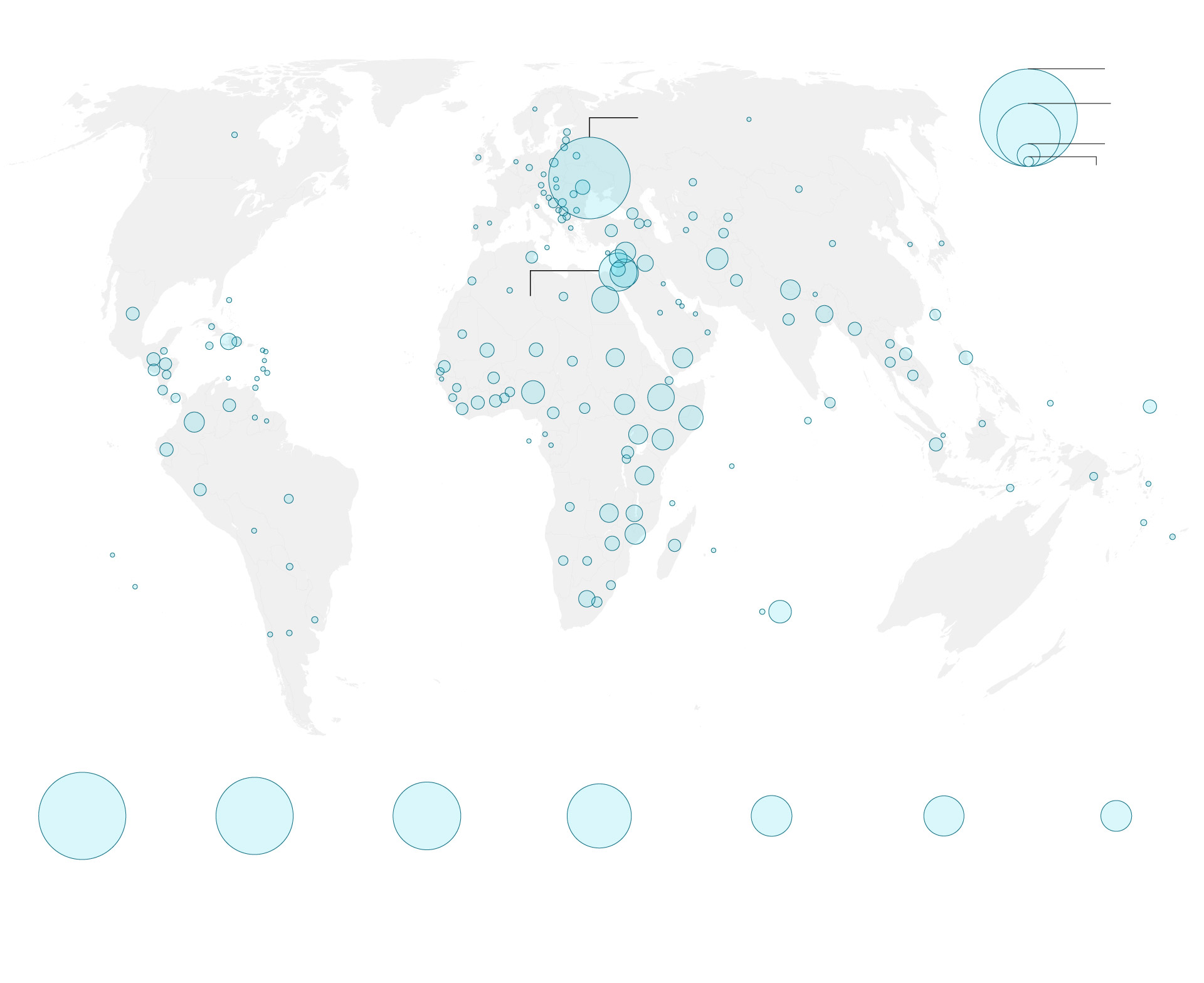

Foreign aid by country, 2023 FY

25B

10B

Ukraine

$17.2B

1B

100M

Israel

$3.3B

Foreign aid spending by region

Europe and

Eurasia

$20.2B

Sub-Saharan

Africa

15.7B

Worldwide

programs

15.7B

Middle East and

North Africa

10.6B

South and

Central Asia

3.9B

Western

Hemisphere

3.8B

East Asia

and Oceania

2.1B


The U.S. government is the world’s single largest humanitarian donor, according to the United Nations, though foreign assistance represented less than 1 percent of the congressional budget in fiscal 2023. That adds up to about $210 a year for the average taxpayer, compared with more than $2,800 per year for defense.


President Harry S. Truman introduced the country’s first major foreign aid package in the aftermath of World War II, arguing that strategic assistance could insulate states against the spread of communism. A decade later, President John F. Kennedy signed the Foreign Assistance Act into law and created USAID by executive order.

Key allies, such as Ukraine, Israel and Egypt, rely on U.S. funding to secure their borders and protect shared interests. Other top recipients, including Jordan, Iraq and countries across sub-Saharan Africa, rely on American aid to combat the debilitating effects of war, drought and disease.


Experts warn that the 90-day funding pause could be particularly devastating for countries on the brink of famine, such as Sudan. The World Food Program there relies on the United States for more than 60 cents of every dollar spent on aid.


“The United States is the financial foundation of the entire humanitarian system,” said Nathaniel Raymond, executive director of the Humanitarian Research Lab at the Yale School of Public Health. “How will the house stand if you rip down the foundation?”


Global health and food aid

Emergency food assistance

$5.3B

Material relief assistance

and services

5.2B

Health

$23.7 billion

STD control including HIV/AIDS

5.1B

Relief co-ordination; protection

and support services

3.7B

Other 4.4B

Countries with largest spending of health funds

Ethiopia

Nigeria

Congo (Kinshasa)

880M

802M

$1.2B

Afghanistan

Syria

728M

769M

Ukraine

1.1B

Yemen

Kenya

South Sudan

699M

679M

617M

Somalia

881M

A third of the U.S. foreign aid budget in 2023 was spent on emergency food and global health.


In Ethiopia, the largest recipient of U.S. food assistance, WFP estimates that over 15 million people rely on emergency aid, following a years-long drought that wrecked crops and an armed conflict in Tigray that left communities on the brink of famine.


The majority of people receive direct food aid, rather than cash, which means that working supply chains are vital to staving off hunger.


Although Rubio issued a waiver to exempt emergency food programs from the 90-day aid pause, WFP administrators said the entire production line in Ethiopia has ground to a halt.


Warehouses in Djibouti are stocked with next month’s food supply, but truck drivers and program officers have been fired, furloughed or ordered to stop work. Without transportation or staff, palettes of taxpayer-funded flour, lentils and iodized salt may go to waste.


Aid workers say they have been given no guidance from administrators on whether essential workers can return.

“They got rid of all the senior lawyers,” said a senior USAID civil servant, now placed on administrative leave, speaking like others in this story on the condition of anonymity for fear of retribution. “The people who would be working to clarify these things aren’t around.”


An internal WFP memo viewed by The Washington Post warned of an “imminent” break in Ethiopia’s emergency assistance pipeline. Officials fear the disruption could set off a chain reaction of violence, starvation and migration.

The impact on global health could be just as swift and far-reaching. Multimillion-dollar programs to combat malaria, Ebola and tuberculosis have been put on hold. Some U.S.-funded clinics were ordered to close. And medical providers that receive U.S. support said that they have started to ration supplies or halt nonessential services in anticipation of funding gaps.


“We’re reading that an agency is closing down, but it’s not an agency: It’s someone for people to see when they go into labor or their child gets sick with malaria,” said Colin Puzo Smith, director of global policy at the nonpartisan advocacy group Results.


Over the past decade, there’s been a bipartisan effort to give local communities more control over health programs — often placing USAID in a supporting role.

“USAID is not footing the bill for the majority of health needs worldwide, but they often support a key part of the system,” said Puzo Smith. “When you turn that off overnight, it throws the whole system into disarray.”

Under a waiver granted by Rubio to the United States’ flagship HIV prevention program, PEPFAR, doctors are free to administer “lifesaving HIV care and treatment services,” but some say they are afraid to proceed because U.S.-funded systems to track pharmaceutical supplies are disabled and access to USAID’s global payment system has not been restored.


Global security
Stabilization operations

and security sector reform

$9.1B

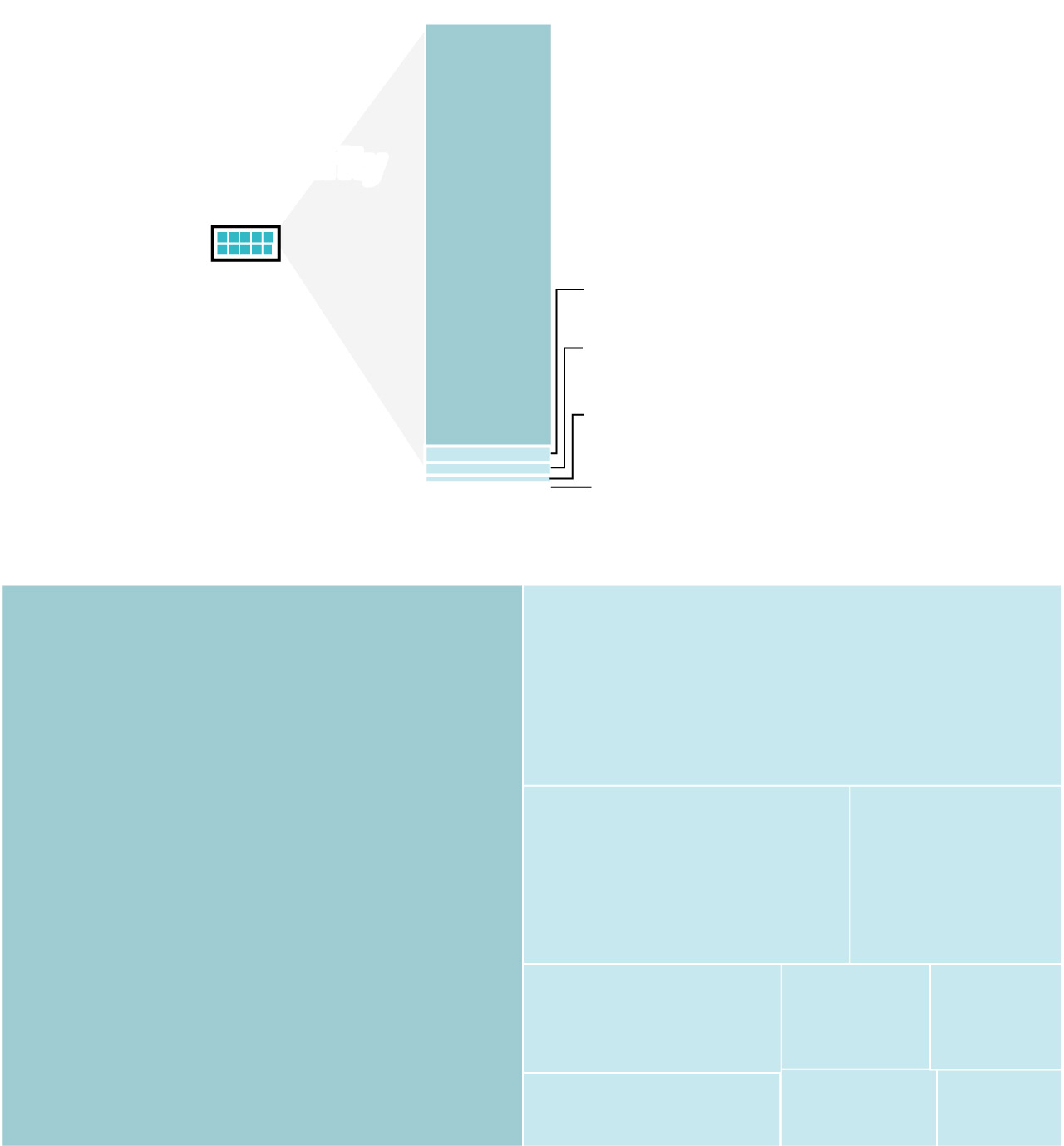
Global security

$9.9 billion budget

Conflict mitigation and reconciliation

$349M

Combating weapons of mass destruction

$278M

Peace and security - general

$157M

$10M

Other

Countries with largest spending of security funds

Egypt

1.2B

Ukraine

Jordan

654M

429M

Israel

$3.3B

Iraq

Lebanon

Somalia

318M

215M

181M

Ecuador

Taiwan

Colombia

162M

135M

113M

The United States spends nearly $10 billion on programs designed to reduce global conflict.


One third of “stabilization” funding was given directly to Israel in 2023, followed by large contributions to Ukraine and Egypt. U.S. support to Israel increased dramatically after the Hamas-led attacks on Oct. 7, 2023, and the war in Gaza. Trump issued a waiver for Israel and Egypt that allows U.S. funding to continue throughout the pause.

The United States also leads efforts to combat violent extremism in Syria, Iraq and across North Africa.

At Al Hol, a desert camp in northeast Syria that houses thousands of former Islamic State fighters and their families, a collection of U.S. contractors provide food, water and fuel to residents, and train the camp’s security forces.


Although some programs have resumed following a State Department waiver, the future of key contractors may be in jeopardy because USAID has not issued payments for other regional programs in December and January, according to Proximity International. The U.S.-based contractor says it is owed more than $2 million.

“We will fail because USAID does not have a working mechanism to pay us back for money we have already spent on allowable expenses,” said Courtney Brown, Proximity International’s CEO.


In Iraq, the future of a flagship effort to resettle the families of former Islamic State fighters is also in doubt.

The U.S.-backed program “facilitated security clearances, cross-border transit and rehabilitation support for the new arrivals,” said a former USAID senior staff member. “Now all of that is on pause.”


The former staffer fears that the breakdown in U.S. programming will undercut years of local trust-building and strengthen the hand of Tehran.


“A more stable Iraq was a more sovereign Iraq that could stand up to Iranian pressure,” he said.


Governance
Macroeconomic

foundation

for growth

$14.6B

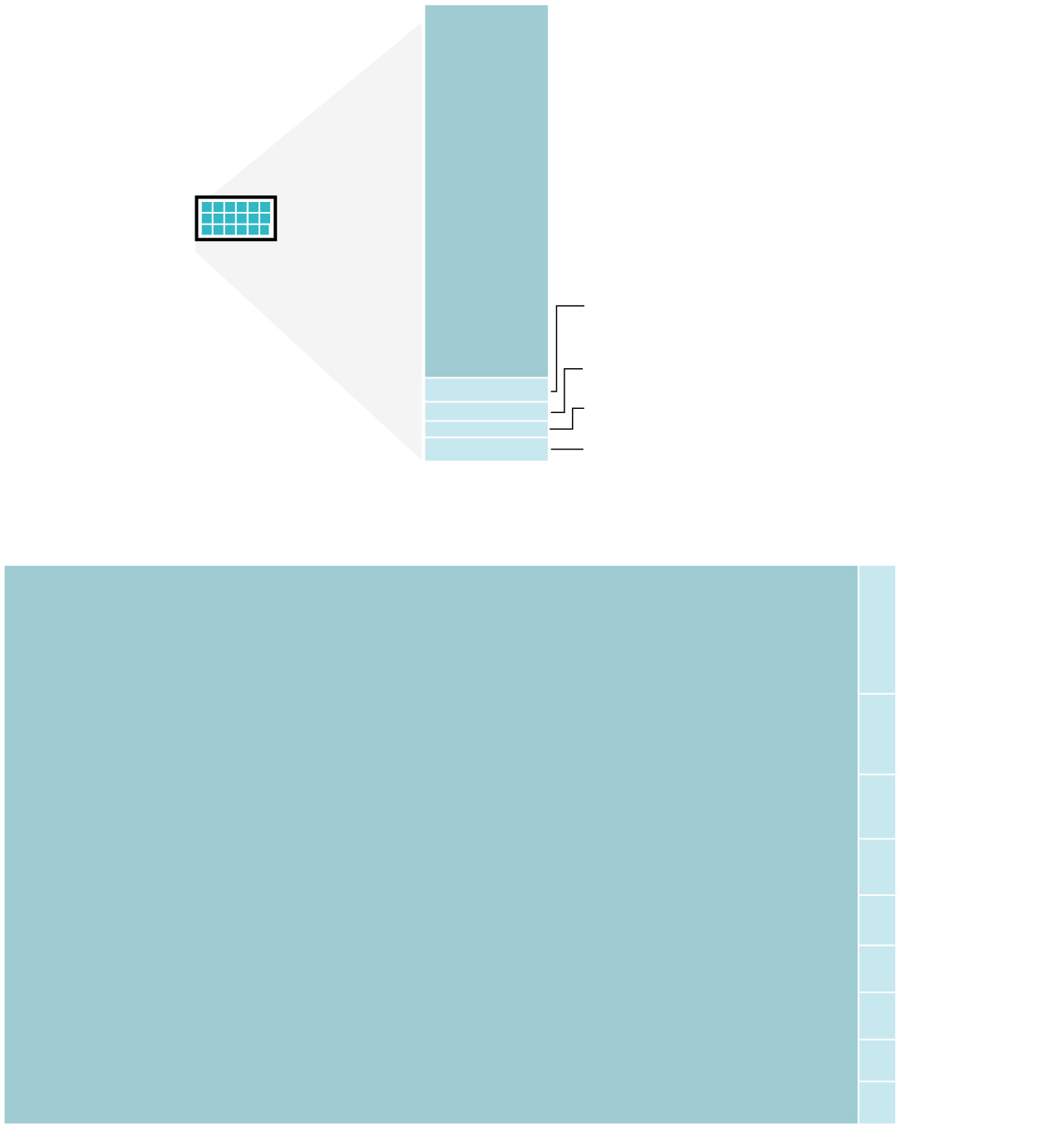
Governance funds

$17.8 billion

Rule of law and

human rights 933M

Good governance 749M

Civil society 749M

Other 937M

Countries with largest spending of governance funds

Moldova

151M

Colombia

92M

Mexico

73M

Ukraine

West Bank

and Gaza

14.7B

66M

Honduras

58M

El Salvador

54M

Tunisia

52M

Somalia

49M

Bangladesh

49M

U.S. investments in global governance range from anti-corruption initiatives to programs that help safeguard elections.


The Biden administration committed more than $14 billion to Ukraine to soften the political and economic damage from Russia’s war with the nation. It also poured funding into Eastern European countries, such as Moldova, to counteract Russian influence.


Colombia, a key South American ally, is home to one of the most robust governance programs. The country has recently seen an upsurge in fighting between rival rebel groups and is hosting more than 3 million Venezuelan migrants. USAID was leading efforts to integrate new arrivals and reduce the flow of migrants to the north — a Trump administration priority.


“We used all the tools of national security: defense, diplomacy and development,” said Susan Reichle, a retired USAID mission director. “You need all three to help a country, particularly after conflict.”


Reichle fears the sudden U.S. departure will create a power vacuum.


“We are breaking our partners’ trust,” she said. “And this is going to force them into the arms of China and Russia.”🔺

Islandwide Power Outage: CEB


Islandwide Power Outage: CEB Update


12.47 PM : The Ceylon Electricity Board (CEB) has announced that it may take several hours to fully restore power across the island following a sudden nationwide outage today.

According to the CEB’s System Control Division, restoration efforts are underway in stages, but some areas may experience del

12.30 : A monkey clashing with the Panadura grid substation caused the islandwide power outage, according to Power Minister Jayakodi. The Minister stated that the incident led to a major disruption in the electricity grid, affecting supply across the country.

However, the Ministry of Power and Energy later described the situation as an “emergency at the Panadura substation,” without confirming the Minister’s claim. Restoration efforts are ongoing, with teams working to bring power back as soon as possible.

The Ceylon Electricity Board (CEB) has yet to issue an official explanation for the outage. Further updates are expected. (NewsWire)


12.20 : A sudden islandwide power outage has been reported, affecting multiple regions across Sri Lanka. The Ceylon Electricity Board (CEB) has acknowledged the issue and stated that steps are being taken to restore the power supply as soon as possible.

“The current islandwide power failure has been caused by an imbalance in the National Grid” Ministry of Power said.

“The System Control Centre of the Ceylon Electricity Board is currently in the process of restoring the islandwide power outage” CEB said in an update.

Authorities urge the public to remain patient as restoration efforts are underway. (NewsWire)

Saturday, February 08, 2025

OPINION: Lavrov Compares Trump’s ‘America First’ to Nazi propaganda


OPINION: Lavrov Compares Trump’s ‘America First’ to Nazi propaganda

Moscow, unsure of how Trump will turn out, are showing signs of unease by dispensing with diplomacy and lashing out.

By Peter Dickinson February 8, 2025

In a move likely to cause considerable offense in the White House, Russian Foreign Minister Sergei Lavrov has compared US President Donald Trump’s “America First” concept to Nazi propaganda. This provocative statement from Russia’s top diplomat offers an indication of the mood in Moscow as the United States and Russia engage in preliminary talks over a possible deal to end the invasion of Ukraine.

In an article published on Feb. 4 by the Russia in Global Affairs journal, Lavrov accused the US of undermining the international order with “cowboy attacks,” and claimed that the rhetoric of the Trump administration was reminiscent of Nazi Germany. “The ‘America First’ concept has disturbing similarities to the ‘Germany Above All’ slogan of the Hitler period,” he wrote.

Such attacks are nothing new, of course. The Kremlin has a long history of branding critics and adversaries as Nazis that can be traced all the way back to the height of the Cold War. When the Hungarians rebelled against Soviet occupation in 1956, Moscow condemned the uprising as a “fascist rebellion” before sending in the tanks. It was a similar story during the Soviet suppression of the Prague Spring of 1968. Communist officials even referred to the Berlin Wall itself as “the Anti-Fascist Protective Wall.”

This trend survived the Soviet collapse and has been enthusiastically embraced by the Putin regime. Labeling opponents as Nazis is regarded as a particularly effective tactic in modern Russia as it strikes an emotive chord among audiences raised to revere the staggering Soviet sacrifices in the fight against Hitler’s Germany.

Throughout Putin’s reign, domestic political opponents including Alexei Navalny have been routinely demonized as Nazis. The same strategy is frequently employed in the international arena. When Estonia sought to remove a Soviet World War II monument from Tallinn city center in 2007, the Kremlin media went into a frenzy about “Fascist Estonia,” sparking riots among Estonia’s sizable ethnic Russian population. A long list of other international critics and adversaries have faced the same Nazi slurs.

The most notorious Russian accusations of Nazism have been leveled at Ukraine. Ever since Ukraine’s 2004 Orange Revolution, Russian state propaganda has sought to portray Ukrainian national identity as a modern form of fascism that is virtually indistinguishable from Nazism. This propaganda campaign is rooted in Soviet era attempts to discredit Ukraine’s independence movement via association with World War II collaboration. It reached new lows in 2014 as Putin attempted to legitimize the occupation of Ukraine’s Crimean peninsula and Donbas region.

Moscow’s efforts to portray Ukraine as a Nazi state escalated further following the onset of the full-scale invasion three years ago, with a massive spike in references to “Nazi Ukraine” throughout the Kremlin-controlled Russian media. In this increasingly unhinged environment, few were surprised when Putin announced that one of his two principal war aims was the “denazification” of Ukraine.

It has since become abundantly clear that Putin’s frequent talk of “denazification” is actually Kremlin code for “deukrainianization.” In other words, the ultimate goal of Russia’s current invasion is to create a Ukraine without Ukrainians, with false accusations of Nazism serving as a convenient excuse to justify the destruction of the Ukrainian state and nation.

It has since become abundantly clear that Putin’s frequent talk of “denazification” is actually Kremlin code for “deukrainianization.”

The history of nationalist politics in independent Ukraine is far removed from the Kremlin’s fascist fantasies. In reality, Ukrainian far-right parties have never come close to holding political power and typically receive far fewer votes than nationalist candidates in most other European countries.

When Ukraine’s frustrated and marginalized nationalists banded together into a single bloc for the country’s last prewar parliamentary election in 2019, they managed to secure a meager 2.16 percent of the vote. Meanwhile, Russian-speaking Jewish comedian Volodymyr Zelenskyy’s landslide victory in Ukraine’s presidential election of the same year served to further highlight the absurdity of Russia’s entire “Nazi Ukraine” narrative.

Ever since Zelenskyy’s election, Russian officials have been tying themselves in knots attempting to explain how a supposedly Nazi state could elect a Jewish leader. In one particularly infamous incident during a spring 2022 interview with Italian TV show Zona Bianca, foreign minister Lavrov responded to questioning about Zelenskyy’s Jewish heritage by claiming that Adolf Hitler “also had Jewish blood.”

Lavrov’s latest comments do not signal a significant shift in the Kremlin position toward the United States and should not be blown out of proportion. Nevertheless, it is always worth paying attention when Russia plays the Nazi card. In this instance, the decision to target Trump personally with Nazi slurs by comparing one of his core political messages to Hitler’s propaganda suggests a degree of unease in Moscow over what the Kremlin can expect from the new US administration.

If Trump follows through on his threats to pressure Putin into peace talks, this unease may soon give way to outright hostility. At that point, we can expect to see yet more lurid Russian accusations of Nazism, this time aimed at the United States. That, after all, is how the Kremlin propaganda machine works. Putin claims to venerate the memory of World War II, but he has done more than anyone to distort the legacy of the conflict for his own political gain.🔺

Peter Dickinson is editor of the Atlantic Council’s UkraineAlert service.

Trump’s aid freeze sparks mayhem around the world


A person leaves flowers, next to a USAID sign which is covered over, at the agency's headquarters in Washington,
U.S., February 7, 2025. REUTERS/Nathan Howard/File Phot

Trump’s aid freeze sparks mayhem around the world

By Emma Farge, Maggie Fick, Poppy Mcpherson, Humeyra Pamuk and Jennifer Rigby

February 8, 2025

Summary

  • Aid freeze affects programs across globe, causing confusion and fear
  • USAID turmoil worsens aid distribution issues, staff fired or barred from communication
  • Essential services halted, risking lives in Myanmar, Haiti, and other regions

Feb 8 (Reuters) - In Ghana and Kenya, insecticide and mosquito nets sit in warehouses because U.S. officials haven’t approved urgent anti-malaria campaigns.

In Haiti, a group treating HIV patients awaits U.S. permission to dispense medicines that prevent mothers from giving the disease to their children.

In Myanmar, where famine looms and the U.S is the single largest aid donor, one humanitarian worker described the situation as “mayhem.”

Nearly three weeks into U.S. President Donald Trump's sweeping freeze on foreign aid, life-saving programs across the globe remain shut as humanitarian workers struggle to secure U.S. government waivers meant to keep them open, dozens of aid workers and U.N. staff told Reuters.

After Trump announced the 90-day freeze on January 20, U.S. Secretary of State Marco Rubio issued waivers for what he called “life-saving humanitarian assistance,” which included “core life-saving medicine, medical services, food, shelter, and subsistence assistance.”

But aid workers and U.N. officials said the waivers had sparked widespread confusion, along with fears that their U.S. funding would never be restored.

They said they couldn’t restart work without first confirming with their U.S. counterparts whether specific programs qualified for exemption. This was proving nearly impossible, they said, due to a communication breakdown with U.S. officials, some of whom had been fired or barred from talking.

The breakdown appeared partly by design. On January 31, staff at the United States Agency for International Development, once the main delivery mechanism for American largesse, were told not to communicate externally about the waiver and what it may or may not include, according to a previously unreported recording of the meeting reviewed by Reuters.

The U.S. State Department and White House did not respond to requests for comment.

The spiraling consequences of the aid freeze in developing countries underline the real-world harms from Trump's upending of decades-old U.S. initiatives designed to build global alliances by making America the world’s most generous superpower and largest single aid donor.

Aid workers had a list of urgent questions going unanswered. Among them: Which programs could continue? What qualifies as life-saving aid? Food? Shelter? Medicine? And how do they keep people from dying when almost every aid service has been shut at once?

With little guidance from U.S. officials, aid workers said their organizations erred on the side of caution and closed programs rather than incur expenses that the U.S. government might not reimburse, the aid workers said. Some described how U.S partners – often people they had worked with for years – no longer answered their phones or emails.

One Geneva-based aid official who reached U.S. officials was stunned by their response. “We asked: Can you tell us exactly which programs we need to stop? Then we got a message saying ‘no more guidance is forthcoming’. This leaves us in a situation where you have to make a choice of which program is ‘life-saving’,” the official said. “We don’t have money to pay for it ourselves. We can’t spend money we don’t know if we have.”

The turmoil was particularly acute at USAID, now in disarray and targeted for closure as a “criminal organization” by Trump’s government efficiency tsar, the billionaire Elon Musk.

In his executive order, Trump said the U.S. “foreign aid industry and bureaucracy” were “in many cases antithetical to American values.” He ordered the 90-day pause pending a review on whether aid was consistent with his “America First” foreign policy.

Most of those who spoke to Reuters requested anonymity, fearful of antagonizing the Trump administration and jeopardizing the possible restoration of aid.

Two workers with aid organizations in Myanmar told Reuters they didn’t know whether U.S.-funded food distribution in the country was covered by a waiver and would continue. One of the workers described the situation as “mayhem.” Myanmar faces a severe food crisis due to natural disasters and a spiraling civil war. An estimated two million people in the country are on the brink of famine, according to the U.N.

Refugees also bore the brunt of the aid freeze in Bangladesh, where the U.S funds about 55% of assistance to more than a million Rohingya from Myanmar living in squalid camps. "Some essential and life-saving services” had been interrupted by the freeze, said the Inter Sector Coordination Group, an international relief organization that oversees the camps, in a previously unreported draft statement to local aid groups. The group didn’t respond to a request for comment.

A U.N. official in Bangladesh seeking clarity on which programs could remain open said U.S. counterparts were “not answering the phones.”

In Africa, humanitarian workers were due to start anti-malaria spraying campaigns this month in Ghana and Kenya before mosquito populations explode during the rainy season, but insecticide and mosquito nets are stuck in warehouses, said a USAID contractor.

A USAID memo, dated February 4 and seen by Reuters on Saturday, said “life-saving activities” to address malaria, tuberculosis and other diseases and conditions would be exempt from the freeze. But campaigns to protect millions of people appeared on hold as aid workers sought clarification on when funding would resume and specific malaria programs in Africa could restart, the contractor said.

Malaria, a preventable disease, is caused by parasites transmitted to people by the bites of infected mosquitoes. The vast majority of the world’s 597,000 malaria deaths in 2023 were African children aged under five years old, the World Health Organization said in December.

“There is a small window to do those campaigns which is going to close rapidly,” said the USAID contractor.

Millions of U.S. taxpayer dollars already spent on supplies to fight malaria in Africa could go to waste, aid workers said. Malaria No More, a global nonprofit based in Washington, said the freeze could prevent the distribution of 15.6 million life-saving treatments, nine million nets and 48 million doses of preventative medicine.

The U.S. is the top donor in the global fight against malaria, mostly through the President's Malaria Initiative, known as PMI, set up under former President George W. Bush in 2005. PMI’s website – which included information on populations at risk of malaria – has been taken down and replaced with a brief statement: “In order to be consistent with the President's Executive Orders, this website is currently undergoing maintenance as we expeditiously and thoroughly review all of the content.”

“It’s as if all the work . . . has just been erased,” said Anne Linn, a USAID staffer who worked remotely from Montana as a technical advisor and was fired on Jan. 28. “It’s so cruel and senseless,” she said. “The wastefulness of it is staggering to me.”

In Haiti, a program that provides treatment to AIDS patients was supposed to be exempt from the aid freeze under a State Department waiver but remained shut because it hadn’t received specific written instructions to open, said a worker at the nonprofit program. She said funding for the program came from the U.S. President's Emergency Plan for AIDS Relief, known as PEPFAR, the world's leading initiative to combat HIV.

The State Department, which manages PEPFAR, said on February 1 that the program was covered by the waiver for life-saving humanitarian assistance. But the aid worker said she hadn’t received paperwork confirming that they could continue to distribute medicine.

"Everything is closed until further notice," she said. Pregnant women were at risk because the program provides medication that can prevent HIV transmission to their infants, she added. She said more than half of Haiti’s 150,000 AIDS patients received treatment through PEPFAR.

In 2024, the U.S. provided 60% of Haiti’s humanitarian funding, totaling $208 million, according to the U.N.’s Financial Tracking Service.

TURMOIL AT USAID

The problems were exacerbated by turmoil at USAID, whose leaders Trump has described as “radical left lunatics.”

Trump's administration plans to keep 611 staff at USAID out of its worldwide total of more than 10,000, according to a notice sent to the agency on February 5 and reviewed by Reuters.

Washington's primary humanitarian aid agency has been a target of a government reorganization program spearheaded by Musk, a close Trump ally, since the Republican president took office on January 20. Staff have been shut out of the agency’s headquarters in Washington. Rubio has appointed himself the agency’s acting administrator.

An expert in water and sanitation spoke of “mass confusion” at the USAID’s global health bureau after she and dozens of others were fired on January 28. “It happened so quickly that I had no way of saving emails, contacts,” she said. “We were all just thrown away and bulldozed over.”

‘PEOPLE ARE GOING TO DIE’

In Thailand, the aid freeze forced the International Rescue Committee, which funds health clinics with U.S. support, to quickly shut down the hospital and clinics it ran in seven refugee camps on the Myanmar-Thai border. IRC was told by U.S. officials they couldn’t reopen before receiving another notification, which hasn’t arrived, said an aid worker.

Many were discharged from the IRC facilities, leaving people including pregnant women and children unable to access medication or medical equipment, said Francois Nosten, director of the Shoklo Malaria Research Unit, a field station in the border camps run by Bangkok's Mahidol University.

An elderly woman, who had been hospitalized with lung problems and was dependent on oxygen, died four days after being discharged, according to her family. Reuters couldn’t independently confirm her cause of death.

An IRC spokesperson said some refugees had "self-organized" to provide critical services for themselves until aid support was "transitioned" to Thai authorities.

If “you cut all the activities then some people are going to die,” said Nosten. 🔺

In chaotic Washington blitz, Elon Musk’s ultimate goal becomes clear

In chaotic Washington blitz, Elon Musk’s ultimate goal becomes clear

Shrink government, control data and -- according to one official closely watching the billionaire’s DOGE -- 

Replace “the human workforce with machines.”

The washington Post February 8, 2025 


Elon Musk appears at a Trump campaign event at the Butler Farm Show in Pennsylvania
on Oct. 5, just months after Trump was injured in Butler during an assassination attempt
on July 13. (Jabin Botsford/The Washington Post)

By Jeff Stein, Elizabeth Dwoskin, Hannah Natanson and Jonathan O'Connell


Billionaire Elon Musk’s blitzkrieg on Washington has brought into focus his vision for a dramatically smaller and weaker government, as he and a coterie of aides move to control, automate — and substantially diminish — hundreds if not thousands of public functions.


In less than three weeks, Musk’s U.S. DOGE Service has followed the same playbook at one federal agency after another: Install loyalists in leadership. Hoover up internal data, including the sensitive and the classified. Gain control of the flow of funds. And push hard — by means legal or otherwise — to eliminate jobs and programs not ideologically aligned with Trump administration goals.


The DOGE campaign has generated chaos on a near-hourly basis across the nation’s capital. But it appears carefully choreographed in service of a broader agenda to gut the civilian workforce, assert power over the vast federal bureaucracy and shrink it to levels unseen in at least 20 years. The aim is a diminished government that exerts less oversight over private business, delivers fewer services and comprises a smaller share of the U.S. economy — but is far more responsive to the directives of the president.


Though led by Musk’s team, this campaign is broadly supported by President Donald Trump and his senior leadership, who will be crucial to implementing its next stages. And while resistance to Musk has emerged in the federal courts, among federal employee unions and in pockets of Congress, allies say the billionaire’s talent for ripping apart and transforming institutions has been underestimated — as has been proved in the scant time since Trump’s Jan. 20 inauguration.


“Chaos is often the birthplace of new orders, new systems and new paradigms. Washington doesn’t know how to deal with people who refuse to play the game by their rules,” said investor Shervin Pishevar, a longtime friend of Musk’s.


Noting that Musk’s political inexperience has long been derided in Washington, Pishevar added: “Donald Trump and Elon Musk are two different storms backed by a majority of Americans — one political, one technological. But both are tearing through the same rotting structure.”


DOGE’s early directives, its technology-driven approach and its interactions with the federal bureaucracy have provided an increasingly clear picture of their end goal for government — and clarified the stakes of Trump’s second term.


If Musk is successful, the federal workforce will be cut by at least 10 percent. A mass bid for voluntary resignations — blocked by a federal judge who has scheduled a Monday hearing — is expected to be only the first step before mass involuntary dismissals. Those are likely to include new hires or people with poor performance reviews, according to a plan laid out in memos issued over the last week by the Office of Personnel Management, which is now under Musk’s control. Unions this week advised workers to download their performance reviews and personnel files in preparation for having the information used against them.


As much as half the government’s nonmilitary real estate holdings are set to be liquidated, a move aimed at closing offices and increasing commute times amid sharp new limits on remote and telework. That is intended to depress workforce morale and increase attrition, according to four officials with knowledge of internal conversations at the General Services Administration, another agency taken over by Musk.


“We’ve heard from them that they want to make the buildings so crappy that people will leave,” said one senior official at GSA, which manages most federal property. “I think that’s the larger goal here, which is bring everybody back, the buildings are going to suck, their commutes are going to suck.”


To replace the existing civil service, Musk’s allies are looking to technology. DOGE associates have been feeding vast troves of government records and databases into artificial intelligence tools, looking for unwanted federal programs and trying to determine which human work can be replaced by AI, machine-learning tools or even robots.


That push has been especially fierce at GSA, where DOGE staffers are telling managers that they plan to automate a majority of jobs, according to a person familiar with the situation.


“The end goal is replacing the human workforce with machines,” said a U.S. official closely watching DOGE activity. “Everything that can be machine-automated will be. And the technocrats will replace the bureaucrats.”


The defenestration of the federal workforce could clear the way for Trump and Musk to cancel federal spending or eliminate entire agencies without approval of Congress, an unprecedented expansion of executive power. This week, Tom Krause, a Musk ally, was installed to oversee an agency in the U.S. Treasury Department responsible for executing trillions of dollars in annual payments to the full array of recipients, from contractors and grantees to military families and retirees. The Bureau of Fiscal Service has long simply cut the checks as ordered by various federal agencies, but Krause’s appointment may change that.


Meanwhile, White House officials have begun preparing budget documents that seek to cut some agencies and departments by as much as 60 percent, according to two other people familiar with the matter, who spoke on the condition of anonymity to reflect internal deliberations. It’s unclear whether Trump will feel compelled to ask Congress to approve those cuts. Though the Constitution specifically invests spending power in Congress, Musk and Trump budget chief Russell Vought have argued they should have authority to slash spending unilaterally.


Taken together, experts say, these shifts amount to one of the most aggressive attempted overhauls of the federal government in American history.


David Super, an administrative law professor at Georgetown University, said the proposed cuts would return the modern civil service to the late 19th century, before the enactment of anti-corruption reforms. Super said the two biggest previous power grabs were President Richard M. Nixon’s 1973 attempt to cancel federal programs he didn’t like and President Harry S. Truman’s 1952 effort to nationalize the steel industry — both of which were struck down by the courts.


“The administration is doing the equivalent of these moves several times a day, every day,” Super said. “The division we’ve had since 1787 is checks and balances — that no one branch is preeminent, but that all three are required to work together. The vision here is an extremely strong executive and a subordinate judiciary and Congress.”


The battle over Trump’s unilateral prerogatives is now playing out along numerous fronts. On Friday night, the National Institutes of Health announced it would cut billions of dollars in biomedical research funding, prompting Democrats to question the legality of the move. On Saturday, meanwhile, a federal judge issued an emergency order prohibiting DOGE from accessing personal and financial data kept at Treasury.


Musk’s defenders say he and Trump are applying the long-standing idea of “zero based budgeting” — taking all spending to zero and then rebuilding from scratch — to the federal government for the first time. The moves are also characteristic of Musk’s boundary-pushing management style. When he took over Twitter, he fired more than 75 percent of the staff. He also has had a preference for a lean workforce at Tesla, an opposition to unions at all his companies and a habitual willingness everywhere to push past norms and rules.


Avik Roy, founder of the Foundation for Research on Equal Opportunity, a think tank that promotes free markets, said the aggressive measures are justified in part by the severity of the nation’s deteriorating fiscal picture and the staggering rise in regulations during the Biden administration.


“There’s been this massive freak-out over what Trump and Elon are doing. But frankly it’s not been an evenhanded narrative. Because, when Biden was in charge, when Obama was in charge, they did a lot of things that were shot down 9-0 by the courts and there was not the degree of concern over breaking laws and precedent,” Roy said, pointing to President Joe Biden’s unilateral effort to cancel student loan debt.


Of Trump and Musk, Roy said: “They’re trying to say, ‘Let’s start with a clean slate, figure out which programs meet important objectives, and which are fraud and abuse.’ How much of that will survive legal challenge remains to be seen, but if some get knocked down and some lead to more government efficiency, that’s a good thing.”


Initially, few expected Musk to cause such seismic shifts. Musk said he wanted to remake the federal government from scratch — to “delete” all that he viewed wasn’t working and start over — but few took that ambition literally, said Joe Lonsdale, an investor and Palantir co-founder who is friends with Musk.


In the weeks after the election, Trump said Musk’s “Department of Government Efficiency” would be a nongovernmental entity providing nonbinding advice to the administration. Some Trump advisers described it as place to sideline the overzealous billionaires who wanted to help Trump but knew nothing about how Washington worked.


But within hours of taking office, Trump signed an executive order placing DOGE squarely inside the White House, in an office responsible for information technology, the U.S. Digital Service.


Within days, it became clear that Musk’s ambitions were not merely to remake government technology, as some speculated, but to revamp the entire federal bureaucracy. DOGE co-leader Vivek Ramaswamy, the biotech entrepreneur and former GOP presidential candidate, quickly left the project amid differences over Musk’s plans to dismantle government by foregrounding technology and bypassing Congress.


“Everyone in the DC laptop class was extremely arrogant,” Lonsdale said. “These people don’t realize there are levels of competence and boldness that are far beyond anything in their sphere.”


The DOGE playbook has been the same everywhere, according to more than two dozen federal workers with direct knowledge of DOGE activities, as well as records obtained by The Post. The workers — employed at OPM, GSA, FEMA, the U.S. Agency for International Development and the Education Department — spoke on the condition of anonymity for fear of retaliation.


DOGE comes in fast, going around lower-level IT staffers, who typically raise privacy concerns but are overruled by senior leaders who fold to DOGE’s demands. DOGE team members are then given superpowered user accounts enabling them to access and edit reams of government data with little to no oversight, the people said. That allows them to make changes at lightning speed, bypassing typical security protocols and alarming government employees tasked with keeping sensitive data secure.


At OPM, for example, DOGE team members gained the ability to delete, modify or export the personal information of millions of federal workers and federal job applicants. After The Post reported on security concerns over such access, OPM’s interim leadership on Friday directed DOGE agents to be removed from the sensitive personnel system.


Federal workers who have been in meetings with DOGE staffers say their driving mission seems to be slashing spending — both by canceling government contracts and eliminating jobs. They often appear tense, as if facing significant pressure from their bosses to move fast, said a person who has worked with them.


At the GSA, acting administrator Stephen Ehikian — a former Silicon Valley executive — and other Trump appointees have pushed aggressively to cut costs by at least 50 percent, in part by eliminating half of all federal real estate nationwide. That measure was outlined in an email Tuesday to real estate staff from Michael Peters, the new head of the public buildings service.


The sign at USAID headquarters has been removed as President Donald Trump looks to dismantle the agency. (Kayla Bartkowski/Getty Images)

The messaging has appeared deliberately designed to increase attrition. In an email Tuesday, Ehikian warned of a “very high probability” that the 2,000 people who live more than 50 miles from a service station would be assigned farther away as part of his effort to reorganize the agency. Staff would not know whether they had been reassigned — say, from North Carolina to Colorado — until days after they had to decide whether to accept Musk’s offer to resign with eight months pay.


The Education Department may be furthest along the DOGE path to demolition. DOGE staffers there have begun using AI to analyze the department’s financial data, aiming to cancel every contract that is not required by law or essential to the department’s operations, according to two employees.


On Friday, records obtained by The Post show DOGE staffer Ethan Shaotran editing the department’s website. He also started putting together a new webpage that will track the cancellation of Biden-era grants that pushed “divisive and toxic ideologies through the K-12 system,” according to the records.


Under a heading called “Collected Lowlights,” Shaotran listed nixed programs: A “JEDI” (Justice, Equity Diversity & Inclusion) training for teachers; workshops on “Decolonizing the curriculum” and “Becoming an anti-racist educator”; and “Using taxpayer funds to establish an ‘Equity & Social Justice’ center.’”


“It’s an incredible snatch and grab blitzkrieg,” one Education Department official said. “We’re like the French in the Maginot Line on the border with Germany, and they’re like going around us through Belgium. They’re just … they’re so fast.”


A nascent resistance may yet constrain Musk’s ambitions. Already, multiple lawsuits have been filed to limit DOGE’s access to sensitive federal material. Congress may object to entire federal agencies being abolished without its consent. And the civilian workforce has viewed “buyout” offers skeptically, with unions telling members who work from home not to accept any offers to resign while they plan a legal challenge.


But people who have known Musk for years say his single-minded willingness to break rules in service of a larger mission is unparalleled. He once told Tesla employees they would lose stock options if they joined a union — a comment deemed an unlawful threat by the National Labor Relations Board and the courts. He has tussled with the Federal Aviation Administration over launching rockets without proper permission and paid fines from the Environmental Protection Agency for dumping wastewater on protected Texas wetlands.


For now, most congressional Republicans are supporting Trump and Musk’s transformation of the federal government. But even some conservatives and longtime Trump allies have expressed reservations about their methods.


“It’s a wrecking ball, rather than a scalpel here. Not that I’d complain about that — I’ve always said we need a wrecking ball,” said Stephen Moore, an outside adviser to Trump who has been working to shrink government since the Reagan era.


“But how much authority does the Constitution really give the president to completely reorganize the government on his own?” Moore said. “We’re moving toward an imperial presidency. And whether or not that’s a good thing remains to be seen.”🔺

--------------------------------------------------

Emily Davies contributed to this report.


By Jeff Stein, Elizabeth Dwoskin, Hannah Natanson and Jonathan O'Connell

காலநிலை அறிவிப்பு-பேராசிரியர் நா.பிரதீபராஜா

https://www.facebook.com/Piratheeparajah 03.12.2025 புதன்கிழமை பிற்பகல் 3.30 மணி விழிப்பூட்டும் முன்னறிவிப்பு இன்று வடக்கு மற்றும் கிழக்கு ம...